The Silent Vessel: Terracotta Fragment as Threshold in the 2026 Old Money Silhouette
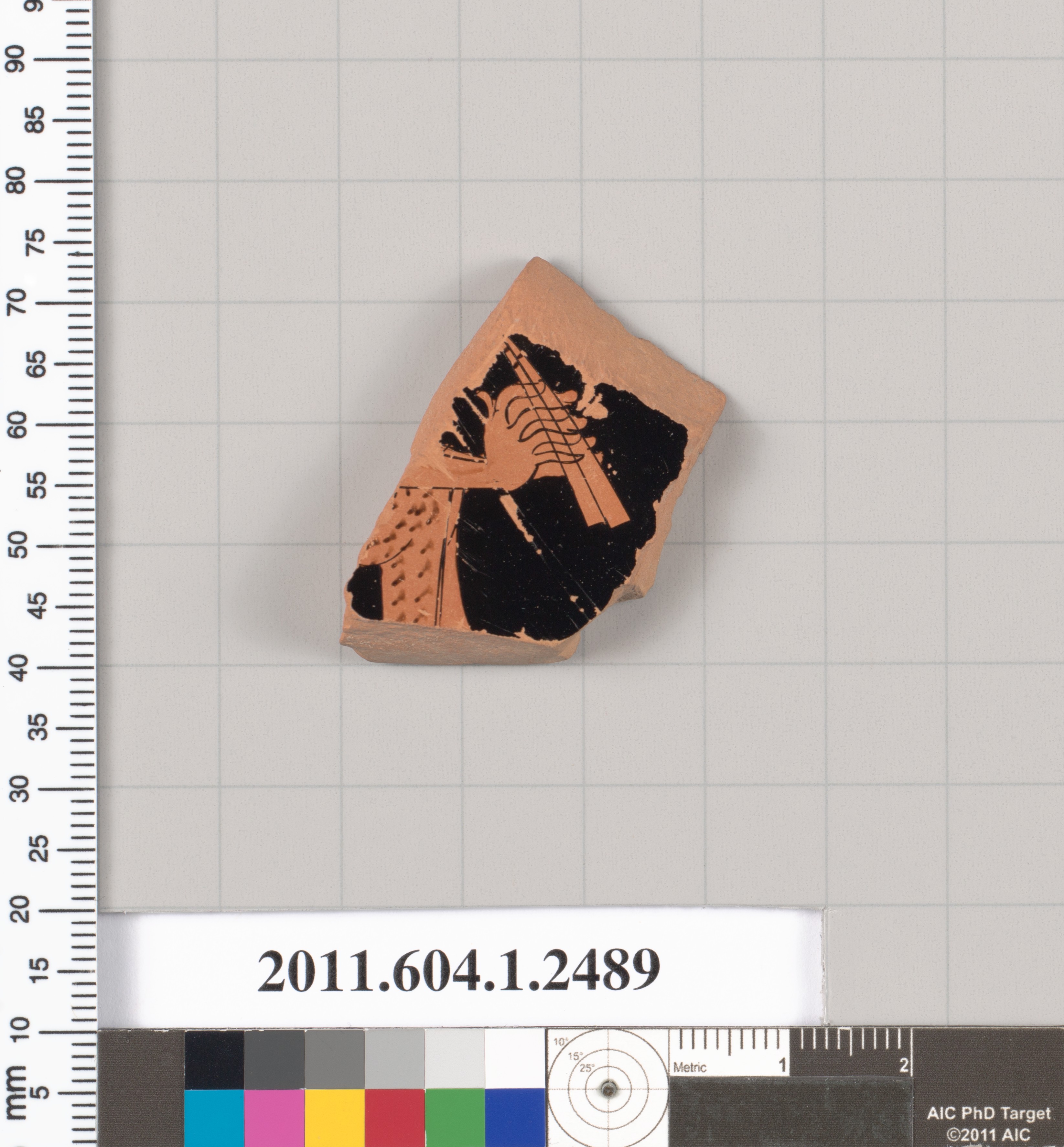
In the vast constellation of art history, the terracotta fragment of a Greek Attic kylix—a drinking cup broken yet resonant—offers a profound dialectic with the two sacred objects previously examined: the Christian Christ Bearing the Cross and the Zen-inspired Roundback Armchair: Lohan Type. Where the former embodies the weight of incarnation and the latter the void of invitation, this humble shard of fired clay occupies a third, more primordial position: that of the fragment as threshold. It is neither full nor empty, but a broken edge where presence and absence meet. For the 2026 Old Money silhouette, this fragment becomes an unexpected yet rigorous muse—a guide to a sartorial language that rejects ostentation in favor of material gravity, archaeological tactility, and the poetics of incompletion.
The Fragment as Aesthetic Principle: From Sacred Weight to Secular Grace
The kylix fragment, likely from a symposium vessel, carries the memory of communal ritual—wine, conversation, the fleeting gestures of ancient hands. Its broken rim, once a circle of completion, now reveals a jagged edge that speaks of time’s erosion. Unlike the Christ Bearing the Cross, which concentrates divine suffering into a singular, iconic form, or the Roundback Armchair, which structures emptiness for spiritual arrival, the terracotta shard exists in a state of permanent suspension. It is a relic of a whole we cannot reconstruct. This aesthetic condition—what the German art historian Aby Warburg might call a Pathosformel of loss—offers a radical model for the 2026 Old Money silhouette: a fashion that does not seek to dazzle but to endure, to bear witness, to suggest rather than declare.
In the context of Lauren Fashion Heritage Lab’s archival research, this fragment informs a shift away from the overtly luxurious—the gold-thread brocade, the heavy velvet—toward a heritage-black palette that absorbs light rather than reflecting it. The terracotta’s earthy, fired tones—russet, ochre, charcoal—translate into wool, cashmere, and matte silk that mimic the patina of age. The 2026 Old Money silhouette, therefore, does not mimic the fragment’s form but its ontological condition: a garment that appears to have always existed, that carries the memory of use, that is comfortable with its own incompleteness. This is not the fragility of decay but the strength of a material that has been fired by history.
Materiality and the Archaeology of Dress
The terracotta fragment’s surface—rough, porous, marked by the potter’s wheel and the kiln’s uneven heat—demands a corresponding tactility in fabric. For the 2026 collection, this translates into heavy, unlined wool crepe that drapes with a deliberate weight, cashmere with a napped, almost stone-like finish, and heritage-black linen that wrinkles not as a flaw but as a record of the body’s movement. The fragment teaches us that imperfection is not a deficit but a narrative. Just as the kylix’s painted figures—perhaps a symposium scene or a mythological episode—are now only partially visible, the 2026 silhouette favors subtle, almost illegible details: a seam that does not quite align, a hem that is left raw, a buttonhole that is hand-finished with visible thread. These are not signs of carelessness but of artisanal honesty, a refusal to erase the hand’s labor.
This archaeological sensibility extends to the silhouette’s structure. The kylix fragment, though broken, retains its essential curvature—the gentle arc of the bowl, the slight flare of the lip. The 2026 Old Money silhouette echoes this through rounded shoulders, softly cinched waists, and A-line skirts that avoid the sharp, aggressive tailoring of contemporary power dressing. The jacket, for instance, borrows the Lohan chair’s circular back but renders it in heavy wool, creating a voluminous yet grounded form that suggests both protection and openness. The trousers are cut wide but not exaggerated, falling with a columnar gravity that recalls the terracotta’s stability. The overall effect is one of monumental simplicity—a silhouette that does not shout but occupies space with quiet authority.
The Absent Body and the Present Garment
Just as the Roundback Armchair invites the absent body of the enlightened one, the terracotta fragment suggests the absent hand of the drinker. The 2026 Old Money silhouette operates on a similar principle: the garment is not a second skin but a shell, a vessel, a threshold. The wearer is not displayed but housed. This is a fashion of interiority, where the body’s presence is felt through the fabric’s fall and the garment’s subtle resistance to movement. The heritage-black palette—deep charcoal, ink, obsidian—furthers this effect, creating a visual void that allows the wearer’s face and gestures to become the focal point. The garment becomes a negative space, a frame for the person rather than a spectacle in itself.
This approach directly counters the 2025 trend toward hyper-visible logos and exaggerated volume. The 2026 Old Money silhouette, informed by the terracotta’s fragmentary dignity, is about subtraction, not addition. It is a fashion of restraint that finds its power in what is left out: the missing handle of the kylix, the unpainted section of the bowl, the silence between notes in a Greek chorus. In practical terms, this means minimal hardware, no visible branding, and a reliance on cut and fabric quality to convey status. The garment’s value is not in its novelty but in its permanence—its ability to be worn, repaired, and passed down, much like the fragment itself has survived millennia.
Conclusion: The Eternal Fragment in the Temporal Silhouette
The terracotta kylix fragment, the Christ Bearing the Cross, and the Roundback Armchair converge in a single, profound insight: that the sacred, the beautiful, and the enduring are most powerfully felt not in completeness but in the space between what is and what was. For the 2026 Old Money silhouette, this means embracing a heritage-black aesthetic that is neither mournful nor minimalist but archaeological—a fashion that digs through time to find forms that carry the weight of history without being crushed by it. The fragment teaches us that brokenness is not an end but a beginning, that the most luxurious garment is one that feels as if it has always existed, and that true elegance lies in the quiet confidence of the vessel that knows its purpose. In the 2026 collection, the wearer does not simply put on clothes; they inhabit a fragment of eternity, a shard of the symposium, a piece of the sacred chair, a trace of the cross—all held together by the black thread of time.