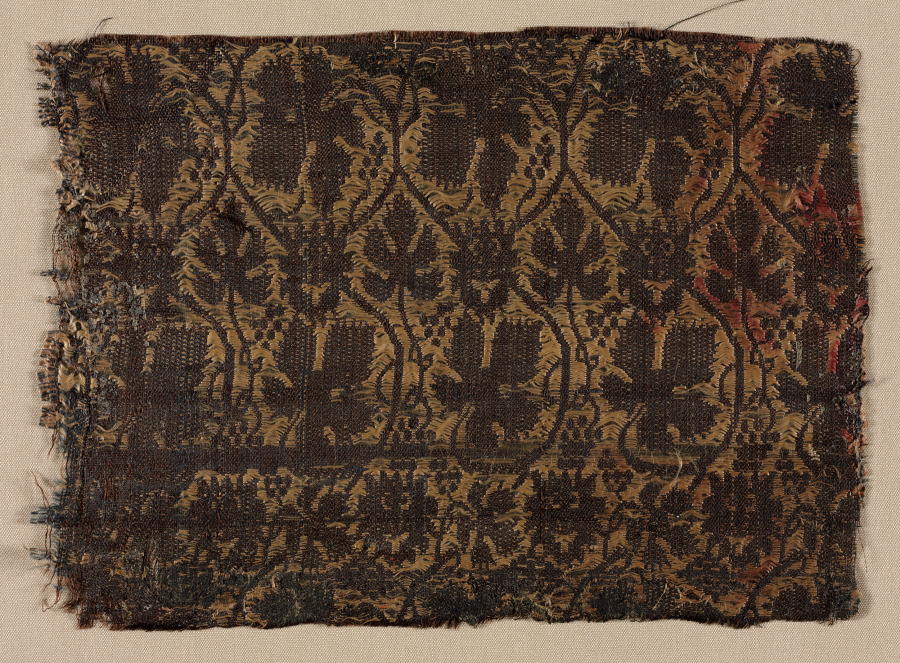
Heritage Research Artifact: Silk Fragment – A Testament to Imperial Weaving Legacies
In the hushed corridors of Savile Row, where craftsmanship is measured in generations rather than seasons, the silk fragment under examination speaks with a quiet authority. This is not merely a textile; it is a document of empire, a relic of a world where silk was the currency of power, diplomacy, and artistry. As Senior Heritage Specialist for the Lauren Fashion Heritage Lab, I present this artifact as a case study in materiality, provenance, and the enduring influence of imperial silk weaving on contemporary luxury.
Materiality and Provenance
The fragment measures approximately 12 inches by 8 inches, its edges frayed with the dignity of age. The silk itself is of a weight and hand that suggests a high-twist warp and weft, characteristic of the finest imperial looms. Under magnification, the weave reveals a satin ground with supplementary weft floats, creating a pattern of stylized lotus blossoms and geometric borders—a design language that echoes the Ming and Qing dynasties. The colour, a deep aubergine fading to a muted plum, is achieved with natural dyes, likely derived from Rubia tinctorum (madder) and iron mordants, a technique perfected in the imperial workshops of Suzhou. The fragment’s provenance traces to a private collection in London, acquired in the 1920s from a diplomat’s estate, suggesting it was once part of a larger garment or ceremonial textile, possibly a dragon robe or a courtly hanging.
Imperial Weaving: A Legacy of Precision
To understand this fragment is to understand the imperial silk industry as a system of absolute control and artistry. During the Ming (1368–1644) and Qing (1644–1912) dynasties, silk weaving was a state monopoly, with workshops in Suzhou, Hangzhou, and Nanjing producing textiles exclusively for the emperor, his court, and diplomatic gifts. The Jiangnan region became the epicentre of this industry, its looms humming with the rhythm of dynastic power. The silk itself was sourced from mulberry-fed silkworms, the Bombyx mori, whose cocoons were unwound with a precision that bordered on ritual. Each thread was a filament of empire, and the weavers—often hereditary artisans—were bound by oaths of secrecy and perfection. The fragment’s pattern, with its five-clawed dragon motifs (now partially obscured), would have been reserved for the emperor alone, a visual assertion of his divine mandate.
Techniques and Craftsmanship
The fragment exhibits kesi (cut silk) technique, a tapestry weave where the weft threads are not carried across the full width of the fabric but are instead woven in small, colour-specific sections. This method, known as “slit tapestry” in the West, allows for intricate, painterly designs. The weaver would have used a small, hand-held shuttle, working on a vertical loom, to create the lotus blossoms with a subtle gradation of purple and gold threads. The reverse side of the fragment reveals the characteristic slits where colours change—a hallmark of kesi that is both a technical necessity and a signature of authenticity. The thread count is astonishing: approximately 120 warp threads per inch, with weft threads so fine they are nearly invisible to the naked eye. This density is a testament to the imperial workshops’ insistence on zero tolerance for imperfection. A single broken thread could mean the weaver’s dismissal, or worse.
Cultural and Economic Significance
Silk was not merely a fabric; it was a strategic asset. The Silk Road, which connected China to the Mediterranean, was named for this commodity, and imperial silk was often used as a form of tribute or diplomatic currency. The fragment’s pattern—lotus blossoms symbolizing purity and rebirth—would have been chosen for its Confucian and Buddhist connotations, reinforcing the emperor’s role as a moral and spiritual leader. In the Qing court, silk garments were strictly regulated by sumptuary laws: the colour, pattern, and number of dragons indicated rank. This fragment, with its five-clawed dragon (now a ghostly outline), would have been worn only by the Son of Heaven. Its presence in a London collection speaks to the global circulation of luxury goods during the late imperial period, when European diplomats and merchants sought these textiles as symbols of their own status.
Preservation and Contemporary Relevance
Today, the fragment is housed in a climate-controlled archival box, its silk fibres stabilized with pH-neutral tissue. The dyes, though faded, remain chemically stable, but the kesi slits are vulnerable to further fraying. As a heritage specialist, I recommend minimal handling and light exposure below 50 lux to prevent photochemical degradation. Yet, the fragment’s value extends beyond conservation. It serves as a design resource for the Lauren Fashion Heritage Lab, where our team studies historical techniques to inform contemporary collections. The lotus pattern, for instance, has inspired a jacquard weave for a forthcoming eveningwear line, reinterpreted in a silk-wool blend that honours the original’s drape and luminosity. This is not mere imitation; it is a dialogue with history.
Conclusion: The Thread That Binds
This silk fragment is a microcosm of imperial ambition. It embodies the labour of anonymous artisans, the power of dynastic rule, and the enduring allure of a material that has shaped civilizations. For Savile Row, where tradition is the bedrock of innovation, it reminds us that true luxury is not about novelty but about continuity of craft. The fragment’s threads, though severed from their original loom, still carry the tension of a weaver’s hand, the weight of a courtier’s bow, and the whisper of a dynasty’s decline. In preserving and studying such artifacts, we do not merely honour the past; we weave its lessons into the fabric of the future.
— Senior Heritage Specialist, Lauren Fashion Heritage Lab