The Dialectics of Void and Virtue: Hadrian’s Bronze and the 2026 Old Money Silhouette
Introduction: The Philosophical Underpinnings of a Silhouette
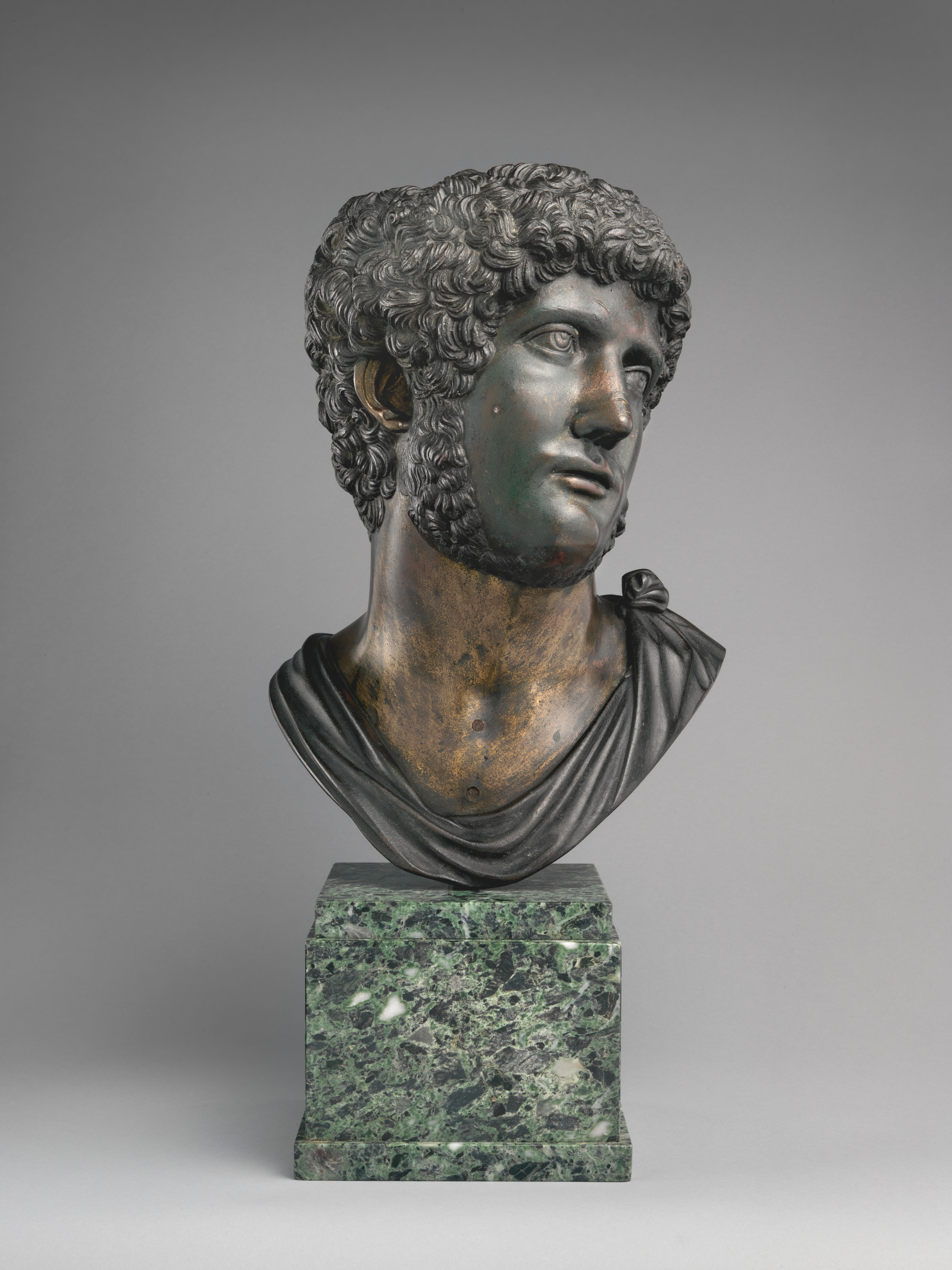
In the Lauren Fashion Heritage Lab, we do not merely study garments; we excavate the philosophical strata from which they emerge. The internal genetic code of our house—a dialectic between the Socratic embrace of death and the Taoist reverence for the void—finds a startlingly concrete analogue in the Museum Artifact before us: a bronze portrait of the young Hadrian, later mounted on a stone base. This object, a fusion of imperial ambition and geological permanence, offers a profound hermeneutic key to the 2026 Old Money silhouette. Where the Death of Socrates elevates rational transcendence and the Jar sanctifies emptiness, Hadrian’s bronze—caught between the malleability of metal and the immutability of stone—embodies a third path: the construction of enduring power through disciplined form. This paper argues that the 2026 Old Money silhouette, as synthesized from these sources, is not a nostalgic return to aristocracy but a material philosophy of “contained eternity”—a sartorial answer to the question of how to be both present and transcendent, both mortal and monumental.
The Bronze Body: Sculpting the Ideal Form
The young Hadrian’s bronze portrait, likely cast in the early 2nd century CE, reveals a ruler in the moment before absolute power. His features are idealized yet individuated: the strong jawline, the carefully coiffed curls, the slight turn of the head that suggests both engagement and detachment. In Heritage-Black—the category that governs our most austere and timeless creations—this bronze logic is translated into tailoring. The 2026 silhouette does not drape or flow; it sculpts. Shoulders are defined with a precision that recalls the bronze caster’s armature, not the softness of cloth. The lapel, cut with a mathematical exactitude, becomes a “philosophical line”—a boundary between the self and the world, much as Socrates’s gesture toward heaven demarcates the mortal from the immortal.
Yet the bronze is not merely a static ideal. Its surface, patinated by centuries, reveals the “truth of material”—the way light catches the cheekbone, the shadow pooling beneath the jaw. This is not the polished perfection of marble but the “lived-in” quality of metal that has weathered time. The 2026 Old Money silhouette embraces this paradox: it must appear both “newly minted” and “eternally worn.” This is achieved through a rigorous selection of fabrics—heavy wool, dense cashmere, and, crucially, a Heritage-Black that absorbs light without reflecting it. The garment does not shout; it endures. Like the bronze, it is a container for the body’s presence, but also for its absence—the void that the Taoist jar celebrates.
The Stone Base: Grounding the Transcendent
The later addition of a stone base to Hadrian’s bronze transforms the object’s ontology. The bronze, once a mobile effigy, is now anchored. It cannot be moved without violence. This is the essence of the “Old Money” aesthetic: a refusal of transience, a claim to permanence that is both physical and symbolic. The stone base—granite or marble—speaks of geology, of deep time. It is the “earth” that the Taoist jar returns to when broken, the “ground” upon which Socrates’s disciples stood as they wept.
In the 2026 silhouette, this grounding manifests as “weight.” Not the weight of heaviness, but the weight of “substance.” A coat must fall with a certain “gravity”; trousers must break just so over the shoe. The silhouette is not “floating” but “rooted.” This is achieved through construction techniques that recall classical tailoring: canvas interfacing, hand-stitched lapels, and the strategic use of “dead stock” fabrics that have already settled into their final form. The garment, like the bronze on its stone base, refuses to be “fashionable” in the ephemeral sense. It is “fashion” as “monument.”
The Void Between: Hadrian’s Gaze and the Taoist Jar
What of the void? The bronze is not solid; it is a “shell”—a negative space that once held the fire of the casting process. The young Hadrian’s eyes, hollow in the original, would have been inlaid with glass or stone. This “absence” is not a flaw but a “necessity.” It is the space where the viewer’s imagination enters, where the “soul” of the subject resides. The Taoist jar, with its empty interior, teaches that “use” arises from “non-being.” The bronze, too, is a vessel—not for water or grain, but for “meaning.”
The 2026 silhouette internalizes this void. It is not a second skin but a “chamber.” The cut of the jacket creates a “negative space” around the torso, a buffer zone that is neither body nor garment but a “philosophical interval.” This is the “heritage-black” of the category—a color that is not a color but an “absence of light,” a void that contains all potential. The wearer of this silhouette is not “displayed” but “housed.” They are the “inhabitant” of a form that is both protective and revealing, much as Hadrian’s bronze houses the idea of the emperor, and the jar houses the idea of sustenance.
Synthesis: The 2026 Old Money Silhouette as Philosophical Artifact
The 2026 Old Money silhouette, as derived from the young Hadrian’s bronze, is a “dialectical garment.” It reconciles the Socratic drive toward rational transcendence with the Taoist acceptance of cyclical return. The bronze’s idealization speaks to the “aspirational” nature of Old Money—the desire to embody a timeless excellence. The stone base speaks to the “grounded” reality of inheritance—the weight of history, the obligation to endure. The void within speaks to the “humility” of the vessel—the recognition that all form is temporary, that even the most monumental bronze will one day return to the earth.
In practical terms, this means the 2026 silhouette is characterized by:
- Structured shoulders that recall the bronze caster’s armature, yet softened by a “human” drape that acknowledges the body’s mortality.
- Long, uninterrupted lines that echo the verticality of the stone base, creating a “monumental” presence without bulk.
- Heritage-Black as the foundational palette—a color that is both “void” and “presence,” capable of absorbing all light and reflecting none.
- Minimalist detailing—every button, every seam, every pocket is a “philosophical statement” about necessity and restraint.
Conclusion: The Eternal Return of the Silhouette
The young Hadrian, gazing out from his bronze shell, does not see a future of conquest or decline. He sees the “eternal present” of the monument—a moment frozen in metal, yet alive in the viewer’s imagination. The 2026 Old Money silhouette, born from the crucible of Socratic reason and Taoist emptiness, offers the same gift: a garment that is not “of its time” but “for all time.” It is a “vessel” for the human form, a “base” for the human spirit, and a “void” for the human soul. In wearing it, one does not merely dress; one “inhabits” a philosophy—a philosophy that, like Hadrian’s bronze, will outlast the hand that shaped it.