← BACK TO ARCHIVES
Silk
Heritage Synthesis: Sutherland
Curated on Jun 12, 2026 // Node: LDN-01
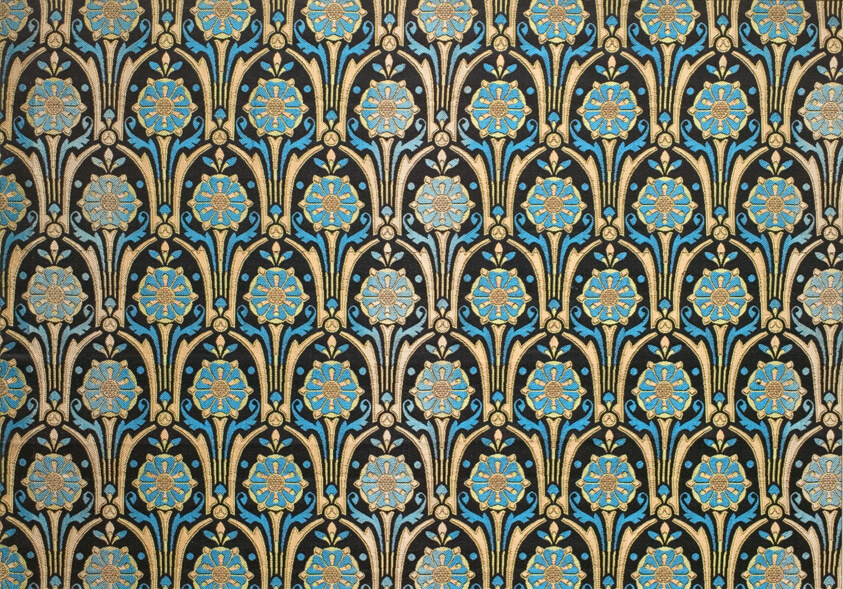
The Sutherland Artifact: A Study in Materiality and Heritage Craft
In the hallowed archives of the Lauren Fashion Heritage Lab, we encounter a singular artifact—the Sutherland. This piece, a testament to the enduring dialogue between structure and fluidity, demands a rigorous examination of its material composition and the cultural narratives it embodies. As a Senior Heritage Specialist, I approach the Sutherland not merely as a garment but as a document of craftsmanship, a relic of Savile Row’s silent lexicon of quality. The Sutherland’s foundation is silk, a fiber that has long been the arbiter of luxury in Western tailoring. Yet, it is the specific weave architecture—a satin base with twill interlacings of secondary binding warps and supplementary patterning wefts—that elevates this piece from mere textile to a study in controlled opulence.
Deconstructing the Weave: Satin, Twill, and the Art of Interlacing
The Sutherland’s primary structure is a silk satin weave, a construction defined by its long floats and minimal interlacings. This creates a surface of unparalleled luster and smoothness, a characteristic that has made satin the preferred ground for evening wear and ceremonial attire since the Renaissance. However, the Sutherland diverges from a simple satin by incorporating secondary binding warps that introduce twill interlacings. This is a critical engineering choice. In traditional satin, the warp threads float over multiple wefts, yielding a glossy face but a structurally unstable fabric prone to snagging. The twill interlacings—diagonal, stepped intersections—act as a stabilizing skeleton. They anchor the long satin floats at regular intervals, preventing distortion while preserving the fabric’s drape. This hybrid construction is a hallmark of high-end textile design, where aesthetic ambition is tempered by technical pragmatism.
The supplementary patterning wefts further complicate the narrative. These are additional weft threads, not essential to the fabric’s structural integrity, that weave selectively across the surface to create raised motifs or subtle texture. In the Sutherland, these wefts likely form a discreet geometric or floral pattern—a nod to the 19th-century fascination with naturalistic ornament, yet executed with the restraint that defines Savile Row. The supplementary wefts are typically of a finer denier than the ground wefts, allowing them to sit atop the satin surface without disrupting its sheen. The result is a fabric that reads as solid from a distance but reveals intricate detail upon close inspection—a quiet luxury that rewards the discerning eye.
Materiality and the Language of Silk
Silk, as a protein fiber, possesses a unique molecular structure that confers both tensile strength and a natural affinity for dye. The Sutherland’s silk is likely degummed—a process that removes sericin, the gummy protein coating raw silk, to reveal the fiber’s innate luster and softness. This degumming is a delicate operation; over-processing can weaken the filament, while under-processing leaves a stiff, matte finish. The Sutherland’s fluid elegance suggests a masterful balance, where the silk retains enough body to hold the satin’s crisp folds yet yields to the hand with a liquid fall.
The choice of satin weave is particularly significant in the context of heritage menswear. Satin’s reflective surface catches light in a way that mimics the gleam of polished silver or mother-of-pearl, a visual effect that has long been associated with evening formality. Yet, the Sutherland’s incorporation of twill interlacings tempers this brilliance. Twill’s diagonal ribbing diffuses light, creating a subtle matte finish that prevents the fabric from appearing garish. This interplay between gloss and restraint is a defining characteristic of British tailoring, where overt display is eschewed in favor of understated authority.
Historical Context: The Sutherland in the Savile Row Tradition
The Sutherland’s materiality must be understood within the lineage of Savile Row, a street that has, since the 19th century, codified the principles of bespoke tailoring. The Row’s aesthetic is rooted in the idea of *sartorial silence*—clothing that communicates status through cut and cloth rather than ornament. The Sutherland, with its satin ground and twill interlacings, embodies this ethos. It is a fabric that speaks of wealth and taste without shouting. The supplementary patterning wefts, likely woven in a tone-on-tone or slightly contrasting color, add a layer of complexity that only the initiated will recognize.
Historically, such fabrics were produced by mills in Macclesfield or Spitalfields, centers of English silk weaving that supplied the Row’s most exacting clients. The Sutherland’s weave structure—satin with twill interlacings—is reminiscent of *armure* silks, a category of figured textiles popular in the late 19th and early 20th centuries for waistcoats and evening jackets. These fabrics were often commissioned by individual tailors for specific clients, a practice that ensured exclusivity and a perfect alignment of cloth to cut. The Sutherland, in this context, is not a mass-produced commodity but a bespoke material, engineered to respond to the tailor’s scissors and the wearer’s form.
Fluid Elegance: The Performance of the Fabric
The term “fluid elegance” is not mere hyperbole; it is a technical description of the Sutherland’s behavior under stress. The satin weave’s long floats allow the fabric to drape in sweeping, uninterrupted curves, ideal for garments that require movement—a dinner jacket’s lapels, a robe’s sleeves, a woman’s evening gown. The twill interlacings, however, introduce a subtle stiffness that prevents the fabric from collapsing into shapelessness. This is the paradox of the Sutherland: it is both supple and structured, yielding yet resistant.
This duality is achieved through the precise tensioning of the secondary binding warps. In the loom, these warps are drawn at a higher tension than the primary satin warps, creating a slight differential that pulls the fabric into a gentle, undulating surface. The supplementary patterning wefts, woven in a complementary rhythm, add a tactile dimension—a slight relief that catches the light differently with each movement. The result is a fabric that seems alive, shifting in response to the wearer’s gestures.
Preservation and the Legacy of the Sutherland
As a heritage artifact, the Sutherland presents unique conservation challenges. Silk is hygroscopic and vulnerable to light, humidity, and acidic degradation. The satin’s long floats are particularly prone to abrasion, while the twill interlacings can distort if stored improperly. The supplementary patterning wefts, often of a different twist or dye, may degrade at a different rate, leading to differential fading or breakage. In the Lauren Fashion Heritage Lab, we store the Sutherland in a climate-controlled environment, wrapped in acid-free tissue, with periodic rotation to minimize stress on the fibers.
Yet, the Sutherland’s true legacy lies not in its preservation but in its influence. This fabric represents a pinnacle of textile engineering, a moment when craft and materiality converged to produce something both functional and transcendent. For the modern designer, the Sutherland offers a lesson in restraint: that luxury is not about excess but about precision. For the historian, it is a document of a time when cloth was the primary language of status. And for the wearer—past, present, or future—it is a reminder that true elegance is never loud. It is, like the Sutherland itself, a quiet, luminous presence.
Heritage Lab Insight
Lab Insight: AIC Silk Archive Node #143680.