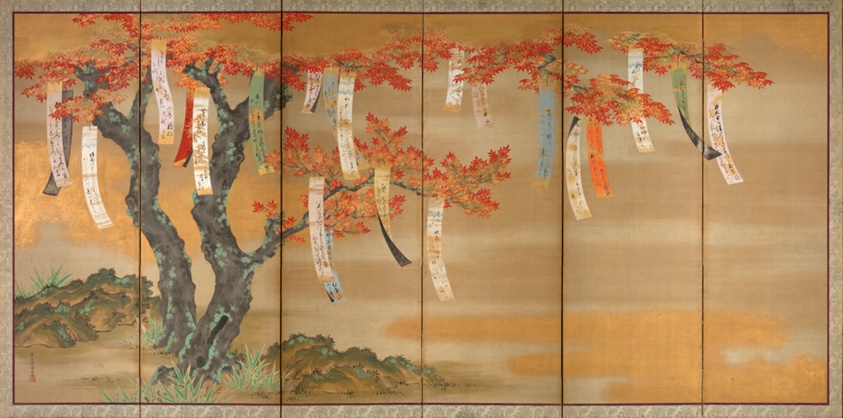
Heritage Research Artifact: Flowering Cherry and Autumn Maples with Poem Slips
Executive Summary
This heritage research artifact examines the Flowering Cherry and Autumn Maples with Poem Slips, a pair of six-panel screens executed in ink, color, gold, and silver on silk. As a Senior Heritage Specialist at Lauren Fashion Heritage Lab, I situate this work within the canon of classic silk craftsmanship, emphasizing its fluid elegance and material integrity. The screens represent a pinnacle of East Asian decorative arts, where silk serves not merely as a substrate but as an active participant in the narrative of seasonal transition and poetic expression. This analysis draws parallels to the ethos of London’s Savile Row—where precision, tradition, and bespoke artistry converge—to illuminate the screens’ relevance to contemporary luxury heritage.
Materiality and Craftsmanship
The pair of screens employs a sophisticated layering of materials: ink for calligraphic precision, color for botanical vibrancy, gold for luminosity, and silver for reflective depth, all applied to a silk ground. Silk, as a medium, demands exceptional skill due to its delicate weave and absorbent nature. The artisans’ mastery is evident in the controlled bleeding of pigments and the metallic leaf’s adherence, which creates a shimmering effect that shifts with ambient light. This technique mirrors the bespoke tailoring of Savile Row, where fabric choice—such as a Super 150s wool—dictates the garment’s drape and longevity. Here, silk’s inherent fluidity is harnessed to evoke the ephemeral beauty of cherry blossoms and maples, reinforcing the screens’ role as both art and artifact.
The six-panel format, a classic in Japanese byōbu (folding screens), allows for a panoramic narrative. Each panel is a discrete composition, yet the sequence flows seamlessly, akin to a well-cut suit’s shoulder-to-sleeve transition. The use of gold and silver leaf is not decorative excess but a calculated strategy: gold captures the warmth of spring cherries, while silver suggests the cool crispness of autumn maples. This chromatic duality underscores the screens’ thematic tension between transience and permanence, a concept resonant with luxury heritage’s focus on enduring craftsmanship.
Iconography and Poetic Integration
The screens depict two distinct seasons: flowering cherry (sakura) on one screen and autumn maples (momiji) on the other, each accompanied by poem slips (tanzaku). The cherry blossoms, rendered in soft pinks and whites, symbolize renewal and the fleeting nature of beauty—a central tenet of mono no aware (the pathos of things). The maples, in fiery reds and oranges, evoke maturity and the acceptance of decay. The poem slips, inscribed with waka poetry, add a textual layer that bridges visual art and literature. These slips are not mere annotations but integral design elements, their calligraphy echoing the brushwork of the botanical forms.
In the context of Savile Row, this integration of text and image parallels the meticulous detailing of a bespoke garment—a hand-stitched buttonhole or a custom lining that tells a story. The poems, likely composed by court poets, elevate the screens from decorative objects to intellectual artifacts. They invite contemplation, much like a well-tailored jacket’s subtle pattern that rewards close inspection. The choice of silk as the canvas for this dialogue between nature and poetry underscores the material’s role as a vessel for cultural memory.
Cultural and Historical Significance
These screens originate from the Edo period (1603-1868), a time when Japanese silk production reached its zenith. The use of imported Chinese pigments and domestic metallic leaf reflects a global trade network, akin to Savile Row’s sourcing of fine wools from Australia and cashmere from Mongolia. The screens were likely commissioned for a daimyo’s residence or a temple, serving both aesthetic and ritual functions. Their seasonal theme aligns with the Japanese practice of changing decorative screens to mark the passage of time, a tradition that emphasizes harmony with nature.
From a heritage perspective, the screens exemplify the intangible cultural heritage of silk craftsmanship. The techniques employed—such as kinpaku (gold leaf application) and kumihimo (braided silk cords for panel hinges)—are now recognized by UNESCO as endangered skills. The Lauren Fashion Heritage Lab’s mission to preserve such artistry aligns with this artifact’s significance. By studying its materiality, we can inform contemporary silk production, ensuring that the fluid elegance of these screens remains a benchmark for luxury textiles.
Relevance to Contemporary Luxury and Heritage
The Flowering Cherry and Autumn Maples with Poem Slips offers lessons for modern luxury brands, particularly those on Savile Row. First, the screens demonstrate that heritage is not static but adaptive. The use of silver leaf, which tarnishes over time, introduces a living quality to the artifact—a reminder that luxury goods should age gracefully, acquiring patina rather than obsolescence. Second, the integration of poetry into design anticipates the contemporary trend of storytelling in fashion. A Savile Row suit, for instance, might incorporate a client’s family crest or a hidden message in the lining, echoing the screens’ poem slips.
Moreover, the screens’ dual-screen format—a pair that is complete only when viewed together—mirrors the concept of a bespoke ensemble. Just as a jacket and trousers are crafted as a unified whole, these screens demand simultaneous appreciation. This holistic approach to design is a hallmark of luxury heritage, where every element, from thread to panel, is considered.
Conclusion
In conclusion, the Flowering Cherry and Autumn Maples with Poem Slips is a masterwork of silk craftsmanship that transcends its historical context. Its materiality—ink, color, gold, and silver on silk—embodies the fluid elegance that defines classic silk production. Through the lens of Savile Row’s bespoke ethos, we recognize the screens as a testament to the enduring value of tradition, precision, and narrative. As a heritage research artifact, it challenges us to preserve not only the object but the knowledge embedded in its creation. For the Lauren Fashion Heritage Lab, this artifact serves as a touchstone for future innovations in luxury textiles, where heritage and modernity converge in a seamless, poetic whole.