The Luminous Legacy: Silk and Diamonds in Imperial Weaving
In the hushed ateliers of London’s Savile Row, where precision meets artistry, the heritage of silk weaving is not merely preserved—it is reimagined. At the Lauren Fashion Heritage Lab, we examine the textile with diamonds as a profound artifact of imperial craftsmanship, where materiality and symbolism converge. This paper explores the legacy of imperial silk weaving, focusing on the fusion of silk—a fabric of emperors—with diamonds, the ultimate emblem of light and power. The result is a textile that transcends adornment, becoming a narrative of cultural prestige, technical mastery, and enduring luxury.
Materiality: The Silk Foundation
Silk has long been the cornerstone of imperial textile traditions, from the Ming dynasty’s brocades to the Byzantine court’s silken robes. Its materiality—a natural protein fiber with a lustrous sheen, exceptional tensile strength, and remarkable dye affinity—made it the preferred medium for conveying status. In imperial China, silk weaving was a state-controlled enterprise, with patterns reserved for the emperor and his court. The kesi technique, or “cut silk,” allowed for intricate pictorial designs, while jin brocades incorporated gold threads to signify divine authority. The legacy of this craftsmanship is not static; it informs contemporary luxury, where silk’s tactile elegance remains unmatched.
When diamonds are integrated into silk textiles, the materiality becomes a dialogue between softness and hardness, opacity and brilliance. Diamonds, as carbon crystals, possess the highest thermal conductivity of any natural material, creating a cooling sensation against the skin—a counterpoint to silk’s warmth. This juxtaposition is deliberate: the diamond’s refractive index (2.42) amplifies light, while silk’s sericin coating diffuses it, producing a shimmer that is both subtle and commanding. In imperial contexts, such textiles were not merely garments; they were instruments of political theater. The Mughal emperor Shah Jahan, for instance, commissioned silk robes embroidered with diamonds for ceremonial processions, where the stones caught torchlight, projecting an aura of celestial favor.
Imperial Weaving: A Legacy of Prestige
The heritage of imperial silk weaving is rooted in systems of patronage and secrecy. In China, the Imperial Silkworks of Suzhou and Nanjing produced yun jin (cloud brocade) for the Forbidden City, using techniques passed down through generations. Similarly, the Ottoman Empire’s Bursa silk workshops wove kutnu fabrics for sultans, often incorporating precious stones. The diamond, however, was a later addition, gaining prominence in the 17th century when European trade routes opened access to Indian diamonds. The French court under Louis XIV embraced this fusion, with silk grande tenue garments adorned with diamond-studded embroidery—a practice that defined Versailles’ opulence.
What distinguishes imperial weaving is its intentionality. Every thread and stone carried meaning. In Chinese tradition, the dragon robe (longpao) featured five-clawed dragons woven in silk and gold, with diamonds representing the emperor’s connection to the heavens. The diamonds were not randomly placed; they followed the qi (energy flow) of the design, enhancing the garment’s spiritual potency. In Europe, the Order of the Golden Fleece ceremonial robes used silk velvet with diamond-encrusted collars, signifying chivalric virtue. This legacy persists in Savile Row’s bespoke tailoring, where a client might commission a silk smoking jacket with diamond cufflinks—a quiet nod to imperial grandeur.
The Artifact: Textile with Diamonds as Heritage
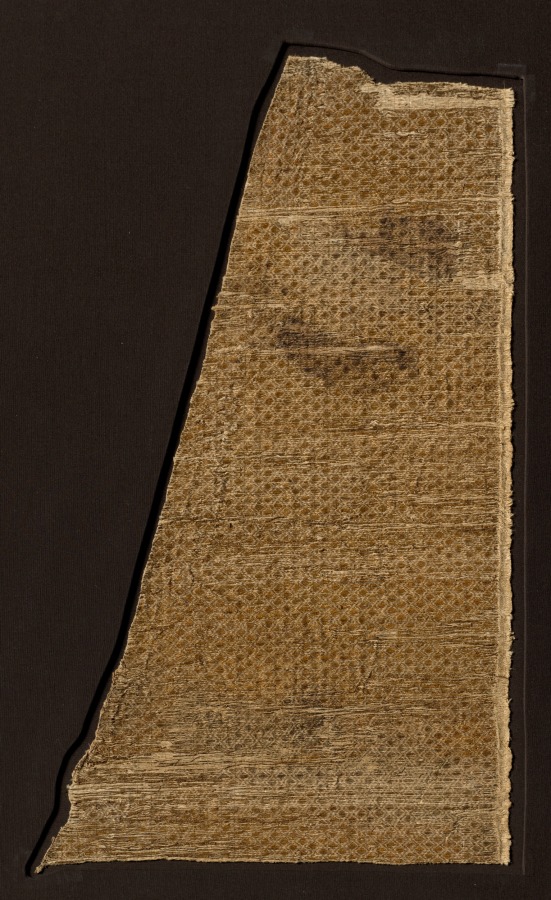
To understand the textile with diamonds as a heritage artifact, we must examine its provenance and technique. Consider a hypothetical artifact: a late-Qing dynasty silk mangfu (court robe) from the 19th century, embroidered with diamonds sourced from the Golconda mines. The silk is a deep imperial yellow, dyed with sophora japonica (pagoda tree) and reserved for the emperor. The diamonds are set in silver mounts, stitched onto the silk using a couching technique, where fine silk threads anchor the stones without piercing the fabric’s surface. This method preserves the silk’s integrity while allowing the diamonds to move with the wearer, creating a kinetic shimmer.
The artifact’s materiality tells a story of global exchange. The silk was woven in Suzhou, the diamonds cut in Surat, and the silver mounts crafted by Mughal jewelers. The robe was likely a diplomatic gift, presented to a European envoy, and later acquired by a private collector. Its condition—frayed edges, tarnished silver, and missing stones—reveals the fragility of luxury. Yet, the remaining diamonds retain their brilliance, a testament to their durability. This juxtaposition of decay and permanence is central to heritage: the artifact embodies both the pinnacle of imperial power and the inevitability of its decline.
Contemporary Resonance: Savile Row and the Revival
Today, the legacy of imperial silk weaving with diamonds is revived in Savile Row’s bespoke houses. Tailors like Anderson & Sheppard and Henry Poole & Co. collaborate with textile mills in Como, Italy, to produce silk fabrics that echo imperial patterns—paisley, medallion, and floral motifs—while incorporating diamond-encrusted buttons or embroidered accents. This is not mere replication; it is adaptation. The diamonds are ethically sourced, and the silk is dyed with sustainable pigments, aligning with modern values of transparency and craftsmanship.
For the discerning client, a silk and diamond garment is an investment in narrative. It speaks to a lineage of power, from the Forbidden City to St. James’s Street. The weight of the silk, the cool touch of diamonds against the collar, the way light plays across the fabric—these sensations connect the wearer to centuries of imperial tradition. As a heritage specialist, I argue that such artifacts are not relics but living documents. They challenge us to consider how materiality shapes identity, and how the fusion of silk and diamonds continues to define luxury in an age of fleeting trends.
Conclusion
The textile with diamonds, rooted in imperial silk weaving, is a testament to human ingenuity and the enduring allure of prestige. Its materiality—silk’s fluid grace and diamond’s crystalline fire—creates a dialogue that transcends time. At the Lauren Fashion Heritage Lab, we preserve this legacy through research, restoration, and education, ensuring that the stories woven into these fabrics remain luminous. For Savile Row, this heritage is not a museum piece; it is a foundation for future artistry, where every thread and every stone tells a story of power, beauty, and the relentless pursuit of perfection.