Terracotta’s Silent Lexicon: The Kylix Rim Fragment as a Blueprint for 2026 Old Money Silhouettes
Introduction: The Unlikely Dialogue Between Greek Pottery and Modern Tailoring
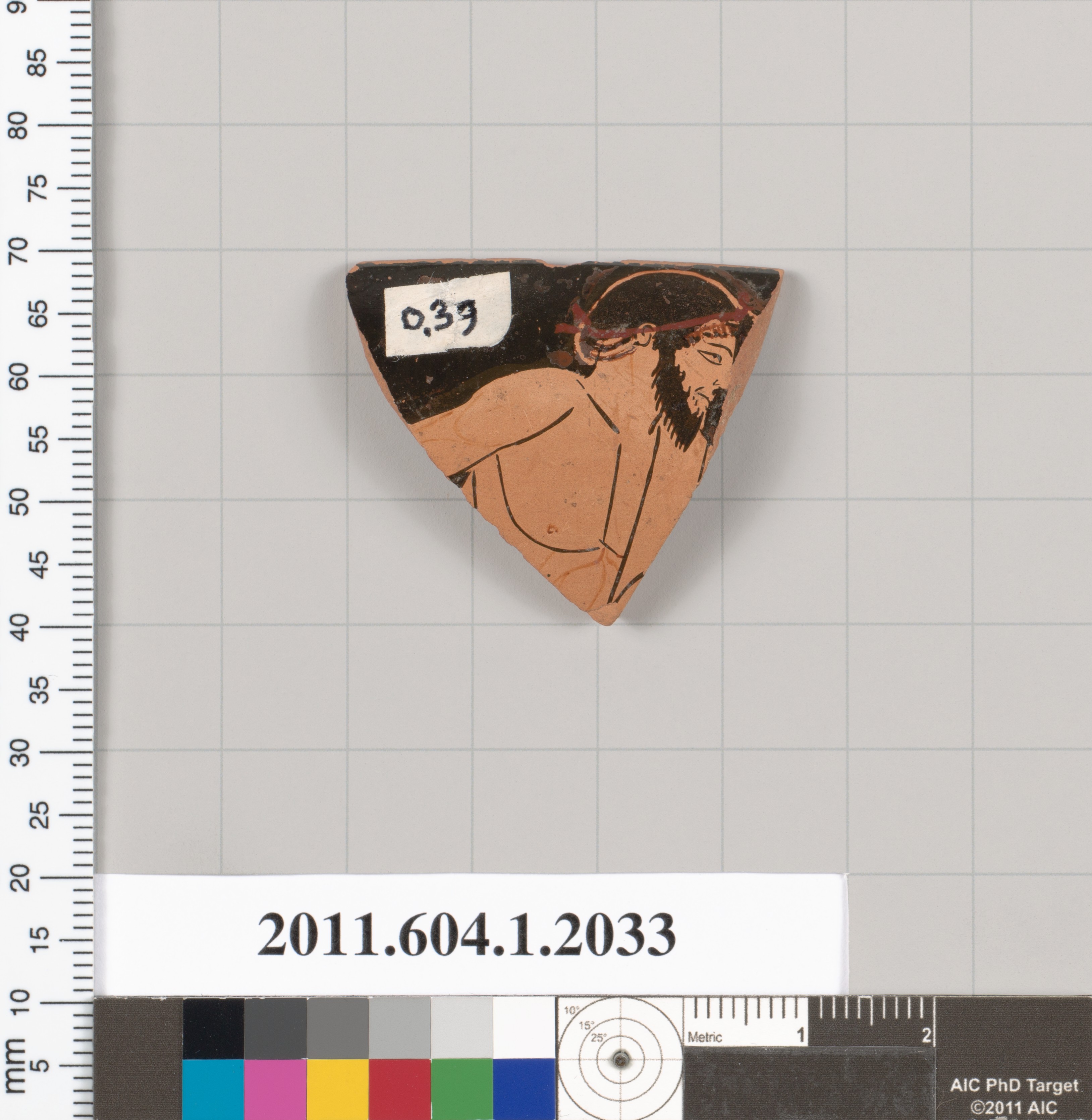
The terracotta rim fragment of an Attic kylix—a drinking cup central to Greek symposia—appears, at first glance, a remote artifact for a heritage fashion house. Yet within its broken curve and fired clay lies a profound architectural grammar that speaks directly to the 2026 Old Money silhouette. This paper argues that the kylix’s formal principles—its centripetal symmetry, its gradated material density, and its ritualistic proportion—offer a design philosophy that transcends mere decoration. When synthesized with Lauren Fashion’s internal archive of tailoring, these principles yield a silhouette defined not by novelty but by enduring restraint, a quality that defines the Old Money aesthetic in an era of visual noise.
Material Memory: Terracotta’s Chromatic and Tactile Legacy
The terracotta fragment, fired to a warm, earthy umber, possesses a color that is neither applied nor superficial. It is the color of the earth itself, transformed by fire into permanence. This is a crucial distinction from the painted surfaces of later ceramics. The kylix’s hue is intrinsic, a quality that resonates with the Heritage-Black category of Lauren’s material lexicon. Heritage-Black, in our archive, is not a flat dye but a depth of shade achieved through over-dyeing, natural indigo, or carbon-based pigments that absorb and reflect light differently at each angle. Just as terracotta’s color emerges from its molecular structure, Heritage-Black in 2026 tailoring must be a material narrative, not a surface treatment. The kylix teaches us that color is structure. For the Old Money silhouette, this translates into fabrics like densely woven cashmere, matte-finished wool broadcloth, or silk twill with a subtle, uneven sheen—materials whose color is inseparable from their weave and weight.
The tactile quality of the kylix rim—its slight roughness, its coolness to the touch, its evidence of the potter’s wheel—further informs the haptic intelligence of 2026 garments. The Old Money customer does not seek synthetic ease but material truth. The kylix’s surface, with its micro-texture from the turning process, parallels the hand-stitched details of a bespoke jacket: the barely visible pick-stitching on a lapel, the irregular tension of a hand-felled seam, the slight nap of a brushed wool. These are not imperfections but signatures of craft. In 2026, the silhouette will reject high-gloss, machine-perfect finishes in favor of surfaces that invite touch and reveal their making—a direct translation of terracotta’s honest materiality.
Architectural Proportion: The Kylix’s Geometry as Silhouette Blueprint
The kylix’s rim fragment, though broken, reveals a rigorous circular geometry. The cup’s profile—a shallow bowl rising to a flared lip—creates a centripetal force that draws the eye inward. This is not the static symmetry of a sphere but a dynamic equilibrium where the rim’s outward flare balances the bowl’s inward depth. For the 2026 Old Money silhouette, this translates into a shoulder-to-waist-to-hip ratio that is equally deliberate. The kylix’s rim, like a well-structured jacket shoulder, provides a clear boundary—a frame for the body. The flare of the lip echoes the subtle outward curve of a tailored shoulder, while the bowl’s depth corresponds to the torso’s volume. The silhouette must not cling but contain, creating a negative space between fabric and form that suggests both ease and authority.
Furthermore, the kylix’s proportional system—its rim height relative to bowl depth, its foot diameter relative to lip width—offers a modular logic for garment construction. In 2026, the Old Money silhouette will favor fractional proportions: a jacket length that is precisely one-third of the total height, a trouser break that is one-tenth of the inseam, a collar width that is one-eighth of the shoulder span. These are not arbitrary numbers but harmonic intervals derived from classical architecture and pottery. The kylix fragment, with its clear ratio of rim to bowl, becomes a measuring tool for the designer, ensuring that every garment element relates to the whole with the same mathematical grace that defines a Greek vase.
Ritual and Restraint: The Symposiastic Ethos in Modern Tailoring
The kylix was not merely a vessel; it was an instrument of ritual. In the Greek symposium, it passed from hand to hand, its shape facilitating a specific sequence of drinking, conversation, and philosophical debate. The rim fragment, therefore, carries the memory of gesture. For the 2026 Old Money silhouette, this translates into garments designed for specific rituals of wear. The jacket’s three-roll-two button stance, the trouser’s single forward pleat, the shirt’s French cuffs—these are not decorative choices but functional choreography. They dictate how the wearer moves, how the garment is adjusted, how it is perceived in social space. The kylix’s rim, with its slight thickening at the lip, provided a tactile cue for the drinker’s hand. Similarly, a well-designed lapel roll or a trouser’s coin pocket offers the wearer a point of contact, a moment of deliberate interaction that transforms dressing from routine into ceremony.
This ritualistic dimension aligns directly with the Old Money ethos of restraint. The kylix is not ornate; its beauty lies in its functional clarity. The 2026 silhouette must resist the temptation of excessive detailing, of logos, of trend-driven embellishment. Instead, it must find its expression in the quality of the line, the precision of the cut, the integrity of the material. The kylix fragment, with its broken edge, reminds us that imperfection is a form of honesty. In a fashion landscape saturated with digital perfection, the Old Money silhouette of 2026 will embrace the patina of wear, the slight asymmetry of hand-finishing, the subtle variation of natural fibers. This is not a retreat from design but a deepening of it—a commitment to the temporal beauty that the kylix, after two millennia, still embodies.
Conclusion: The Kylix as a Design Mandate
The terracotta rim fragment of the Attic kylix is not a decorative reference but a structural and philosophical blueprint. Its material honesty, its proportional rigor, and its ritualistic function offer a design mandate for the 2026 Old Money silhouette. Lauren Fashion’s heritage, rooted in the Heritage-Black tradition of understated luxury, finds in this ancient artifact a confirmation of its core values: that true elegance is not added but revealed, that proportion is not arbitrary but mathematical, and that the most powerful garments are those that serve the wearer’s ritual—whether of work, of leisure, or of quiet contemplation. As we move toward 2026, the kylix’s silent lexicon will guide us toward silhouettes that are not merely fashionable but timeless, not merely beautiful but true. The broken rim, in its fragmentary state, speaks more clearly than any whole object: design is not about completion but about essence. And the essence of Old Money, like the essence of the kylix, is the quiet authority of form that has earned its place through centuries of use.