Heritage-Black
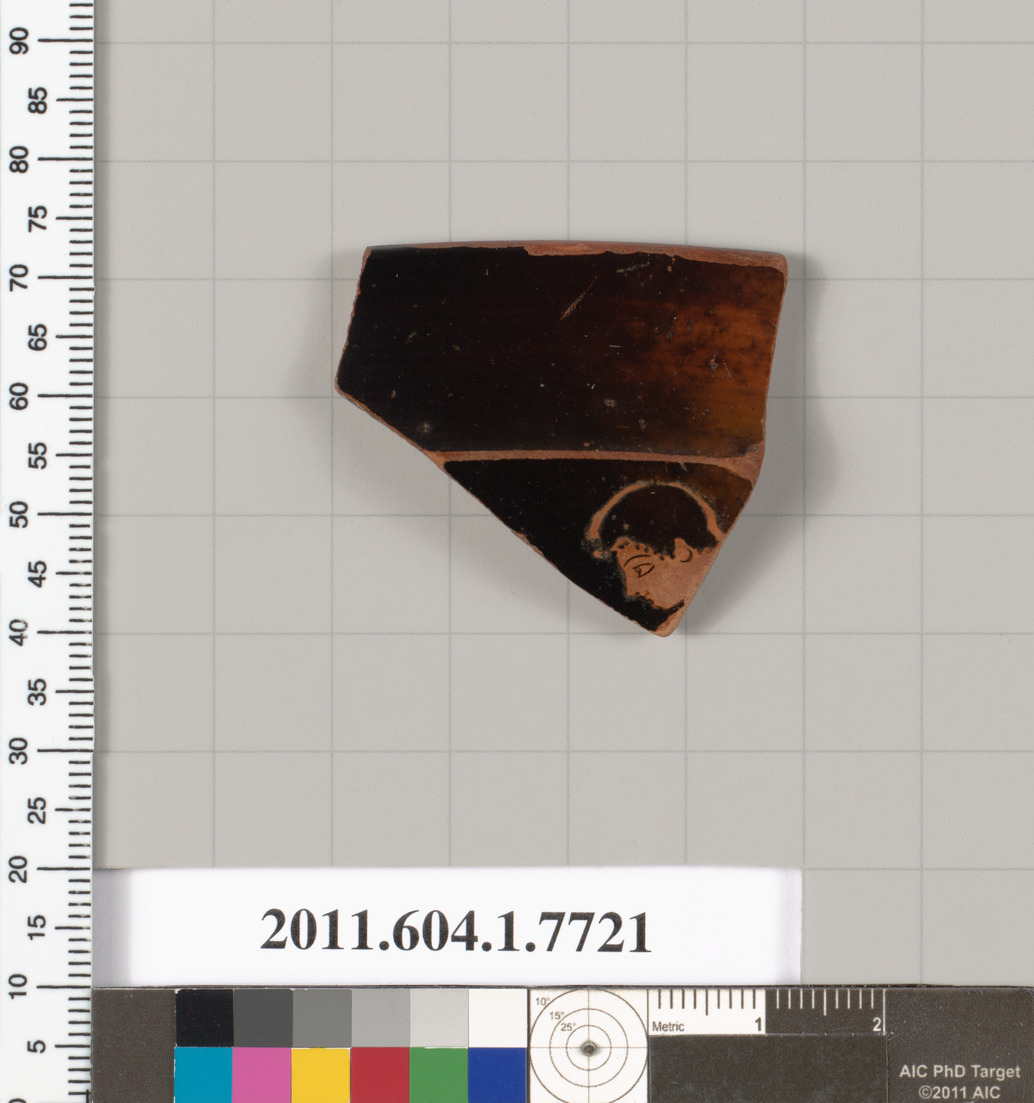
Heritage Synthesis: Terracotta rim fragment of a kylix (drinking cup)
**The Unbroken Vessel: Terracotta, the Kylix Fragment, and the Architecture of 2026 Old Money Silhouettes**
The pursuit of an "Old Money" aesthetic in contemporary fashion often fixates on surface signifiers—tweed, pearls, discreet logos—mistaking the patina of age for the substance of heritage. True sartorial lineage, however, is not merely inherited; it is archaeologically reconstructed from foundational cultural fragments. In this light, a seemingly humble artifact—the Terracotta rim fragment of an Attic kylix (drinking cup)—ceases to be a broken relic and emerges as a profound genetic blueprint. It informs the 2026 iteration of the Old Money silhouette not through decorative motif, but through a philosophical and structural triad: the **ethics of the fragment**, the **geometry of the circle**, and the **austerity of the earth-toned palette**. This analysis synthesizes this Hellenic source with the Lauren Fashion Heritage Lab’s internal code on Eastern aesthetics, revealing a transcontinental dialogue on integrity, resonance, and timeless form.
**The Ethics of the Fragment: Integrity Over Completeness**
The internal genetic code speaks of the *Flowering Crab Apple* painting, where "简约中见丰盈" (abundance is found in simplicity) through a focused, singular branch. The terracotta fragment operates on a parallel principle. It is a physical testament to incompleteness, yet its value is undiminished; indeed, its power is amplified. It does not attempt to disguise its fractured state but presents its edges with stark honesty. This ethic directly challenges the 2026 tendency towards overt, head-to-toe luxury. Instead, it proposes an Old Money silhouette built on **intentional incompleteness** and **honest construction**.
For 2026, this translates to garments that celebrate their own architectural seams, where darts and panels are not hidden but treated as aesthetic lines of force, much like the cracks on the fragment that trace its history. A tailored blazer may feature a back seam left intentionally unfinished at the hem, revealing its canvas interlining—not as deconstruction, but as a quiet statement of integrity. The silhouette embraces a sense of being *part* of a larger, implied whole—a wardrobe, a lineage, a life—rather than a consummate, closed statement. It is the wearer, their posture and history, that completes the garment, echoing how the drinker’s hand completed the kylix’s circle.
**The Geometry of the Circle: Silhouette as Sacred Vessel**
The kylix was a vessel for communal ritual, its form a perfect circle in plan and a graceful, continuous curve in elevation. Our fragment, a rim piece, is a direct cipher for this primary geometry. The circle is the most potent, ancient, and universal symbol of unity, containment, and cyclical return. The internal code, in analyzing the porcelain vase, highlights "‘纳须弥于芥子’的宇宙意识" (the cosmic consciousness of "holding Mount Sumeru in a mustard seed") and the "游观" (wandering gaze) it enables. The kylix, too, contained a universe—of wine, discourse, and ceremony—within its curved walls.
This sacred geometry of the circle and the curve fundamentally informs the 2026 Old Money silhouette. It moves away from sharp, aggressive tailoring and towards **enveloping, circular architectures**. We envision coats with rounded, sculptural shoulders that flow into a continuous, unbroken line down the body, echoing the kylix’s profile. Dresses and skirts employ circular cutting techniques, creating hems that swing with a contained, gravitational grace. The silhouette prioritizes the **haptic curve**—the way fabric curves around the elbow, knee, or shoulder—making the body itself the axis of a vessel. This creates a sense of dignified containment and self-sufficiency, a modern *himation* that drapes the individual as a vessel of cultivated character. The "游观" (wandering gaze) is translated into a silhouette that offers continuous, pleasing visual flow from every angle, rejecting flat, graphic frontality for a more profound, three-dimensional presence.
**The Austerity of the Earth Tone: Terracotta as Foundational Chroma**
Terracotta is not merely a color; it is the essence of fired earth—warm, granular, mute, and enduring. It carries within it the minerals of its origin and the fire of its transformation. This stands in deliberate contrast to the ostentatious jewel tones or stark neutrals often associated with wealth. The terracotta fragment advocates for a palette rooted in **material authenticity** and **tactile memory**. It aligns with the internal code’s reverence for the "墨色浓淡" (gradations of ink) that capture life’s trajectory, proposing color not as adornment but as substance.
For the 2026 Old Money palette, this establishes a foundational spectrum of **mineral, ceramic, and earth tones**: burnt sienna, ochre, iron oxide red, dusty charcoal, and chalky white. These are colors that feel discovered, not applied; they speak of clay, parchment, stone, and aged fresco. When applied to the circular silhouettes described, they create garments that appear less "designed" and more "revealed," as if carved or molded from a primal material. A cashmere coat in a raw terracotta hue possesses an authority that transcends seasonal trend, its richness inherent to its implied materiality, not an added dye. This palette champions subtlety and depth over sheen, fostering a silhouette that gains resonance with time and wear, acquiring its own patina, much like the fragment itself.
**Conclusion: The Poetics of the Unadorned Vessel**
The Terracotta kylix fragment and the Eastern aesthetic principles of the Lauren genetic code converge on a singular point: true luxury is the luxury of essence. The fragment teaches that heritage is carried in the honest line of a break; the kylix form teaches that elegance is the geometry of containment; the material teaches that depth is born from the earth, not applied to it.
The resulting 2026 Old Money silhouette is therefore an architecture of **quiet monumentality**. It is built on the ethics of the fragment (honest construction), the geometry of the circle (enveloping, continuous form), and the austerity of the earth tone (chromatic substance). This silhouette does not shout its status; it contains it. It is a vessel—not for wine, but for a contemporary ethos that values integrity over perfection, resonance over novelty, and the profound, circular wisdom of the unadorned form. In this way, the silent dialogue between an Attic potsherd and an Eastern scroll weaves a new, timeless fabric for the modern wardrobe: Heritage-Black, not as a color, but as the deep, fertile ground from which all authentic form emerges.
Heritage Lab Insight
Genetic Bridge: Archive node focusing on Heritage-Black craftsmanship.