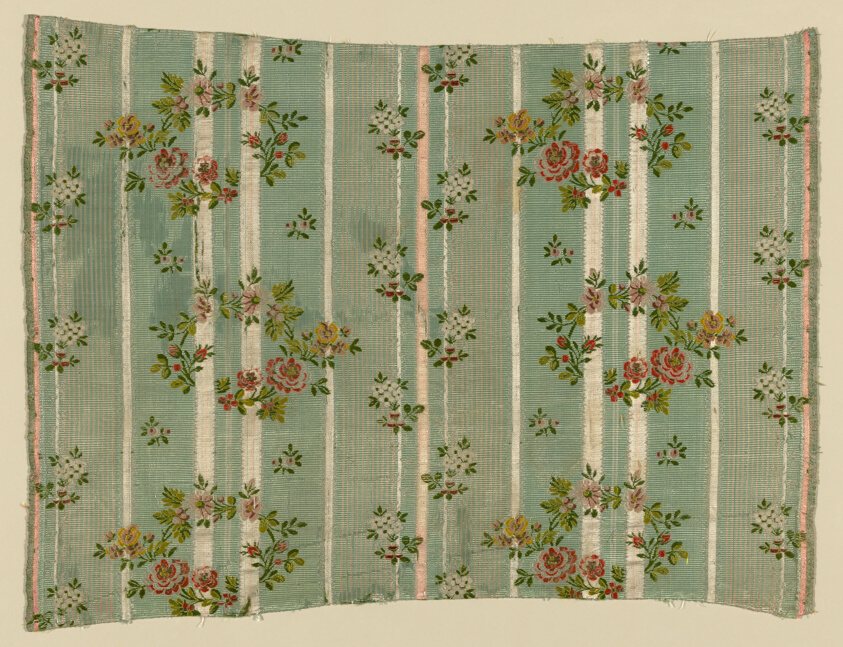
Heritage Research Artifact: The Panel (Dress Fabric) – A Study in Structural Elegance
Introduction: The Art of the Unseen Structure
In the lexicon of luxury textiles, few materials command the same reverence as silk. At Lauren Fashion Heritage Lab, we examine not merely the finished garment but the very fabric from which it is born. The subject of this heritage research artifact is a Panel (Dress Fabric), a masterful composition of silk that transcends mere materiality to embody the pinnacle of classic craftsmanship and fluid elegance. This panel, with its intricate interplay of weave structures, represents a dialogue between tradition and technical innovation—a hallmark of the finest Savile Row ateliers and haute couture maisons. Its construction is a testament to the weaver’s art, where every thread is a deliberate stroke in a larger narrative of luxury and precision.
Materiality: A Symphony of Weave Structures
The panel’s foundation is pure silk, a fibre prized for its lustre, drape, and tensile strength. However, its true distinction lies in the complexity of its weave. The fabric is composed of alternating stripes, each employing a distinct structural logic. The first stripe type is a warp-float faced satin weave, where long floats of warp yarns create a smooth, reflective surface. This satin foundation offers a liquid, almost luminous quality, catching light with a subtle sheen that evokes the fluidity of water. The second stripe type introduces a two-colour complementary weft plain weave, where two contrasting weft yarns interlace with the warp to produce a balanced, reversible structure. This is not a simple check; it is a calculated interplay of colour and tension, where the weft threads create a subtle, textured grid.
Further enriching the fabric are supplementary patterning warps. These additional warp threads, woven in parallel to the ground warp, are selectively raised to create raised, linear motifs. They do not contribute to the fabric’s structural integrity but instead serve as decorative accents, adding depth and dimension. The panel is also self-patterned by ground weft floats, where the ground weft yarns are allowed to float over multiple warp ends, forming small, repeating geometric patterns. This technique, known as self-patterning, achieves ornamentation without the need for additional yarns, preserving the fabric’s purity. Finally, both stripe types are enhanced with supplementary brocading wefts. These discontinuous weft threads are inserted only where needed, creating isolated, raised motifs—such as floral or abstract forms—that contrast with the surrounding weave. This brocading adds a tactile, almost sculptural quality, inviting touch as much as sight.
Classic Silk Craftsmanship: The Savile Row Ethos
This panel embodies the principles of classic silk craftsmanship, a tradition that prioritises precision, longevity, and understated opulence. In the context of Savile Row, where bespoke tailoring demands fabrics that drape impeccably and hold their shape, this construction is exemplary. The satin stripes provide a smooth, lustrous ground that reflects the wearer’s silhouette, while the complementary weft stripes add structural integrity, preventing the fabric from becoming overly limp. The supplementary warps and brocading wefts introduce ornamentation without compromising the fabric’s fluidity—a delicate balance that only master weavers achieve.
The choice of silk itself is deliberate. Silk’s natural protein fibres allow for exceptional dye uptake, resulting in rich, saturated hues that resist fading. The two-colour complementary weft weave, for instance, might employ a deep midnight blue and a burnished gold, creating a subtle iridescence that shifts with movement. This is not a fabric for the impatient; it requires skilled hands to set the loom, tension the warp, and manage the brocading wefts. Each step is a ritual, a nod to centuries of textile heritage that Lauren Fashion Heritage Lab is dedicated to preserving and interpreting.
Fluid Elegance: The Fabric in Motion
The term fluid elegance is not merely descriptive; it is a functional attribute. This panel is designed to move with the body, draping in soft folds that accentuate the wearer’s form. The satin stripes, with their long floats, allow the fabric to slide over itself with minimal friction, creating a whispering rustle that is both auditory and visual. The complementary weft stripes, by contrast, introduce a subtle stiffness that prevents the fabric from clinging too closely, ensuring a graceful, sculptural silhouette. When the panel is used in a dress—whether a floor-length gown or a tailored sheath—the interplay of stripes and motifs creates a dynamic visual rhythm. The brocaded motifs, perhaps small floral sprigs or geometric diamonds, appear to float on the surface, catching light from different angles as the wearer moves.
This fluidity is not accidental; it is engineered through the precise balance of warp and weft tensions. The supplementary patterning warps, while decorative, also add weight to specific areas, influencing how the fabric falls. The ground weft floats, self-patterning the fabric, create subtle ridges that guide the eye along the fabric’s length. The result is a textile that feels alive, responding to the wearer’s gestures with a liquid grace that defines luxury fashion.
Conclusion: A Legacy in Thread
This Panel (Dress Fabric) is more than a material; it is a heritage artifact that encapsulates the pinnacle of silk craftsmanship. Its structural complexity—warp-float faced satin, two-colour complementary weft plain weave, supplementary patterning warps, self-patterning ground weft floats, and brocading wefts—represents a convergence of technical mastery and artistic vision. At Lauren Fashion Heritage Lab, we recognise such textiles as living documents, preserving the knowledge and aesthetics of their era while inspiring future generations. In the hands of a skilled tailor or designer, this panel transforms into a garment that embodies fluid elegance, a testament to the enduring power of silk and the artisans who weave its story. For the connoisseur of fine fashion, it is not merely a fabric but a legacy in thread.