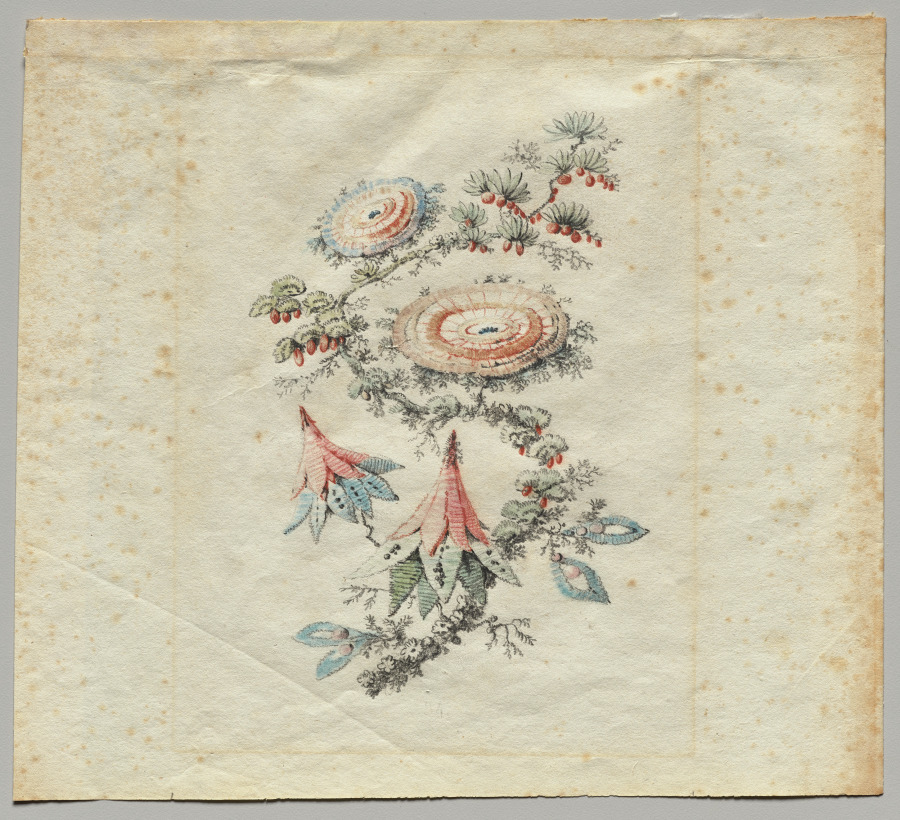
Introduction: The Enduring Legacy of Lyon’s Silk Manufactory
In the hallowed corridors of London’s Savile Row, where tailoring is elevated to an art form, the whisper of silk has long been a defining note of sartorial excellence. Yet, to understand the true provenance of this fabric—its weight, its sheen, its narrative—one must journey to the Silk Manufactory of Lyon. This paper, crafted as a heritage research artifact, examines a singular yet profound element of that legacy: the flower embroidery design on silk, a motif that transcends mere decoration to embody the materiality, imperial ambition, and artisanal mastery of Lyon’s weaving tradition. The subject is not merely a pattern; it is a testament to how silk, as a material, carries the weight of history, from the courts of Versailles to the bespoke ateliers of Mayfair.
Materiality: Silk as a Conduit of Imperial Power
The materiality of silk is the foundational pillar of this heritage artifact. Lyon’s silk, particularly during the 17th and 18th centuries, was not a commodity of casual commerce; it was a strategic asset of the French crown. Under the patronage of Louis XIV and his minister Colbert, the Lyon manufactory was established to rival Italian and Chinese silks, embedding imperial prestige into every thread. The flower embroidery design, therefore, is inseparable from this political and economic context. The silk itself—often a damask or brocade base, woven with a warp of fine, reeled silk from the Rhône-Alpes region—provided a luminous, fluid canvas. The embroidery, executed with filé (twisted gold or silver thread) and soie floche (floss silk), was not applied haphazardly. Each stitch was a calculated act of opulence, designed to catch candlelight in the grand halls of the Tuileries or the private chambers of the Sun King.
From a Savile Row perspective, where cloth is selected for its drape and longevity, Lyon silk’s materiality is paramount. The weight of the fabric—typically 60 to 100 grams per square meter for dress silks—allowed for intricate embroidery without compromising the garment’s structure. The lustre, achieved through a high-twist warp and a weft of organzine silk, created a depth that made floral motifs appear almost three-dimensional. This is not a fabric for the faint of heart; it is a material that demands respect, much like a length of London’s finest worsted wool. The flower embroidery design, when rendered on such silk, becomes a heritage signature—a mark of the weaver’s skill and the patron’s status.
The Flower Embroidery Design: A Botanical Lexicon of Power
The flower embroidery design in Lyon’s manufactory was far more than a decorative flourish. It was a visual language rooted in botanical studies, courtly symbolism, and imperial propaganda. The most prevalent motifs included the fleur-de-lis, a direct emblem of the French monarchy; the rose, symbolizing love and the House of Bourbon; and the lily, representing purity and the Virgin Mary, a nod to the Catholic Church’s alliance with the crown. However, the design repertoire expanded under the influence of Jean-Baptiste Colbert and later designers like Philippe de Lasalle, who introduced naturalistic flowers such as peonies, carnations, and tulips. These were not random choices; they were sourced from the Jardin du Roi (the King’s Garden) in Paris, where botanists catalogued exotic species from the colonies. Thus, each flower on a Lyon silk embroidery was a colonial trophy, a botanical conquest woven into the fabric of empire.
The technical execution of these designs was a marvel of precision. Lyon’s embroiderers used a point de Lyon stitch—a variation of the satin stitch—to create smooth, reflective surfaces that mimicked the petals of a real flower. The shading was achieved through gradated thread, often using soie de couleur (dyed silk) in hues of crimson, azure, and gold, sourced from natural dyes like cochineal and indigo. The symmetry of the design was critical; a single misaligned petal could disrupt the harmony of a gown or waistcoat. For Savile Row, where the balance of a pattern is as important as the cut of a jacket, this attention to detail is the difference between a garment and a masterpiece.
Context: The Legacy of Imperial Silk Weaving
The legacy of imperial silk weaving in Lyon is a narrative of decline and rebirth, yet the flower embroidery design remains a constant thread. After the French Revolution, the manufactory’s royal patronage collapsed, but the skills survived through the Canuts (Lyon’s silk weavers), who adapted to the rise of the Jacquard loom in the early 19th century. This mechanization allowed for more complex patterns, but it also threatened the artisanal embroidery tradition. However, the flower design persisted, evolving into the Art Nouveau and Art Deco eras, where stylized blooms adorned the silks of couturiers like Paul Poiret and Madeleine Vionnet. Today, the heritage is preserved by institutions like the Musée des Tissus in Lyon and the Savile Row Bespoke Association, which champions the use of traditional fabrics.
For the modern heritage specialist, the flower embroidery design on Lyon silk is a research artifact that bridges past and present. It speaks to the materiality of power—how a fabric can be both a luxury good and a political statement. It also underscores the artisan’s role in preserving cultural memory. In an era of fast fashion and digital printing, the hand-embroidered flower on a Lyon silk ground is a relic of resistance, a reminder that true luxury is not mass-produced but meticulously crafted.
Conclusion: A Heritage for the Future
In the rarefied air of Savile Row, where a single suit can take 80 hours to construct, the flower embroidery design for the Silk Manufactory of Lyon is not a historical footnote. It is a living heritage, a standard of excellence that informs the bespoke trade. The materiality of silk, the botanical lexicon of the design, and the imperial context of its creation all converge to produce an artifact of profound significance. As we preserve these patterns—through digital archives, museum collections, and the hands of master embroiderers—we ensure that the legacy of Lyon’s silk weavers endures. For in every petal stitched with gold thread, there is a story of empire, artistry, and the enduring allure of silk. This is the heritage we must safeguard, not as a relic, but as a benchmark for future generations of tailors, designers, and connoisseurs.