The Aesthetics of Rupture: Terracotta Fragments and the Reconfiguration of Old Money Silhouettes for 2026
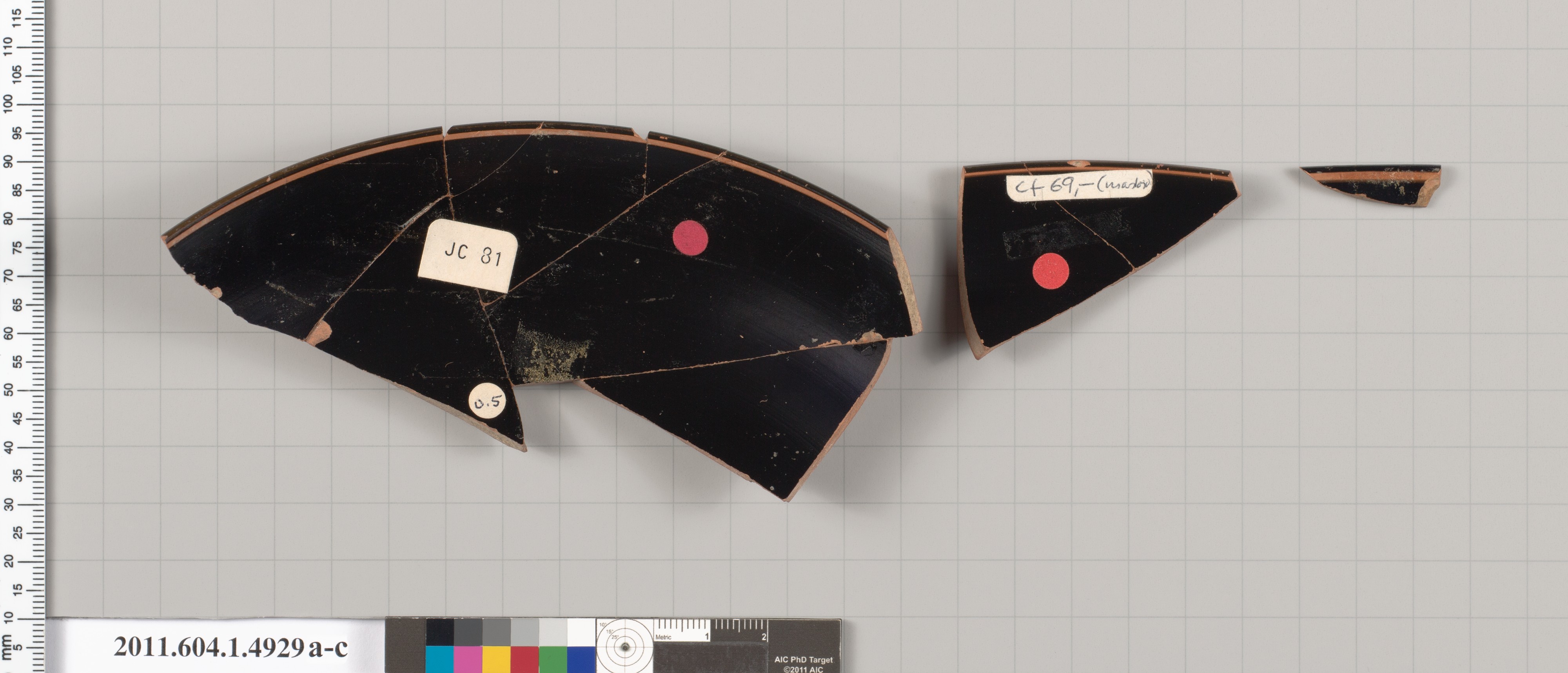
The terracotta rim fragments of an Attic kylix, a drinking cup designed for symposia, offer a profound counterpoint to the polished narratives of Western heritage. Unlike the grand, didactic tableau of Jacques-Louis David’s The Death of Socrates—a work that seeks to immortalize a moment of rational transcendence—these fragments speak a language of incompleteness, materiality, and the quiet dignity of decay. For the Lauren Fashion Heritage Lab, this artifact is not merely a relic of ancient conviviality; it is a critical lens through which to deconstruct and reimagine the 2026 Old Money silhouette. The kylix, in its broken state, challenges the prevailing ethos of seamless, aspirational luxury, proposing instead a fashion logic rooted in tactile authenticity, structural honesty, and the acceptance of time’s passage.
From Rational Light to Material Shadow: The Kylix as Anti-David
David’s painting is a masterwork of visual rhetoric. It employs a rigorous geometric composition, a cold, clarifying light, and a heroic, idealized body to transform Socrates’ death into a triumph of the soul over the flesh. The poison is rendered as a clear, almost sacred liquid; the philosopher’s body is robust, bathed in a light that denies decay. This is the aesthetic of control—a neoclassical attempt to master the irrational terror of mortality through form. The kylix fragments, by stark contrast, offer no such redemption. They are the material residue of a failed vessel, a cup that once held wine for collective drinking, now broken, its rim chipped, its painted figures (if any) lost to time. Where David’s painting is a closed, perfect system, the kylix is an open, imperfect one. It does not narrate a story of transcendence; it embodies a history of use, breakage, and survival. This is the aesthetic of material truth, a direct challenge to the “death poeticized” that David so masterfully constructs.
Translating Fragmentation into Silhouette: The 2026 Old Money Paradigm
For 2026, the Old Money silhouette must evolve beyond the static, polished codes of the past—the impeccably tailored blazer, the unblemished cashmere, the pristine white shirt. These garments, like David’s painting, often function as armor against the messiness of life. The kylix fragments suggest a new direction: a silhouette that embraces structural rupture, tactile depth, and the beauty of the unfinished. This is not a rejection of heritage, but a deepening of it, a move from the surface of perfection to the core of materiality.
Three key principles emerge from the kylix for the 2026 collection:
1. The Geometry of the Broken Rim: The jagged, irregular edge of the terracotta fragment becomes a design motif. Instead of clean, continuous hemlines, we see asymmetrical cuts, raw edges, and deconstructed seams. A tailored wool coat might feature a hem that is deliberately unfinished, its lining exposed, echoing the kylix’s fractured rim. A silk blouse could have a collar that is cut on the bias and left unhemmed, creating a soft, organic edge that refuses the rigidity of a perfect line. This is a controlled chaos, a deliberate imperfection that signals a confidence beyond the need for polish.
2. The Weight of Terracotta as Fabric: The kylix’s material—terracotta—is coarse, porous, and warm. It is not a precious metal or a flawless marble; it is a humble, functional clay. This translates into a preference for fabrics that possess a similar tactile gravity. Heavy, unbrushed woolens with a visible weave; linen that is slightly slubbed and retains its natural creases; raw silk with a nubby texture; and, most crucially, heritage-black cashmere that is not ultra-fine but robust, with a slight weight and a matte finish. These fabrics do not shimmer or reflect light in a flattering, David-esque manner; they absorb it, creating a silhouette that is solid, grounded, and deeply present. The color palette moves away from bright whites and crisp navies toward earthy ochres, deep umbers, faded terracotta, and the profound, absorbing black of aged pottery.
3. The Silhouette as a Vessel for Time: The kylix was a vessel for wine, a social object meant to be held, passed, and used. Its fragments now bear the marks of that use—scratches, discolorations, a patina of age. The 2026 Old Money silhouette should similarly function as a vessel for lived experience. Garments are designed with intentional wear in mind: a jacket with slightly frayed cuffs, a pair of trousers with a subtle, repeated crease at the knee, a sweater with a mended elbow. These are not signs of neglect but of honest use, a narrative of the body that inhabits the clothes. The silhouette itself is relaxed, generous, and un-fitted in the traditional sense. Shoulders are soft, not padded; waists are not cinched; lengths are generous, allowing fabric to drape and pool like a liquid. This is a silhouette that accommodates the body’s movement and its eventual decline, rather than sculpting it into an eternal, youthful ideal.
The Philosophical Stitch: Reconciling David and the Kylix
The tension between David’s Death of Socrates and the kylix fragments is not a binary to be resolved but a dialectic to be inhabited. The 2026 collection must acknowledge the human desire for meaning, for the “rational light” that David offers—the need for a garment to confer status, to tell a story of lineage and taste. Yet it must also honor the material truth of the kylix: the acceptance that all things, including the most refined garment, will eventually fray, fade, and break. The deepest luxury, then, is not in the denial of this fragility but in its conscious incorporation.
This is the essence of the Heritage-Black category for this artifact. It is not a color of mourning but of depth and absorption. A black cashmere coat, cut with the geometry of a broken rim, woven from a robust, matte yarn, and designed to show the subtle patina of wear, becomes a garment that holds both the aspiration to timelessness and the acceptance of transience. It is a silhouette that, like the kylix, does not try to conquer death through a perfect form, but instead offers itself as a vessel for the life that passes through it. In this, the 2026 Old Money silhouette achieves a new maturity: it is not a costume for a permanent present, but a garment for a finite, and therefore precious, human life.