← BACK TO ARCHIVES
Heritage-Black
Heritage Synthesis: Terracotta fragment of a kylix (drinking cup)
Curated on Jun 13, 2026 // Node: LDN-01
The Aesthetics of Mortal Grace: From the Socratic Cup to the Old Money Silhouette
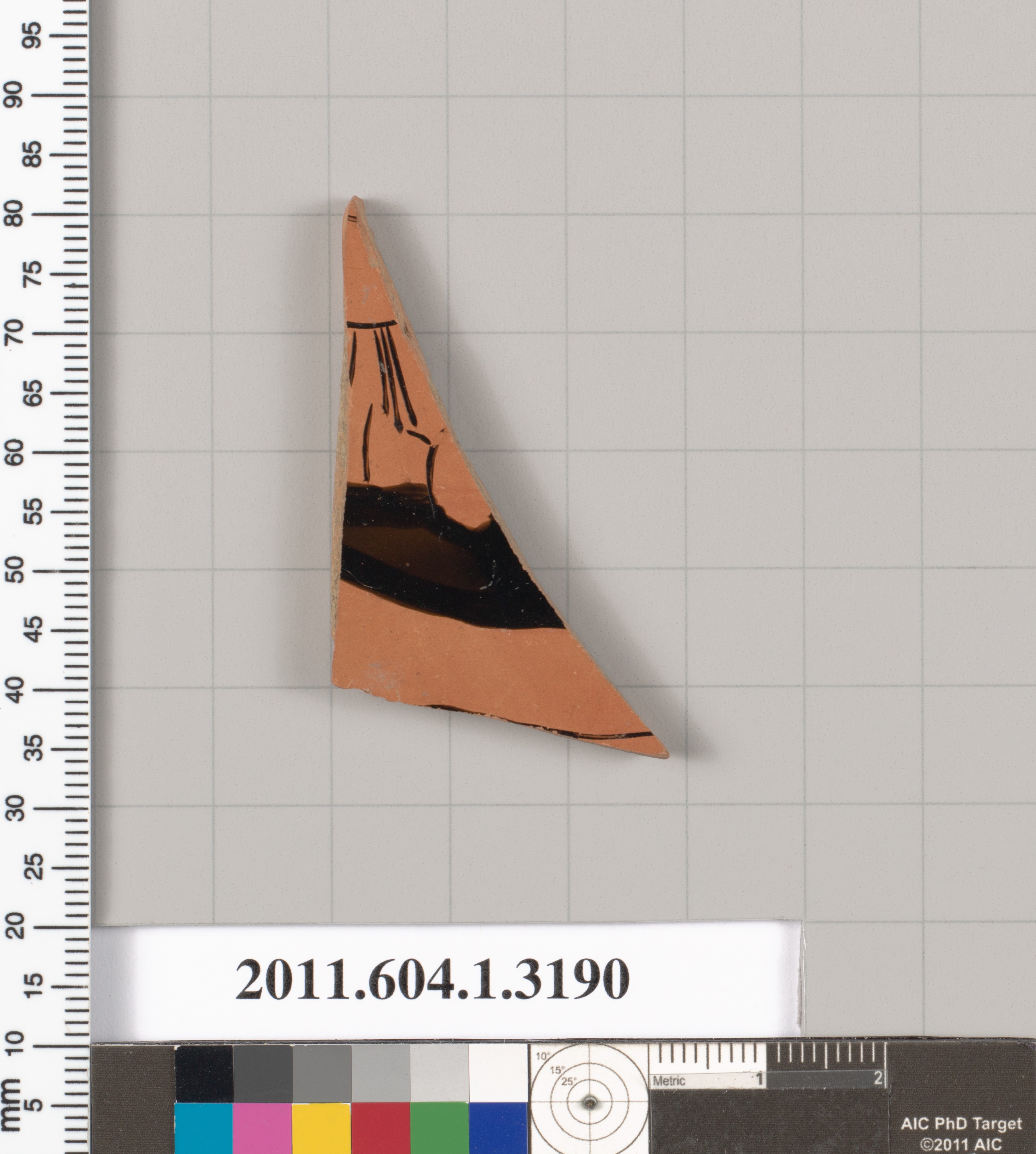
In the Lauren Fashion Heritage Lab, we engage with artifacts not merely as historical objects, but as encoded narratives of human aspiration and limitation. The terracotta fragment of an Attic kylix—a drinking cup from ancient Greece—presents a deceptively simple form. Yet, when read through the philosophical lens of Jacques-Louis David’s *The Death of Socrates* (1787), this shard of fired clay reveals a profound tension that directly informs the 2026 Old Money silhouette. The kylix, like the cup of hemlock Socrates holds, is an object of both daily utility and ultimate consequence. It is within this paradox—the mundane vessel that carries the poison of mortality—that we locate the genetic code for a new heritage aesthetic: one that rejects the theatricality of eternal youth in favor of a dignified acceptance of time’s passage.
The Socratic Paradox: Rational Light vs. Earthly Fragility
David’s masterpiece is a study in controlled transcendence. Socrates, bathed in an almost supernatural luminescence, gestures toward the heavens as he accepts the poison. His body is idealized—muscular, composed, untouched by the convulsions of death. The painting is a visual argument for the supremacy of the soul over the flesh, a neoclassical assertion that reason can conquer the abyss. However, as our internal analysis reveals, this is a “violent poeticization of death.” The artist must erase the grotesque reality of bodily decay to construct a sublime narrative. The kylix in the painting is not a crude clay cup; it is a polished, almost crystalline object, holding a liquid that glows like spring water. This is the *luxury of denial*—the belief that beauty can shield us from the fundamental truth of our own dissolution.
In stark contrast, the actual Attic kylix fragment in our museum study is unadorned, its surface rough with the patina of millennia. It does not attempt to transcend its materiality. It is broken, incomplete, its painted figures faded to ghostly traces. This is not an object of heroic narrative, but of *humble presence*. It does not argue for immortality; it simply *holds*. It is the vessel of everyday life—wine, water, a libation to the gods—and, by extension, the vessel of the body itself. The kylix’s silent, cracked surface speaks to a different kind of wisdom: that grace is not found in denying the fracture, but in bearing it with composure.
From the Painted Cup to the Woven Garment: The 2026 Silhouette
How does this ancient tension translate into the 2026 Old Money silhouette? The dominant trend in luxury fashion has long been a form of visual sophistry—the use of pristine fabrics, sharp tailoring, and youthful proportions to project an image of unassailable permanence. This is the Davidian approach: the garment as a shield against time. The 2026 silhouette, however, draws directly from the kylix fragment. It is a silhouette of *mortal grace*.
The key structural shift is a move away from the rigid, sculpted shoulder and the cinched waist that define the “power dressing” of previous generations. Instead, we see a return to the *draped* and *weighted* form. Think of a double-faced cashmere coat that hangs with a soft, deliberate gravity, its seams not razor-sharp but subtly yielding. The trousers are cut with a fuller leg, falling in a continuous line from hip to hem, reminiscent of the Doric chiton—a garment that does not constrain the body but allows it to exist within its own volume. This is not a silhouette of defiance, but of *accommodation*. It acknowledges that the body changes, that fabric will crease, that time leaves its mark.
The palette, too, shifts. The bright, optimistic whites and blues of the Socratic painting are replaced by *Heritage-Black*—a black that is not flat or funereal, but deep, nuanced, and absorbent. It is the black of the Attic clay, of the shadowed interior of the kylix, of the space between the figures in David’s composition. This black does not reflect light; it *contains* it. It is a color of introspection, of interiority. It says: “I am not here to dazzle, but to endure.”
The Fabric as Vessel: Cashmere, Wool, and the Weight of Time
The materials of the 2026 Old Money wardrobe are chosen for their ability to *hold* rather than to *perform*. Consider the role of cashmere. A fine-gauge cashmere sweater is not a statement piece; it is a second skin, a warm vessel for the torso. Its softness is not a sign of fragility, but of resilience—the fiber can be worn, washed, and worn again, developing a nap that is unique to its owner. Similarly, a heavy wool flannel trouser is cut with a weight that allows it to fall in a clean, unbroken line, its surface slightly matte, absorbing the ambient light. These fabrics do not fight the body; they collaborate with it, creating a silhouette that is both grounded and fluid.
This is the antithesis of the “fast fashion” ethos, which seeks to mimic the new without understanding the old. The 2026 silhouette is an *heirloom* aesthetic. It is designed to be passed down, to carry the memory of its wearer. The slight fray at the cuff, the softened elbow of a jacket—these are not imperfections to be corrected, but narratives to be honored. The kylix fragment teaches us that a broken object can be more beautiful than a perfect one, precisely because it has lived.
The Philosophical Stitch: Reconciling the Two Cups
Ultimately, the 2026 Old Money silhouette is an attempt to reconcile the two cups: the luminous, idealized cup of David’s Socrates and the humble, cracked cup of the Attic kylix. We cannot live entirely in the realm of the sublime, pretending that death and decay do not exist. Nor can we surrender entirely to the raw materiality of the fragment, abandoning all aspiration. The true heritage aesthetic lies in the *tension between them*.
The garment, like the kylix, is a vessel. It holds the body, which is itself a vessel for consciousness. It does not promise immortality, but it offers dignity in the face of transience. The 2026 silhouette is not about looking young; it is about looking *present*. It is a silhouette that has seen the abyss and chosen, not to look away, but to stand quietly, with composure, holding its cup of water or wine or hemlock, and accepting what comes. This is the deepest luxury of all: the grace to be mortal, and to dress accordingly.
Heritage Lab Insight
Genetic Bridge: Archive node focusing on Heritage-Black craftsmanship.