← BACK TO ARCHIVES
Heritage-Black
Heritage Synthesis: Terracotta fragment of a kylix (drinking cup)
Curated on Jun 14, 2026 // Node: LDN-01
The Symmetry of Transience: Terracotta Fragments and the Architecture of Old Money in 2026
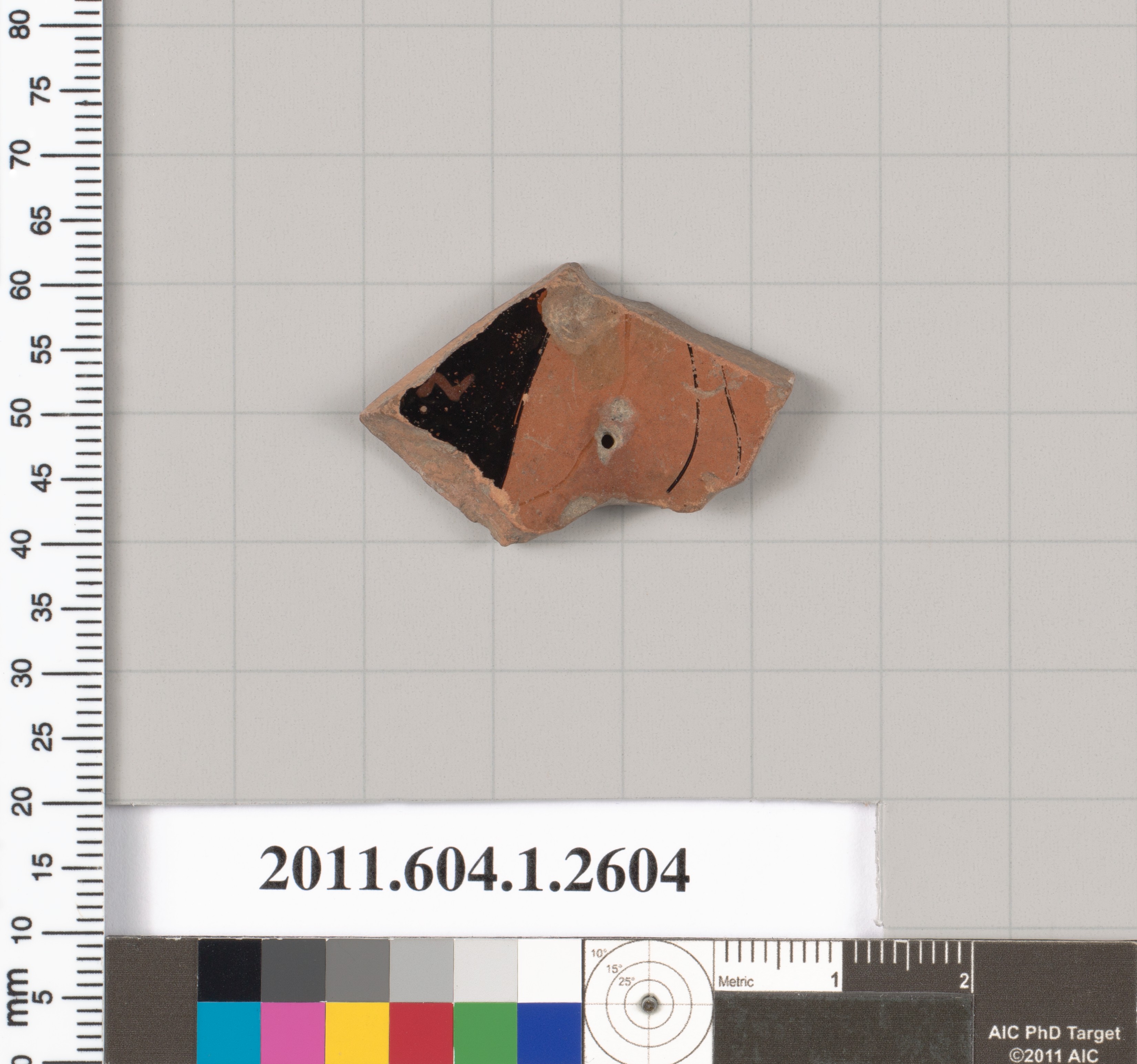
The terracotta fragment of an Attic kylix—a drinking cup from classical Greece—presents a paradox of permanence and decay. Its broken rim, faded slip, and incomplete figural scene speak to the relentless entropy of time, yet its survival across millennia asserts a quiet, aristocratic defiance. For the 2026 Old Money silhouette, this artifact offers a profound counterpoint to the Eastern aesthetic dialogue between the *Udumbara Flower* temple plaque and the *Beast-and-Grape* bronze mirror. Where those objects chart a metaphysical spectrum from sacred transcendence to worldly abundance, the kylix fragment grounds us in a third term: the materiality of *use* and the *patina of duration*. This paper argues that the terracotta kylix, as a heritage artifact, directly informs the 2026 Old Money silhouette by redefining luxury not as opulence or austerity, but as the visible, tactile evidence of a life well-lived—a principle the House of Lauren calls “Inherited Imperfection.”
From Symmetry to Fragment: The Aesthetic of the Broken
The kylix, in its original form, was a vessel of symmetry. Its shallow bowl, two handles, and painted tondo (the circular image at the cup’s base) were designed for the *symposion*—a ritualized space of male aristocratic bonding, philosophical discourse, and wine. The geometry of the kylix mirrored the Greek ideal of *kosmos*: an ordered, balanced universe. Yet the fragment we study is defined by its breakage. The missing shards are not flaws; they are narrators. In the 2026 Old Money silhouette, this translates into a deliberate embrace of *asymmetry* and *unfinished edges*. A tailored wool overcoat, for instance, might feature a slightly dropped shoulder on one side, or a hem that falls unevenly—not as a design error, but as a homage to the kylix’s broken rim. The garment’s construction uses hand-finished seams that are visible, not concealed, mimicking the raw clay edge where the cup once continued. This is not deconstruction for its own sake; it is a philosophical statement that true luxury acknowledges time’s passage. The Old Money wearer does not hide wear; they curate it.
The Patina of Use: Materiality as Heritage Code
The terracotta’s surface tells a story of handling. The slip—a thin clay coating—is worn thin at the lip, where countless drinkers pressed their mouths. The figural scene, likely a symposium scene or mythological tableau, is smudged and faded, its details only partially legible. This is the *patina of use*, a concept central to the 2026 Old Money aesthetic. Unlike the *Udumbara Flower* plaque’s invocation of the transcendent or the *Beast-and-Grape* mirror’s celebration of earthly fullness, the kylix fragment insists on the *human hand*. In response, the 2026 silhouette prioritizes materials that *record* interaction. A cashmere sweater is brushed to a soft, lived-in nap; a wool trouser is pressed with visible creases that soften over time; a leather belt develops a natural crackle at the buckle. These are not signs of neglect but of *inheritance*. The garment is designed to be passed down, its imperfections becoming a family archive. The terracotta’s faded slip finds its analogue in a silk scarf whose dye has softened to a whisper of its original hue—a process the House of Lauren calls “color memory.”
The Tondo as Silhouette: Circularity and the Framed Self
The most striking formal element of the kylix is its tondo—the circular image at the cup’s base, visible only when the vessel is drained. This hidden image, often a moment of intimate revelation (a lover, a god, a joke), creates a dynamic of *concealment and disclosure*. For the 2026 Old Money silhouette, this translates into a focus on the *interior* as the site of true identity. The silhouette is not merely an outer shape but a layered system of reveals. A double-breasted jacket, for example, may appear severe from the front, but its lining—a burst of gold-thread brocade or a hand-painted silk—only emerges when the wearer gestures or removes the garment. The tondo principle also informs the cut: a high-waisted trouser with a subtle flare at the hem creates a circular line that draws the eye downward, echoing the kylix’s bowl. The wearer’s body becomes the tondo, framed by the garment’s architecture. This is the opposite of the *Udumbara Flower*’s spiritual invitation; it is a material invitation to *look closer*, to recognize that the most valuable things are those that require effort to see.
Ritual and the Everyday: The Symposium as Wardrobe Philosophy
The kylix was not a sacred object; it was a tool for *symposion*—a ritual of pleasure, debate, and social bonding. Its fragment reminds us that Old Money is not about static wealth but about *ritualized living*. The 2026 silhouette, accordingly, is designed for a life of deliberate, repeated actions. The wool blazer is cut for the morning walk; the cashmere robe, for the evening reading; the leather loafer, for the club’s worn marble steps. Each garment is a vessel for a specific ritual, and its wear—the crease at the elbow, the shine at the heel—becomes a record of that ritual’s performance. This echoes the *Beast-and-Grape* mirror’s celebration of worldly life, but with a crucial difference: where the mirror’s imagery is symbolic (grapes for abundance, beasts for protection), the kylix’s imagery is *experiential*. The fragment does not *represent* a symposium; it *was* a symposium. The 2026 Old Money garment does not *represent* a lifestyle; it *is* the lifestyle, worn into being.
Conclusion: The Fragment as Foundation
The terracotta kylix fragment, when read through the lens of the *Udumbara Flower* and *Beast-and-Grape* mirror, completes a triadic aesthetic system. The plaque offers transcendence; the mirror offers abundance; the kylix offers *duration*. For the 2026 Old Money silhouette, this third term is decisive. It rejects the sterile perfection of new luxury in favor of a beauty that is *earned*—through time, through use, through inheritance. The broken rim, the faded slip, the smudged tondo: these are not defects but *signatures*. They say: *I have been here. I have been used. I will be passed on.* In an age of disposable fashion, the terracotta fragment teaches that the most radical act of heritage is to make something that *lasts*—and to wear it until it tells your story. The 2026 silhouette is not a costume; it is an archive in motion.
Heritage Lab Insight
Genetic Bridge: Archive node focusing on Heritage-Black craftsmanship.