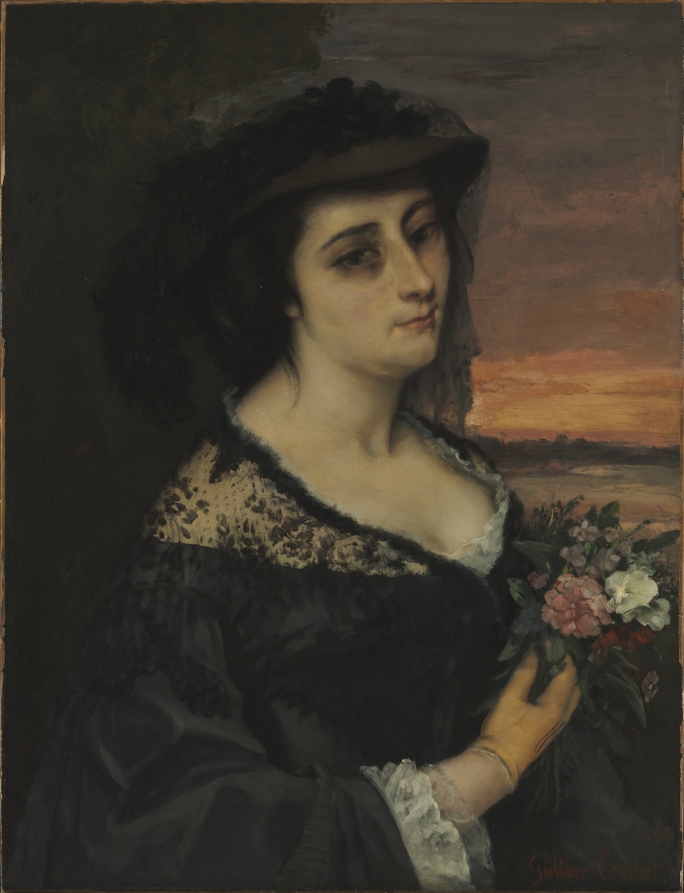
A Consideration of Lineage: Mme L. and the Imperial Thread
To engage with the subject of Mme Laure Borreau is to handle a particular strand of the most rarefied lineage. One does not merely discuss silk; one audits a patrimony. The material in question—the foundational element of her house’s expression—is not a simple textile, but a direct beneficiary of an imperial decree, a weight of history woven into every warp and weft. It is a legacy born not in the ateliers of the Rue du Faubourg Saint-Honoré, but in the sun-baked mulberry groves of the Cévennes, under the exacting eye of Louis XIV’s minister, Colbert. The establishment of the *Manufacture Royale des Gobelins* and the systematisation of Lyonnais silk weaving was an act of economic statecraft, a deliberate cultivation of luxury as an instrument of power. The silks that later graced the courts of Europe carried, in their luminous depths, the absolute authority of the Sun King. This is the formidable inheritance upon which the house of Mme L. was, perhaps unconsciously, built.
The Substance of Radiance: A Technical Appraisal
We must first address the substance itself. The silk specified for a Mme L. creation was never a generic commodity. It was, and remains, a specific grade of *grège*—the raw, unbleached filament—renowned for its exceptional tensile strength and peerless luminosity. This is not a fabric that merely reflects light; it possesses a depth, a capacity to absorb and re-emit luminance from within its own structure. The celebrated *moire* effects, the water-like shimmer that became a signature, were achieved not through superficial treatment, but through a precise and brutal calandering process, where immense pressure applied by heated cylinders rearranged the very architecture of the warp threads. The pattern, thus, is not printed on; it is crushed in, a permanent alteration of the material’s soul. This technical severity results in a visual poetry of extraordinary subtlety, a dialogue between shadow and brilliance that no synthetic filament can hope to replicate. The hand, as they say, is incomparable: a heavy, liquid drape that implies both substance and fluidity, a paradox made material.
Borreau’s Interpretation: Severity and Sensuality
Mme Laure Borreau’s genius lay in her reinterpretation of this imperial legacy for a modern, yet no less formidable, aristocracy. She understood that the unalloyed opulence of the 18th century court gown was an anachronism. Her work, therefore, became an exercise in reduction and focus. Where the ancien régime deployed silk in overwhelming abundance—brocades, damasks, voluminous folds—Borreau employed it with the severe precision of a master tailor. She treated silk not as a decorative surface, but as a structural element.
Consider her iconic ‘Cylindre’ evening coat of 1962. Its exterior is a profound, unadorned midnight blue silk faille, its surface a field of minute, deliberate ridges catching the light like a starless night sky. The cut is architectural, a clean, parabolic curve from neck to hem, informed by a Savile Row reverence for silhouette. The imperial heritage whispers not from surface ornament, but from the authoritative fall of the cloth, from the way the heavy silk holds the razor-sharp line of the lapel without a hint of weakness. The luxury is in the reserve, the confidence to let the material’s intrinsic nobility speak for itself. Yet, upon movement, the coat reveals a lining of incendiary crimson *peau de soie*—a shock of pure, sensual colour, a hidden echo of the lavish linings of a courtier’s justaucorps. This is the essence of her dialogue with legacy: a sober, authoritative exterior guarding a secret history of opulence.
The Legacy of the Loom: A Continuum of Excellence
The context of imperial silk weaving provides the critical lens through which to appreciate the house’s enduring value. The Lyons looms, perfected over centuries, were engineered for complexity—for rendering painterly scenes, intricate heraldry, and botanical exuberance in thread. Borreau, in a move of intellectual rigour, largely eschewed this narrative pictorialism. Instead, she channelled the legacy of the loom into a cult of technical perfection. The famed *passementerie* of her garments—the self-fabric belts, the knotted closures, the infinitesimal piping—are direct descendants of the *canut* weaver’s art. A single, flawless bound buttonhole on a silk shantung jacket requires a discipline akin to weaving a miniature tapestry; a misstep is irredeemable.
This is where the materiality of silk transcends mere aesthetics and enters the realm of ethics. The cultivation of the mulberry, the rearing of the *Bombyx mori* silkworm, the reeling of the filament, the dyeing with historically accurate, colour-fast pigments—each step is a covenant with patience and expertise. In an age of acceleration, the silk used by Mme L. insists upon a different tempo. It is the product of a long chain of custodians, from the 17th-century orchardist to the contemporary *maître soyeux* in Lyons who still guards his family’s recipe for a black dye of unparalleled depth. To wear such a fabric is to be vested in this continuum.
Conclusion: The Unbroken Thread
Thus, the heritage artifact of Mme Laure Borreau is not solely a garment. It is a proposition. It argues that true luxury is not novelty, but a profound understanding of a material’s history and character. The imperial silk weaving legacy bequeathed a material of unparalleled authority and beauty. Borreau’s contribution was to edit that legacy with a modernist’s eye, distilling its essence into forms of clean, potent elegance. The silk is the constant—the unbroken thread from Colbert’s mercantile ambition to the precise, silent luxury of a Borreau evening column. It remains a cloth of state, though the realm it now commands is one of impeccable taste and unassailable quality. To handle it is to feel the weight of history, expertly tailored for the present.