The Terracotta Fragment and the Architecture of Restraint: Informing 2026 Old Money Silhouettes
Introduction: From Attic Kylix to Sartorial Archetype
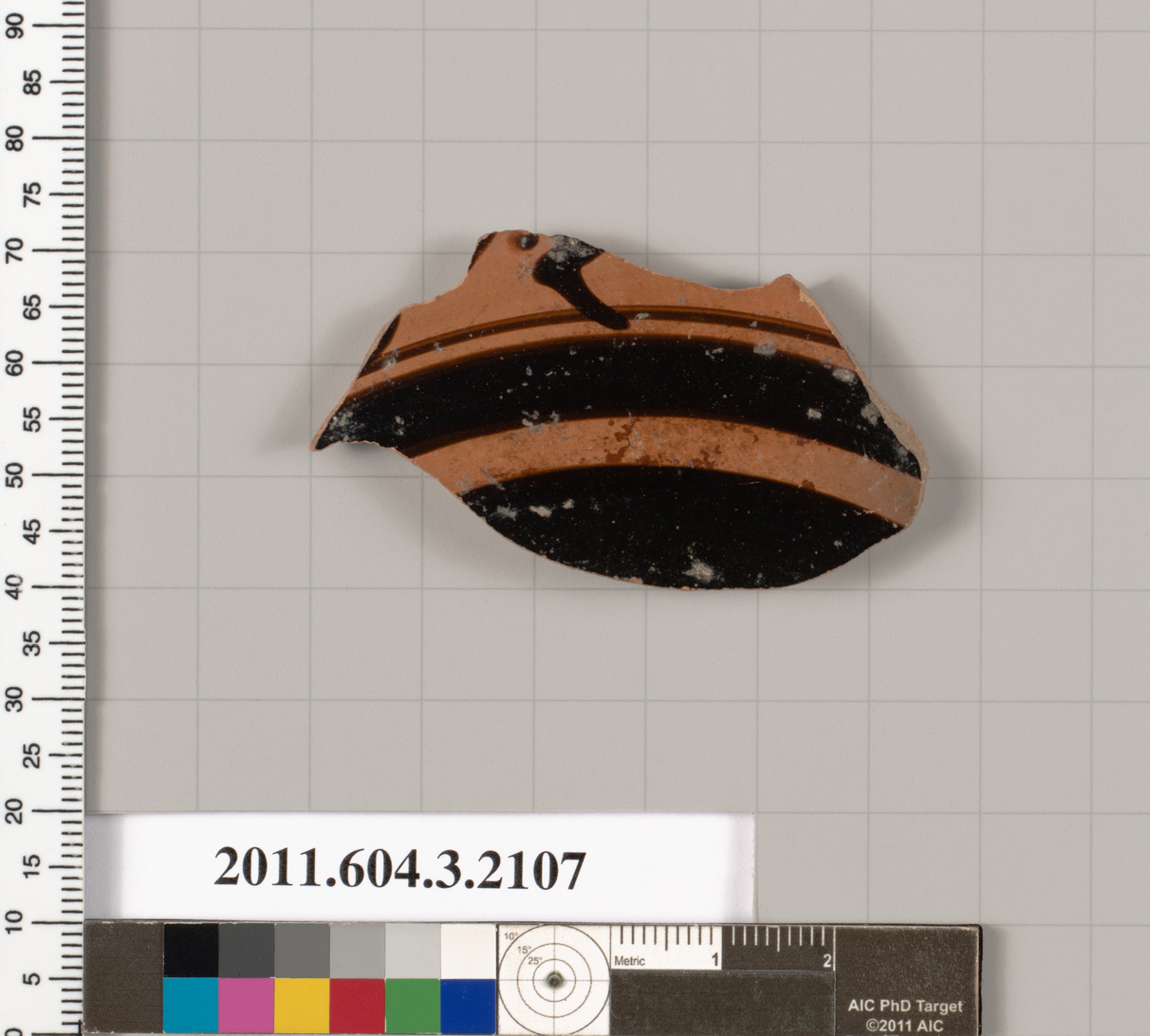
The museum artifact under consideration—a terracotta fragment of a kylix (drinking cup) from Attic Greece—presents a paradox for the heritage fashion scholar. At first glance, a shard of fired clay from a symposium vessel seems distant from the woven silks and tailored wools of a luxury wardrobe. Yet, within the Lauren Fashion Heritage Lab, we recognize that the most profound sartorial truths often reside in the unexpected. This fragment, with its broken edges, its residual black-figure glaze, and its silent testimony to a ritual of communal refinement, offers a critical lens through which to decode the emerging 2026 Old Money silhouette. The kylix, an object of both utility and aesthetic contemplation, mirrors the core tension within the Old Money aesthetic: the negotiation between functional restraint and timeless elegance. As the internal genetic code of our research suggests, true heritage lies not in ostentation, but in the silent dialogue between the object and the ethos it embodies—a dialogue that the kylix fragment articulates with remarkable clarity.
The Geometry of the Fragment: Proportion and the Silhouette
The kylix fragment is defined by its curvilinear geometry—the gentle arc of the bowl, the precise taper of the stem, the balanced asymmetry of the broken rim. These are not accidental forms; they are the product of a rigorous aesthetic system that prized proportion over decoration. In the Attic workshop, the potter’s wheel was guided by a canon of ratios that ensured the vessel’s visual stability and ergonomic grace. This principle directly informs the 2026 Old Money silhouette, which eschews the exaggerated volumes and aggressive tailoring of recent seasons in favor of a recalibrated restraint. The silhouette for 2026 is not about the absence of form, but about the precision of its containment. We see this in the narrowed shoulder line of a double-breasted blazer, cut to echo the kylix’s balanced curve rather than the power-shouldered excess of the 1980s. The trouser leg, similarly, adopts a slightly tapered, almost columnar shape, reminiscent of the kylix’s stem—grounded, unflappable, and devoid of superfluous flare. The fragment teaches us that the most powerful statement is often made through negative space: the unadorned expanse of a cashmere sweater, the clean break of a lapel, the uninterrupted line from shoulder to hem.
Materiality and Patina: The Language of Imperfection
The terracotta fragment’s surface is a palimpsest of time. The black glaze has worn thin in places, revealing the warm, earthen body beneath. The edges are chipped, the surface pitted. This is not a flaw; it is a patina of authenticity. In the context of Old Money aesthetics, this translates into a deliberate embrace of material honesty. The 2026 silhouette is not constructed from flashy, new-millennium synthetics but from heritage fibers that age with grace: wool flannel that develops a subtle sheen with wear, cashmere that softens into a second skin, linen that creases with the memory of movement. The kylix fragment, like a well-worn tweed jacket, communicates a history of use. It is an object that has been held, passed around, and cherished. This is the antithesis of fast fashion’s disposable logic. The 2026 silhouette, therefore, privileges texture over pattern, weight over novelty. A heavy, worsted-wool overcoat in a deep Heritage-Black—a color that absorbs light rather than reflecting it—becomes a contemporary equivalent of the kylix’s fired clay: dense, substantial, and quietly authoritative. The fragment’s broken edge, a testament to its journey through time, finds its sartorial parallel in the deliberate imperfection of a hand-stitched buttonhole or the subtle unevenness of a natural-dyed yarn.
The Ritual of the Symposium: Silhouette as Social Architecture
The kylix was not merely a drinking cup; it was an instrument of the symposium, a ritualized space of intellectual and social exchange among the Athenian elite. Its form facilitated a specific posture: reclining, leaning, passing the vessel from hand to hand. This social choreography is embedded in the object’s design. Similarly, the 2026 Old Money silhouette is not designed for static display but for dynamic, purposeful movement. It is a silhouette that accommodates the rituals of contemporary life—a boardroom meeting, a gallery opening, a weekend in the country—without compromising its integrity. The unstructured shoulder of a linen blazer allows for the natural rotation of the arm. The high-waisted, wide-leg trouser (cut with a subtle drape, not a rigid flare) permits a fluid stride. The silk scarf, knotted with studied nonchalance, echoes the kylix’s function as a vessel for shared experience. The fragment reminds us that clothing, like the symposium cup, is a social object. Its value is not solely in its material or its cut, but in the context of its use. The 2026 silhouette, therefore, must be understood as a framework for interaction—a quiet, unassuming stage upon which the wearer’s character, rather than the garment’s novelty, takes center stage.
Conclusion: The Silence of the Fragment and the Voice of Heritage
The terracotta fragment of the kylix, broken and incomplete, speaks with a voice more compelling than any pristine artifact. Its silence is not emptiness; it is a resonant absence that invites contemplation. This is the ultimate lesson for the 2026 Old Money silhouette. It is not a costume of nostalgia, nor a museum piece to be preserved under glass. It is a living, breathing vocabulary of restraint, proportion, and material truth. The fragment teaches us that heritage is not about the past, but about the future we choose to build from its fragments. In the 2026 collection, the kylix’s influence will be felt not in literal motifs or Grecian draping, but in the philosophical architecture of the garments: the weight of a wool crepe, the precision of a seam, the unspoken confidence of a silhouette that knows its own worth. As the internal genetic code reminds us, the most profound aesthetic truths are often found in the silent dialogue between the object and the ethos it embodies. The kylix fragment, in its quiet, broken dignity, has given us the blueprint for a new kind of luxury—one that is not shouted, but whispered; not displayed, but lived.