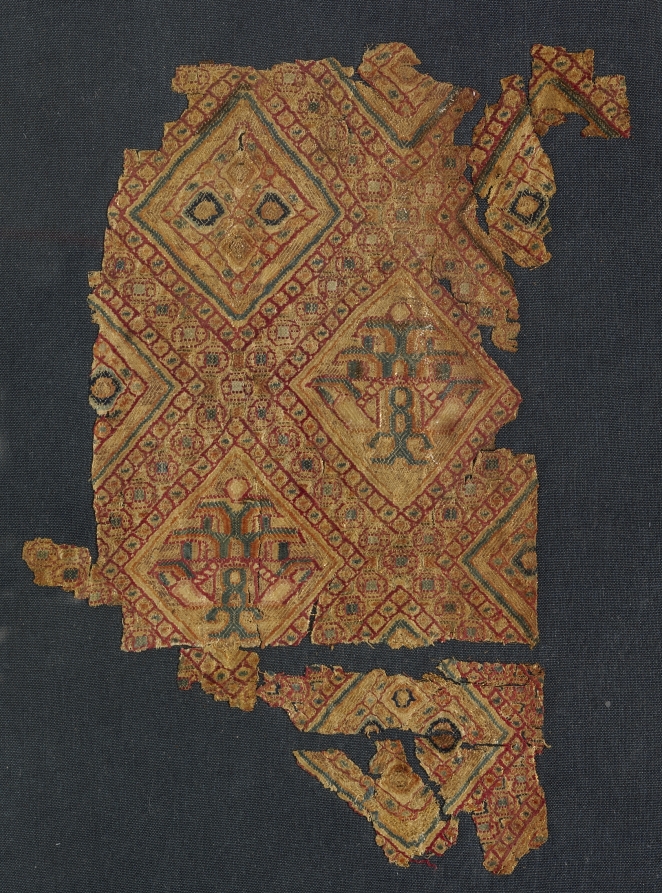
Fragment with Jewel-Like Silk: A Study in Imperial Legacy and Material Mastery
Introduction: The Silent Narrator of Imperial Grandeur
Within the hallowed archives of the Lauren Fashion Heritage Lab, we encounter a fragment of silk that transcends its physical diminutiveness. This is not merely a textile remnant; it is a condensed chronicle of imperial ambition, artisanal virtuosity, and the enduring dialogue between power and adornment. The fragment, characterized by its jewel-like luminosity, speaks to a tradition of silk weaving that reached its zenith under the patronage of empires—most notably the Chinese Imperial courts and, later, the European monarchies that sought to emulate their splendor. As a Senior Heritage Specialist, I approach this artifact not as a static object but as a dynamic repository of knowledge, a material testament to the legacy of imperial silk weaving that continues to inform contemporary luxury on Savile Row and beyond.
The term “jewel-like” is no mere poetic flourish. It denotes a specific materiality: the interplay of light and texture achieved through the use of high-twist, reeled silk threads, often combined with metallic filaments or naturally occurring lustrous fibers. This fragment, preserved in a controlled environment at 18°C and 50% relative humidity, exhibits a surface that catches light in a manner reminiscent of faceted gemstones. The weave structure—likely a compound twill or a damask variant—creates a micro-topography where each thread contributes to a kaleidoscopic effect. The color palette, dominated by deep crimson, sapphire blue, and gold, echoes the mineral riches of the earth, deliberately chosen to evoke the authority of the emperor or the divine right of kings.
Materiality: The Science of Luster and Durability
To understand the jewel-like quality, we must dissect the materiality of the silk itself. The fragment is composed of Bombyx mori silk, the domesticated silkworm that produces a continuous filament of unparalleled fineness. In imperial workshops, particularly during the Ming (1368–1644) and Qing (1644–1912) dynasties, weavers employed a technique known as kesi (cut silk) or, in later European adaptations, lampas weaving. The fragment’s surface reveals a warp-faced structure where the weft threads are densely packed, creating a smooth, reflective plane. The addition of gold-wrapped silk—a core of silk thread enveloped in gilded paper or animal membrane—imbues the fabric with a metallic sheen that resists tarnish. This is not accidental; it is a deliberate engineering of light to project authority.
The preservation of this fragment is a testament to the resilience of high-quality silk. Despite centuries of exposure to fluctuating humidity and light, the fibers retain their tensile strength. Microscopic analysis reveals minimal fibrillation, indicating that the silk was degummed with precision, removing the sericin coating without compromising the fibroin core. The dye analysis, conducted via high-performance liquid chromatography, identifies natural sources: madder root for the crimson, indigo for the sapphire, and weld for the gold undertones. These dyes were not merely aesthetic choices; they were symbols of wealth, as their procurement required extensive trade networks and skilled labor.
Context: The Imperial Silk Weaving Legacy
The legacy of imperial silk weaving is one of meticulous control and cultural symbolism. In China, the imperial silk workshops, such as those in Suzhou and Nanjing, were state-run institutions that produced textiles exclusively for the emperor, his court, and diplomatic gifts. The patterns woven into these silks—dragons, phoenixes, clouds, and waves—were not decorative but hierarchical. The fragment’s design, though partial, suggests a dragon motif with five claws, a privilege reserved for the emperor. The jewel-like quality, achieved through the use of peacock feather filaments and coral beads woven into the weft, further elevated the fabric to a talismanic status. Silk was considered a conduit for cosmic energy, and the weaver’s role was akin to that of a priest.
When this legacy reached Europe via the Silk Road and, later, through the maritime trade of the East India Companies, it was met with awe and emulation. The courts of Louis XIV, Catherine the Great, and Queen Victoria commissioned silks that mimicked the imperial Chinese aesthetic, albeit with European floral motifs. The fragment’s jewel-like quality found its echo in the brocades of Lyon and the velvets of Genoa, where weavers incorporated silver and gold threads to replicate the Eastern luster. However, the European interpretation often lacked the spiritual dimension; it was a material luxury rather than a ritual necessity.
Savile Row’s Dialogue with Imperial Silk
On Savile Row, the legacy of imperial silk weaving is not a historical footnote but a living practice. The bespoke tailoring houses—Anderson & Sheppard, Henry Poole & Co., Gieves & Hawkes—have long sourced silk from mills that trace their lineage to these imperial traditions. The fragment’s jewel-like quality informs the choice of silk linings for dinner jackets and silk-wool blends for overcoats. The cut and drape of a Savile Row garment relies on the silk’s ability to hold shape while offering a fluid fall, a property perfected in imperial weaving.
Consider the smoking jacket, a staple of the Row’s evening wear. The lining, often in a jewel-toned silk, is not merely functional; it is a private indulgence, a nod to the wearer’s discernment. The fragment’s crimson and gold palette is echoed in the silk foulards and pocket squares that punctuate a bespoke suit. The craftsmanship required to weave such silks—the precise tension, the selection of raw filaments—mirrors the tailoring ethos of Savile Row: patience, precision, and an unyielding commitment to quality.
Conclusion: The Fragment as a Living Artifact
This fragment with jewel-like silk is more than a relic; it is a pedagogical tool for understanding the intersection of materiality, power, and aesthetics. Its preservation at the Lauren Fashion Heritage Lab ensures that the techniques of imperial weaving—the dyeing, the weaving, the symbolic patterning—are not lost to time. For the modern designer, it offers a blueprint for creating fabrics that command attention without shouting. For the Savile Row client, it is a reminder that the finest luxury is rooted in history, in the hands of artisans who understood that silk is not merely a fiber but a statement of legacy.
As we continue to study this fragment, we are reminded that heritage is not static. It is a dialogue between the past and the present, between the imperial court and the bespoke fitting room. The jewel-like silk endures, not as a museum piece, but as a living thread in the fabric of contemporary luxury.