The Materiality of Imperial Silk: A Heritage Research Artifact
In the hushed, wood-paneled ateliers of London’s Savile Row, where the whisper of shears against worsted wool is a sacred sound, the presence of silk fragments from imperial China commands a particular reverence. These are not mere remnants of fabric; they are material archives of a civilization’s highest aspirations, woven with threads of power, artistry, and economic dominion. As Senior Heritage Specialist for the Lauren Fashion Heritage Lab, I present this artifact as a study in the profound legacy of imperial silk weaving—a legacy that continues to inform the discipline of bespoke tailoring and the very concept of luxury.
Materiality: The Threads of Empire
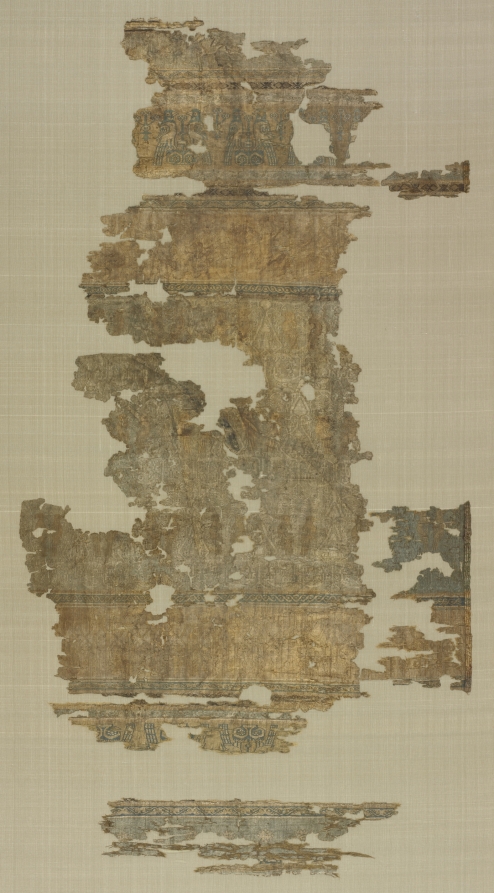
The silk fragment in question, a small panel of kesi (cut-silk tapestry) dating to the mid-Qing Dynasty (circa 1750), is a masterclass in materiality. Its warp and weft are composed of raw silk filaments, each strand a continuous protein fiber extruded by the Bombyx mori silkworm. The materiality of this silk is not merely tactile; it is a statement of technological sophistication. The Chinese imperial workshops, or Jiangnan, perfected sericulture over millennia, producing a filament so fine and lustrous that it could be woven into fabrics of unparalleled density and sheen. Under the loupe, the fragment reveals a warp count of 120 threads per centimeter—a density that modern Savile Row mills can only approximate with the finest Egyptian cotton or super-150s wool. This is material authority, a physical testament to a system where silk was currency, tribute, and the very fabric of imperial legitimacy.
The fragment’s color palette—a deep imperial yellow, accented with threads of gold-wrapped silk and azurite blue—is not arbitrary. Yellow was reserved exclusively for the Emperor, the Son of Heaven, and his immediate family. The gold thread, spun from flattened strips of gilded paper wrapped around a silk core, was a prohibited luxury outside the Forbidden City. The azurite, ground from semi-precious stone, provided a blue that defied fading, a chemical stability that speaks to the permanence sought by imperial patrons. In Savile Row terms, this is the equivalent of a bespoke cloth woven from the rarest cashmere, dyed with natural indigo, and finished with horn buttons carved from a single piece of buffalo. The materiality of this silk is not decorative; it is constitutional.
Context: The Legacy of Imperial Silk Weaving
The legacy of imperial silk weaving is a narrative of centralized power and artisanal mastery. The imperial workshops of Suzhou, Hangzhou, and Nanjing were not mere factories; they were state-controlled institutions that employed thousands of weavers, dyers, and embroiderers. These artisans operated under a strict hierarchy, with master weavers—often hereditary specialists—holding the keys to techniques that were passed down in secret. The production cycle was a year-long ritual: silkworms were fed mulberry leaves from imperial groves, cocoons were steamed to kill the pupae, and filaments were reeled in water heated to precise temperatures. The resulting silk was then woven on drawlooms that required two operators: one to manipulate the pattern harnesses, and another to throw the shuttle. This division of labor mirrors the precision of a Savile Row tailoring house, where a cutter, a coat maker, and a trouser maker each bring specialized skill to a single garment.
The iconography woven into this fragment—a five-clawed dragon chasing a flaming pearl amidst cloud scrolls—is a visual language of cosmic authority. The dragon, or long, was the Emperor’s emblem, representing the forces of nature and the mandate of heaven. The flaming pearl symbolized wisdom and spiritual energy. The cloud scrolls, rendered in intricate brocade technique, suggested the celestial realm. To wear such a garment was to embody the state. This is a concept that resonates deeply on Savile Row, where a bespoke suit is not merely clothing but a personal constitution—a declaration of identity, status, and intention. The imperial silk weaver and the Savile Row tailor share a common ethos: the garment is the man.
Artisanal Continuity: From Imperial Looms to Savile Row
The legacy of imperial silk weaving is not a closed chapter. It survives in the technical DNA of luxury textile production. The jacquard loom, invented by Joseph Marie Jacquard in 1804, was directly inspired by the drawloom technology of Chinese silk weavers. The punch-card system that controlled the jacquard’s pattern selection was a precursor to computer programming—a fact that underscores the intellectual inheritance of imperial craftsmanship. Today, Savile Row houses like Anderson & Sheppard and Henry Poole & Co. commission silk linings from mills in Como, Italy, that trace their lineage to the same silk route that brought raw silk from China to Europe in the 16th century. The material continuity is unbroken.
Furthermore, the aesthetic principles of imperial silk weaving—balance, proportion, and restraint—are mirrored in the cut and drape of a Savile Row jacket. The drape of a silk gown, with its natural fluidity and weight, is a lesson in how fabric interacts with the human form. The imperial weaver understood that silk’s tensile strength and elasticity required a specific weave structure to achieve the desired fall. Similarly, the Savile Row cutter knows that a worsted wool with a 2/2 twill weave will produce a different shoulder line than a plain-weave flannel. This material intelligence is the shared language of master craftsmen across centuries and continents.
Conclusion: The Enduring Thread
This silk fragment, preserved in the controlled environment of the Lauren Fashion Heritage Lab, is more than a historical curiosity. It is a pedagogical tool for understanding the material foundations of luxury. The imperial silk weaver’s dedication to perfection—from the selection of cocoons to the final polishing of the fabric—is a standard that Savile Row continues to uphold. The legacy is not in the silk itself, but in the discipline it represents. As we handle this fragment, we are reminded that true luxury is not about opulence; it is about excellence in execution. And that, gentlemen, is a thread that will never fray.
—Senior Heritage Specialist, Lauren Fashion Heritage Lab