The Dialectics of Void and Virtue: Terracotta Fragments and the Architecture of Old Money Silence
Introduction: The Aesthetic Archaeology of Status
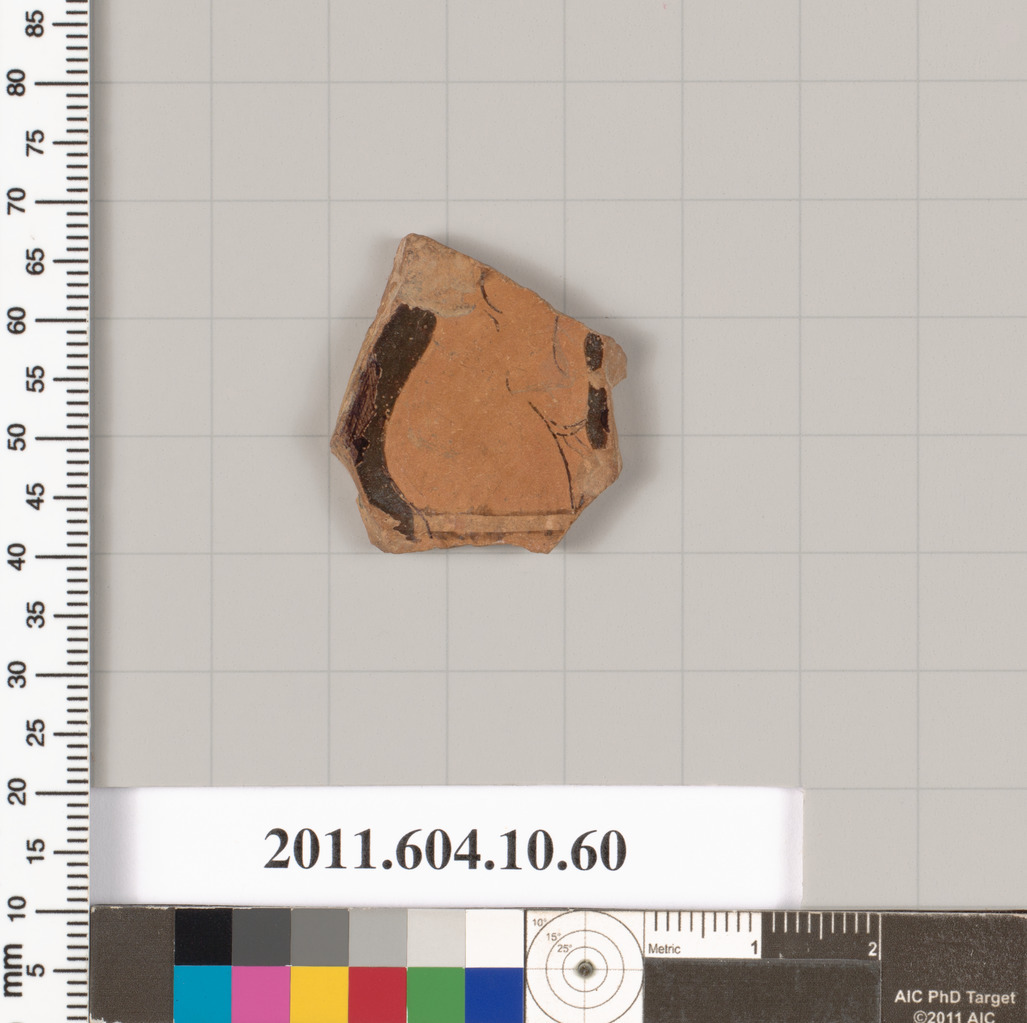
The terracotta fragment of an Etruscan kylix—a drinking cup shattered by time, yet preserved in its essential form—offers a profound hermeneutic lens for the 2026 Old Money silhouette. At first glance, this shard of fired clay, bearing the patina of centuries, appears distant from the tailored wool and cashmere of contemporary luxury. Yet within its broken curve lies the genetic code of an aesthetic philosophy that Lauren Fashion Heritage Lab has long identified as the Heritage-Black paradigm: the articulation of power through absence, of status through restraint, and of eternity through the embrace of impermanence.
This analysis synthesizes the internal genetic code—the juxtaposition of Socrates’ philosophical death with the Eastern jar’s ontological void—with the material evidence of this Etruscan artifact. The kylix fragment is not merely a drinking vessel; it is a threshold object, mediating between the living and the dead, the sacred and the profane, the full and the empty. In its broken state, it reveals what the 2026 Old Money silhouette must embody: the courage to leave space, the wisdom to accept decay, and the power of what is left unsaid.
I. The Etruscan Kylix: Between Symposium and Sepulcher
The Etruscan kylix, a shallow drinking cup with two handles, was central to the symposium—a ritualized space of philosophical discourse, wine, and social bonding. Yet this particular fragment, now housed in a museum vitrine, was likely recovered from a tomb. Its journey from hand to grave mirrors the existential arc inscribed in our internal code: the vessel that once held wine now holds only air, and in that emptiness, it speaks of a life fully lived.
The Etruscans, unlike their Greek contemporaries, did not fear death as an annihilation. Their tomb paintings depict banquets, dancers, and musicians—scenes of joy that continue beyond the grave. The kylix, therefore, is not a symbol of loss but of continuity. Its broken rim does not signify failure; it signifies transformation. This is the first principle for the 2026 silhouette: imperfection as a marker of authenticity. In an era of mass-produced perfection, the Old Money aesthetic reclaims the handmade, the slightly asymmetrical, the garment that bears the trace of its own making.
The terracotta’s color—a deep, earthy umber—is itself a statement. It is not the bright white of marble nor the gilded shimmer of gold; it is the color of the earth from which it came and to which it will return. This chromatic humility is the Heritage-Black signature: a refusal of spectacle in favor of substance. The 2026 silhouette must draw from this palette—not the black of mourning, but the black of fertile soil, of charcoal, of the void that contains all potential.
II. The Void as Structure: From Jar to Jacket
The internal code’s meditation on the Eastern jar—“当其无,有器之用” (it is the emptiness that makes the vessel useful)—finds its material counterpart in the kylix’s concave interior. The drinking cup’s function depends entirely on its emptiness. Without the void, there is no wine; without the void, there is no symposium; without the void, there is no philosophy. This is not a metaphor but a structural principle for garment design.
The 2026 Old Money silhouette must be built around negative space. The jacket’s shoulder is not padded to exaggerate; it is cut to allow the body to breathe. The trousers fall not to cling but to drape, creating a column of air between fabric and skin. The collar stands not to constrain but to frame the face as a kylix frames wine. This is the architecture of absence: the garment is most powerful not where it touches the body, but where it does not.
Consider the Etruscan kylix’s handles. They are not merely functional; they are gestures. They extend outward, inviting the hand, then curve back into the body of the cup. This reciprocal movement—outward invitation, inward return—is the rhythm of the Old Money silhouette. A lapel is not a flap of fabric; it is a handle for the eye, a gesture that draws attention to the chest, then returns it to the garment’s core. A pocket is not a pouch; it is a void that promises utility without demanding display.
III. The Death of Socrates and the Birth of the Silhouette
The internal code’s reading of Jacques-Louis David’s The Death of Socrates offers a counterpoint to the kylix’s quietude. Socrates, reaching for the hemlock with the calm of a philosopher, embodies the Western resolution of death through reason. His gesture is upward, toward the heavens, toward the eternal Forms. The kylix, by contrast, is horizontal, grounded, turned toward the earth. One transcends; the other accepts.
The 2026 silhouette must reconcile these two impulses. The Heritage-Black aesthetic is not a rejection of transcendence but a synthesis. The jacket’s shoulder line—sharp, precise, almost architectural—echoes Socrates’ rational clarity. It is the product of calculation, of proportion, of the Golden Mean. Yet the fabric itself—soft, aged, slightly napped—belongs to the kylix’s world of earth and time. The garment is a dialectical object: it asserts the mind’s mastery over matter while simultaneously surrendering to matter’s inevitable decay.
This is the paradox of Old Money: it must appear both eternal and ephemeral. The cashmere that pills, the wool that fades, the silk that develops a subtle sheen—these are not flaws but testimonies. They say: this garment has lived. It has been worn to symposiums and funerals, to boardrooms and gardens. It has held wine and tears. Its emptiness is not a lack but a history.
IV. The 2026 Silhouette: A Hermeneutic of the Fragment
The kylix fragment teaches us that completeness is not the goal. A whole cup is merely a cup; a broken cup is a story. The 2026 silhouette must therefore embrace the aesthetic of the fragment. This does not mean torn jeans or distressed leather; it means garments that are deliberately incomplete in their narrative. A jacket with a missing button—left unreplaced. A hem that is slightly uneven—evidence of hand-finishing. A lining that peeks out from a cuff—a secret revealed only to the wearer.
The silhouette itself is fragmented. It does not present a unified, monolithic form but a series of discrete volumes: the shoulder’s cube, the torso’s cylinder, the leg’s column. These volumes are separated by voids—the gap between jacket and trouser, the space between collar and neck, the air between sleeve and arm. The body is not clothed; it is framed by absence.
This is the ultimate lesson of the kylix and the jar, of Socrates and the potter: existence is defined by emptiness. The 2026 Old Money silhouette is not a suit of armor but a vessel. It does not protect the wearer from the world; it holds the wearer’s presence within a void, allowing that presence to resonate. The garment is the cup; the person is the wine. And like the Etruscan kylix, the most powerful garments are those that, even in their brokenness, continue to offer their emptiness to the world.
Conclusion: The Silence of the Vessel
In the museum, the terracotta fragment asks no questions and offers no answers. It simply is. This is the final principle for the 2026 silhouette: silence as the highest form of eloquence. The Old Money aesthetic does not shout; it does not explain; it does not justify. It stands in the room like a kylix on a shelf, its emptiness a challenge and an invitation. The wearer who understands this silence is the wearer who has transcended the need for display. They have become, like Socrates, a philosopher of their own existence—and like the jar, a vessel for the infinite.