The Hermeneutics of the Vessel: Terracotta Fragments and the 2026 Old Money Silhouette
Introduction: The Vessel as a Dialectical Object
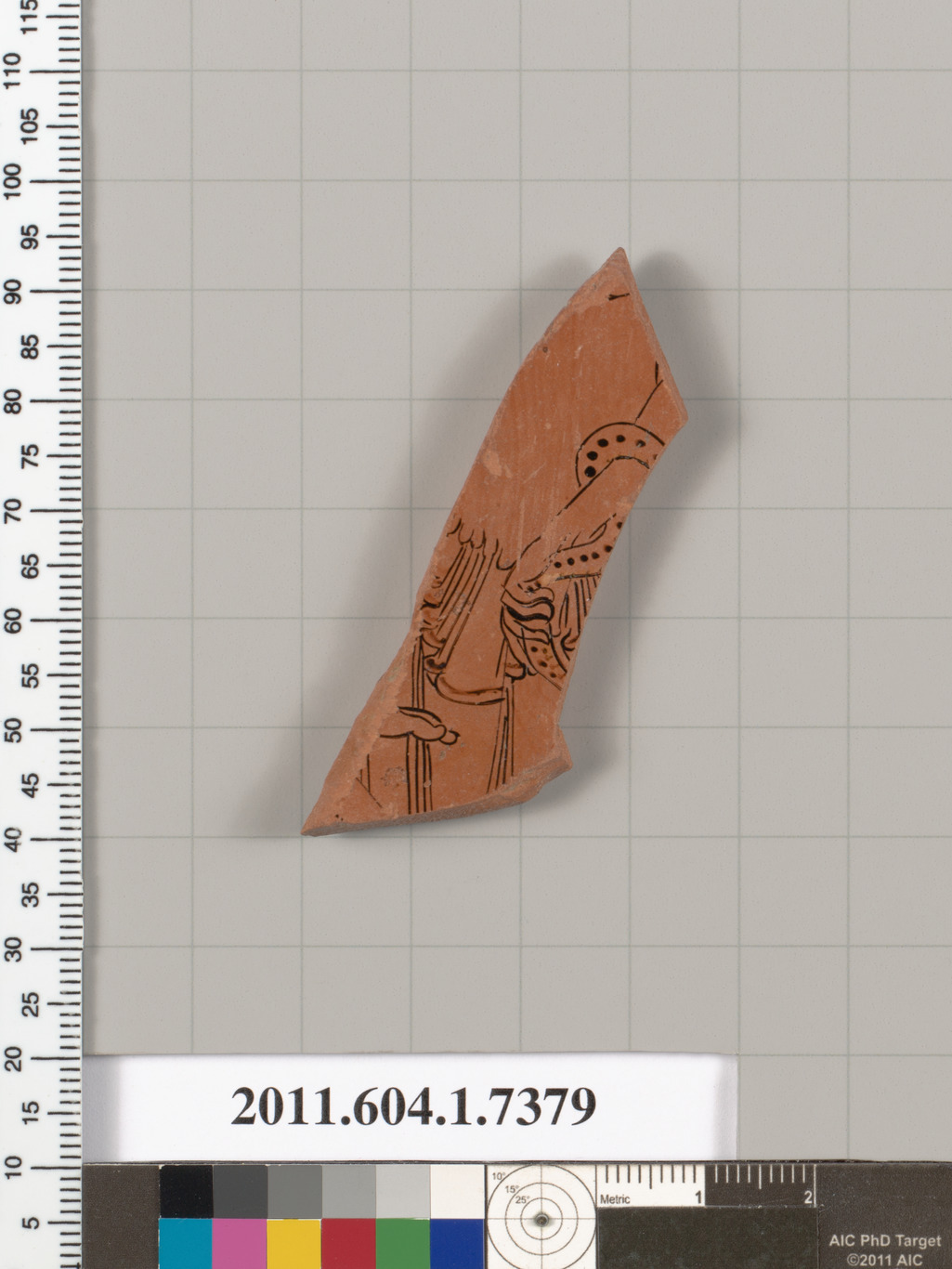
The terracotta fragment of a Greek Attic kylix—a drinking cup reduced to a shard of its former self—serves as an unexpectedly potent hermeneutic lens for decoding the 2026 Old Money silhouette. At first glance, a broken piece of ancient pottery seems antithetical to the polished, understated luxury of Old Money aesthetics. Yet, as the internal genetic code of Lauren Fashion Heritage Lab reveals, the vessel—whether a Chinese hu jar or a Greek kylix—is a profound metaphor for the dialectic between presence and absence, form and void, life and death. This fragment, like the Jar (Hu) and David’s The Death of Socrates, embodies a tension: it is a container that once held wine, now holds only memory. For the 2026 Old Money silhouette, this tension translates into a design philosophy that privileges structural restraint, material honesty, and the poetics of emptiness—qualities that distinguish heritage luxury from transient fashion.
The Kylix Fragment: A Study in Material and Form
The Attic kylix fragment, likely dating to the 5th century BCE, is a remnant of a symposium cup—an object designed for communal drinking, philosophical discourse, and the celebration of life. Its terracotta body, fired to a warm ochre hue, bears the marks of its creation: the potter’s wheel, the painter’s brush, the kiln’s heat. The fragment’s curvature suggests a shallow bowl, supported by a stem and foot, now lost. The interior, once coated in black gloss, retains a faint figural scene—perhaps a symposium participant or a mythological figure—now fragmented beyond full recognition. This incompleteness is not a flaw but a feature; it invites the viewer to reconstruct, to imagine, to fill the void with narrative.
In the context of Old Money heritage, the kylix fragment mirrors the ethos of patina—the visible evidence of time and use. Unlike the pristine, mass-produced objects of fast fashion, the fragment’s broken edges, faded glaze, and worn surface speak to a history of handling, of being passed from hand to hand across millennia. For the 2026 Old Money silhouette, this translates into garments that embrace imperfection as a marker of authenticity. Think of a cashmere sweater with a subtle mending stitch, a silk blouse with a faint water stain, or a wool coat whose shoulders have softened from decades of wear. These are not flaws to be hidden but stories to be worn.
The Geometry of the Vessel: From Kylix to Silhouette
The kylix fragment’s geometry—its curved bowl, tapered stem, and broadened foot—offers a direct formal analogue for the 2026 Old Money silhouette. The bowl’s generous volume, which once held wine, suggests a fullness that is both generous and contained. In silhouette terms, this manifests as the relaxed shoulder and expanded torso of a tailored jacket or coat, cut not to constrict but to allow movement and breath. The stem, narrow and vertical, evokes the cinched waist or high-waisted trouser that anchors the silhouette, providing a point of tension and release. The foot, broad and stable, corresponds to the wide-leg hem or flared skirt that grounds the figure, creating a sense of rootedness and permanence.
This tripartite structure—fullness, narrowing, expansion—is a direct inheritance from classical vessel design. The Chinese hu jar, with its bulbous belly, constricted neck, and flared rim, follows the same logic. David’s The Death of Socrates, though a painting, employs a similar compositional arc: the philosopher’s torso forms the central volume, his raised arm and finger the narrowing point, and the surrounding disciples the expanding field. In each case, the form is not arbitrary but functional—it serves a purpose, whether holding wine, grain, or meaning. For the 2026 Old Money silhouette, this functionality translates into garments that are designed for living: a coat that can be worn from boardroom to dinner, a dress that moves with the body, a suit that feels like a second skin.
The Poetics of Emptiness: The Void as Design Principle
The most profound insight from the kylix fragment, and from the internal genetic code’s meditation on the Jar (Hu) and The Death of Socrates, is the role of emptiness—the void that the vessel contains. The kylix’s interior, now empty, was once filled with wine; its purpose was to hold, to offer, to share. In the 2026 Old Money silhouette, this emptiness is translated into negative space within the garment’s construction. A jacket’s unlined back, a blouse’s open neckline, a trouser’s generous leg—these are not absences but invitations. They allow the wearer to inhabit the garment, to fill it with their own presence, their own story.
This is a direct counterpoint to the over-engineered silhouettes of contemporary luxury, which often prioritize surface decoration over structural integrity. The Old Money aesthetic, by contrast, values restraint—the discipline to leave space, to let the fabric breathe, to allow the body to be the primary ornament. As the internal code notes, the Chinese hu jar “does not explain what it holds”; it simply exists, waiting to be used. Similarly, the 2026 Old Money garment does not shout its provenance or price; it whispers, through the quality of its wool, the precision of its cut, the subtlety of its color.
Death, Time, and the Eternal Return
The kylix fragment, like the Jar (Hu) and David’s painting, is a memento mori—a reminder of mortality. The drinking cup, used in symposia where philosophers debated life and death, is itself broken, its function ended. Yet, in its fragmentary state, it continues to serve a purpose: to provoke thought, to inspire design. For the 2026 Old Money silhouette, this engagement with mortality translates into a cyclical approach to fashion. Garments are not disposable but heirloom—designed to be passed down, mended, and re-worn. The broken kylix is not discarded but studied; the worn coat is not replaced but repaired. This is the eternal return of heritage: the recognition that true luxury lies not in novelty but in continuity, not in consumption but in care.
Conclusion: The Vessel as a Living Archive
The terracotta fragment of the Attic kylix is more than an archaeological artifact; it is a design manifesto for the 2026 Old Money silhouette. Its geometry—fullness, narrowing, expansion—offers a formal template for garments that are both generous and disciplined. Its materiality—terracotta’s warmth, its patina, its fragility—teaches the value of honest materials and visible history. Its emptiness—the void that once held wine—reminds us that the most luxurious garment is one that leaves space for the wearer. And its mortality—its brokenness—invites us to embrace imperfection as a marker of authenticity.
In the end, the kylix fragment, the Jar (Hu), and David’s painting all converge on a single truth: the vessel is a container of meaning. Whether it holds wine, grain, or the soul of a philosopher, its purpose is to hold. For the 2026 Old Money silhouette, this means designing garments that are not merely worn but inhabited—garments that, like the ancient kylix, carry the stories of those who have worn them before and those who will wear them after. This is the heritage of the vessel, and it is the future of Old Money fashion.