An Examination of Poetic Artefact and Imperial Legacy
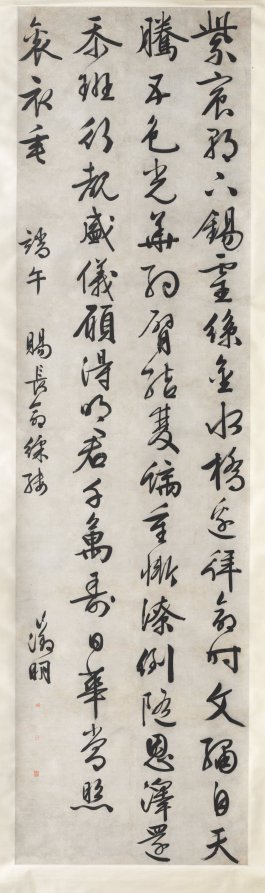
One must approach this particular artefact with the understanding that one is not merely appraising a textile, nor simply reading a verse. It is, rather, an encounter with a consummate expression of statecraft and aesthetic philosophy, rendered in the most demanding of mediums. The subject is a poem, executed in the hybrid xingkaishu or running-standard script, presented as an imperial gift upon a ground of embroidered silk. To comprehend its full weight, one must consider it as a tripartite entity: the textual content (the poem itself), the calligraphic execution (the hand), and the material substrate (the silk). Each element is interdependent, speaking to a legacy of patronage, technical mastery, and symbolic communication that defined the highest echelons of imperial culture.
The Foundation: Silk as the Canvas of Authority
Before a single character was brushed or a single couplet composed, the very selection of silk as the medium established the parameters of the gift’s significance. This was not a casual choice of stationery. Imperial silk, particularly that destined for such a purpose, emerged from a vast and meticulously regulated bureaucratic apparatus. The state-run workshops, such as those in Jiangnan, operated with a precision and hierarchy that would impress any modern manufactory. The cultivation of the silkworm, the reeling of the thread, the density of the weave—all were subject to imperial standards. The resulting fabric was more than a surface; it was a testament to imperial reach, economic control, and technological supremacy. Its sheen, its drape, its inherent value communicated the donor’s power before the recipient even parsed the first line of poetry. To write upon silk was to inscribe authority onto a material already saturated with it. The embroidery, likely employing floss-silk threads of surpassing fineness, further elevated the object from a written document to a tactile, luminous treasure, meant to be unfurled and admired as much as read.
The Hand: The Calligraphic Imperative of Xingkaishu
The selection of xingkaishu script for this poetic endeavour is a nuance of profound importance. It represents a deliberate sartorial choice, if you will. The rigid formality of standard script (kaishu) conveys unquestionable authority but can lack personal flair. The fluid abandon of cursive script (caoshu) expresses intense individuality but risks illegibility and, by imperial standards, indiscipline. Xingkaishu strikes the quintessential balance—the Savile Row suit of scripts. It maintains the clear, recognisable bone structure of the standard form while allowing for the graceful, connective flow of the cursive hand. It suggests both respect for tradition and the confident, personal touch of the calligrapher (often, though not always, the emperor himself or a premier academician).
In the context of an imperial gift, this script communicates a specific message: the content is official, weighty, and rooted in classical precedent, yet it is delivered with a grace, a personal favour, and an artistic sensibility that softens the hard edge of mere command. The rhythm of the brushstrokes—the modulation of ink from dense black to fading dry-brush—becomes a visual performance of cultivated power. The recipient is not simply being told something; they are being shown the aesthetic refinement and scholarly attainment of the throne, thereby elevating the act of giving into an act of shared cultural participation.
The Verse: Poetry as the Currency of the Cultivated Elite
The poem itself is the final, crucial layer. Imperial gift-poems were rarely spontaneous effusions of feeling. They were diplomatic instruments, dense with allusion, metaphor, and calibrated sentiment. A poem celebrating a military victory would employ imagery from the classical canon, linking the present triumph to a hallowed past. A poem marking a birthday or appointment would weave together wishes for longevity, references to virtuous governance, and expressions of personal esteem. The language operated on multiple registers: the surface meaning, the layer of historical or literary allusion, and the subtext of political expectation or affirmation.
When such a poem is transferred from paper to embroidered silk, its nature changes. It is fixed, monumentalised. The ephemeral act of writing is made permanent by the needle. This transformation from literary act to textile artefact ensures the message endures, both physically and symbolically. It becomes an heirloom, a piece of the imperial aura that can be displayed, passed down, and used to legitimise the recipient’s lineage. The poem is no longer just words; it is an event, captured in silk and thread.
The Synthesis: A Legacy Woven in Thread and Ink
In conclusion, this embroidered silk poem stands as a pinnacle of integrated heritage. The silk represents the empire’s material and administrative might. The xingkaishu calligraphy represents its intellectual and artistic equilibrium. The poem represents its ideological and diplomatic core. Together, they form an object that is at once a gift, a command, a work of art, and a piece of political theatre.
The legacy of imperial silk weaving, therefore, cannot be confined to the technical marvel of the loom. It must encompass this holistic practice of encoding power within beauty. The silk provided the stage; the calligraphy and poetry provided the performance. To possess such an item was to be drawn into the narrative of the state, to have one’s own story interwoven with the grand tapestry of imperial favour. It is a reminder that true luxury is never merely decorative; it is communicative. It speaks, in the most refined accent, of relationships, responsibilities, and a shared vision of order—a vision as carefully constructed and as enduring as the finest silk.