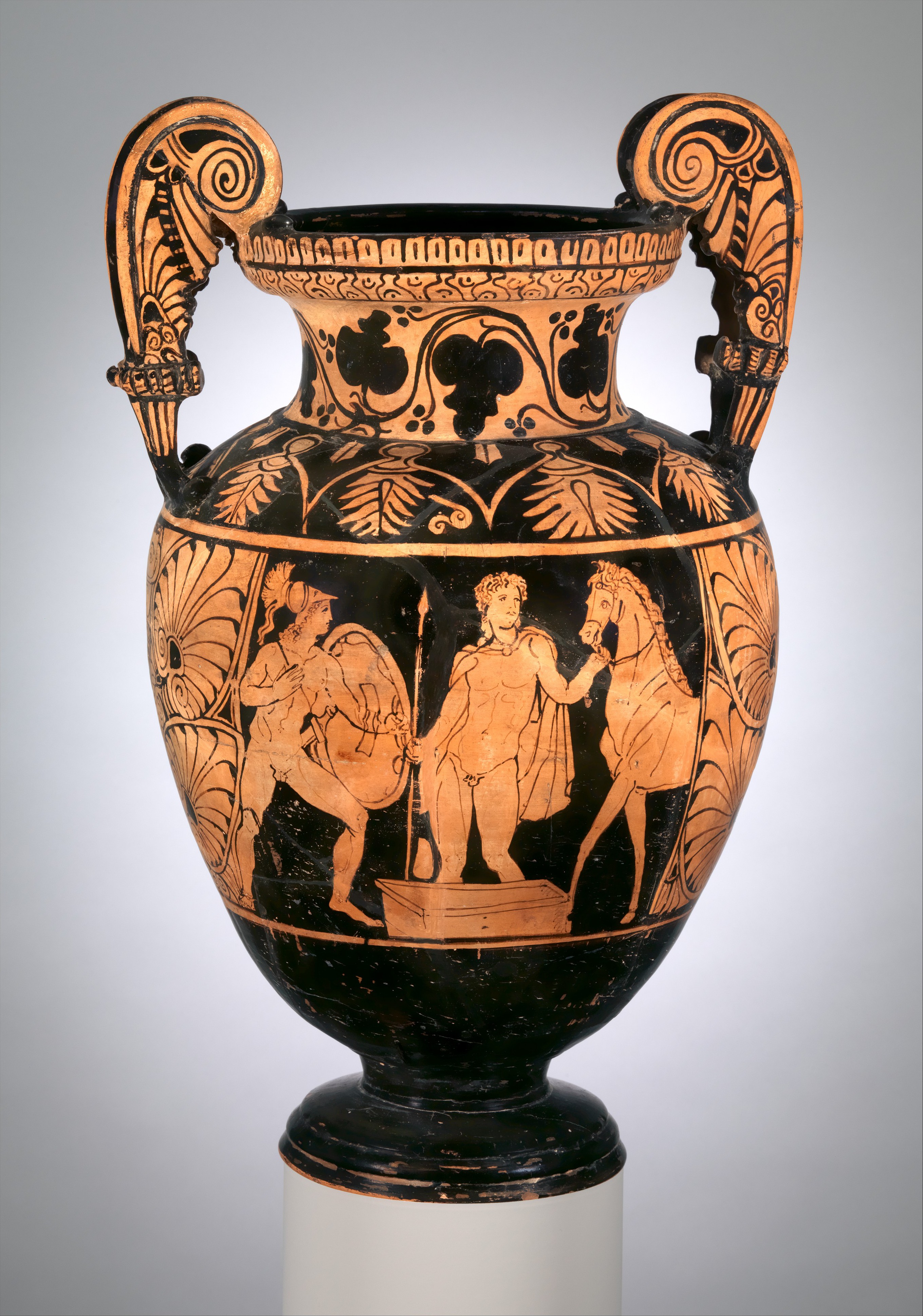
From Etruscan Volute-Krater to Old Money Silhouette: The Aesthetics of Void and Virtue in Lauren Fashion’s 2026 Heritage Line
Introduction: The Krater as Philosophical Vessel
The Terracotta volute-krater—a ceremonial mixing bowl from the Etruscan civilization—is not merely a utilitarian artifact. It is a philosophical vessel, a container designed to mediate between the mortal and the divine. In the context of Lauren Fashion’s 2026 Old Money silhouettes, this krater becomes a foundational metaphor. Its terracotta body, fired in earth and air, carries the genetic code of two opposing yet convergent traditions: the Socratic embrace of death as rational transcendence, and the Eastern reverence for the void as generative space. This paper argues that the krater’s dual nature—its capacity to hold both wine and meaning—informs a new aesthetic of restrained opulence and existential calm in Lauren’s forthcoming collection.
I. The Krater as a Site of Dialectical Tension
The Etruscan volute-krater, with its elegant handles and painted narratives, was a centerpiece of the symposium—a ritualized space where wine, water, and discourse mingled. Yet its terracotta materiality speaks to a humility that belies its ceremonial function. Unlike the polished marble of Greek statuary or the gilded bronze of Roman luxury, terracotta is earthy, porous, and mortal. It cracks, it fades, it returns to clay. This is precisely the tension that Lauren Fashion’s heritage team has isolated: the krater embodies a noble impermanence that resonates with the Old Money ethos of quiet power—wealth that does not shout, but endures through understatement.
In the 2026 silhouettes, this translates into structured yet softened tailoring. Jackets with broad shoulders and nipped waists recall the krater’s volute handles—curving outward to embrace, then drawing inward to contain. The fabrics—heritage-black cashmere, brushed wool, and matte silk—mimic the krater’s surface: rich but not reflective, textured but not ostentatious. The void of the krater’s interior becomes the negative space in a double-breasted blazer, where the lapel’s notch creates a pause, a breath, a moment of silence before the garment speaks again.
II. The Socratic Silhouette: Rationality as Structure
The Socratic paradigm—death as philosophical triumph—informs the architectural precision of the 2026 line. Just as Socrates’ final moments were orchestrated with rational clarity, the silhouettes are calculated to the millimeter. Shoulder pads are not padding; they are structural declarations of a mind that has mastered its own mortality. The high-waisted trousers with knife-edge pleats evoke the columns of a stoa—a space for dialectic, for walking and thinking. The single-breasted peak-lapel jacket, cut from heritage-black wool, is the garment equivalent of a syllogism: each line follows logically from the last, and the conclusion is elegance as inevitability.
Yet this rationality is not cold. The terracotta pigment—a burnt umber that appears in linings, pocket squares, and subtle embroidery—anchors the collection in the earthly. It is the color of the krater’s clay, of the soil that receives the philosopher’s body. This chromatic choice reminds the wearer that even the most transcendent intellect is housed in flesh and dust. The Old Money client does not flee from this truth; she wears it as a badge of existential maturity.
III. The Taoist Void: Emptiness as Generative Form
Parallel to the Socratic structure runs a Taoist undercurrent. The krater’s emptiness is not absence, but potentiality. In the 2026 silhouettes, this manifests as deliberate asymmetry and unlined garments. A coat that falls open at the front, revealing a void of silk beneath, is a direct homage to the Jar—the vessel that holds nothing, and therefore everything. The kimono-sleeve wrap coat in cashmere is cut with a single shoulder seam, allowing the fabric to drape like wet clay on a potter’s wheel. It is not tailored to the body; it negotiates with the body, leaving space for breath, for movement, for the unexpected.
The void is also literal: pockets are deep but invisible, fastenings are hidden, and hems are raw. The garment does not declare its construction; it suggests it. This is the Old Money equivalent of the Taoist sage—powerful in stillness, wealthy in emptiness. The terracotta krater teaches that the most valuable thing a vessel can hold is nothing. Lauren Fashion’s 2026 silhouettes apply this lesson to the wardrobe: the most luxurious garment is one that does not compete with the wearer, but contains her presence as a krater contains wine.
IV. Synthesis: The Eternal Return of the Vessel
The krater’s final lesson is one of cyclical time. Etruscan terracotta was not meant to last forever; it was meant to serve, to break, to be replaced. This acceptance of impermanence is the ultimate Old Money value. The 2026 collection does not chase trends; it returns to archetypes. The double-breasted overcoat is a direct descendant of the chlamys; the wide-leg trouser echoes the himation. Yet these are not costumes. They are vessels for the modern self—containers that hold the wine of experience and the water of daily life.
In the final analysis, the terracotta volute-krater is not a source of motifs, but a philosophical blueprint. It teaches that true luxury is not accumulation, but containment; not permanence, but graceful transience. Lauren Fashion’s 2026 Old Money silhouettes are, therefore, not garments in the conventional sense. They are existential vessels—each one a krater for the soul, fired in the kiln of heritage, and ready to hold the eternal return of the wearer’s own becoming.
Conclusion: The krater’s terracotta whispers what Socrates’ hemlock and the Taoist jar both knew: that the void is not an end, but a beginning. In the 2026 line, Lauren Fashion transforms this ancient wisdom into wearable philosophy—a silhouette that is at once rational and receptive, structured and empty, mortal and eternal. This is the heritage-black of the future: a color that absorbs all light, and in doing so, contains all possibility.