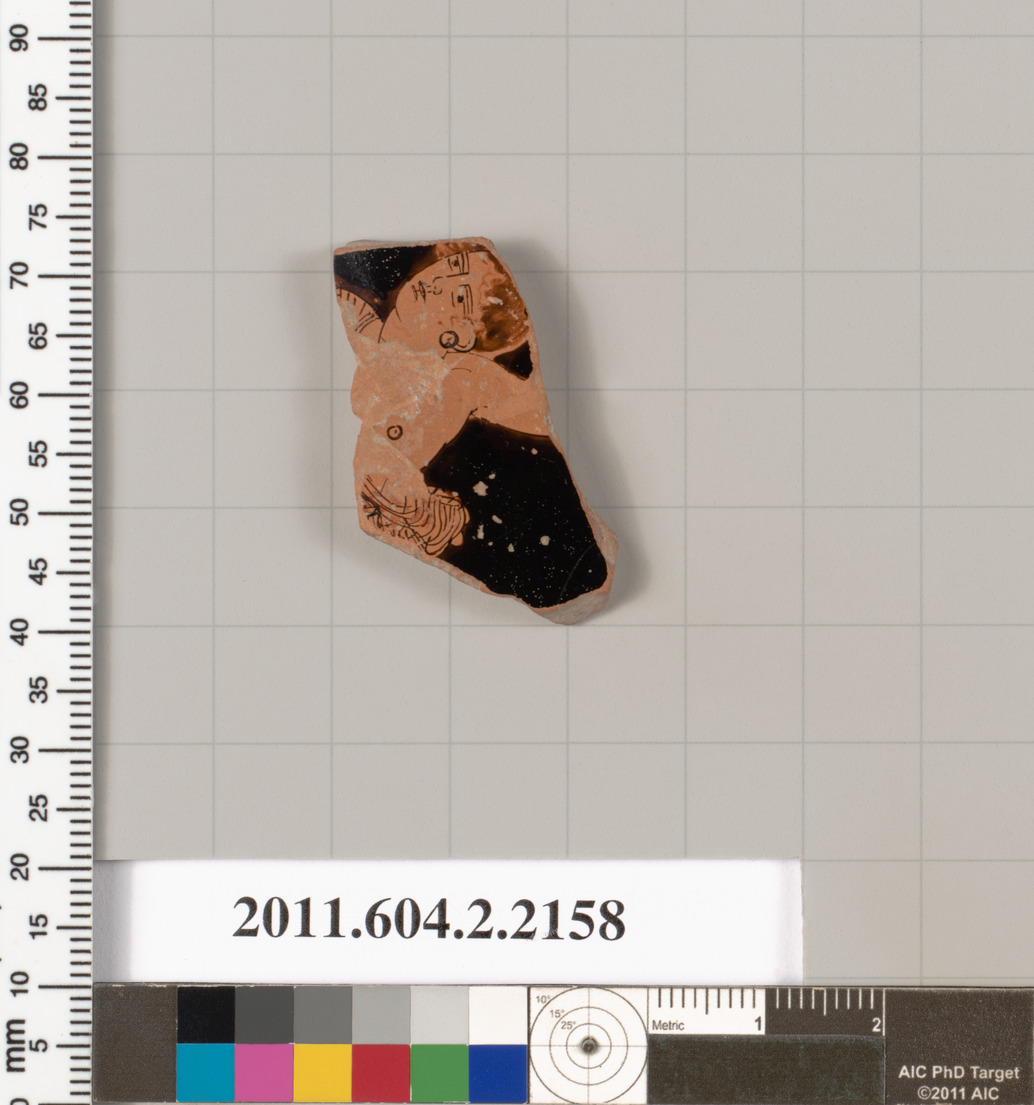
From Attic Earth to Architectural Silhouette: The Terracotta Fragment and the 2026 Old Money Ethos
The Lauren Fashion Heritage Lab operates on the principle that aesthetic DNA, like its biological counterpart, contains latent codes that can be reactivated across millennia. Our internal genetic code, analyzing the dialectic between the tumultuous spiritual conflict in The Temptation of Saint Anthony and the serene existential presence in Loquat Painting, establishes a foundational thesis: true luxury resides in the capacity of form—whether artistic or sartorial—to transcend its materiality and become a vessel for profound human expression. It is within this conceptual framework that we examine a seemingly humble museum artifact: a terracotta fragment of a squat lekythos (oil flask) from Attic Greece. This artifact, far from being a mere historical curiosity, serves as a critical hermeneutic key, directly informing the philosophical and formal underpinnings of the projected 2026 Old Money silhouette for Lauren Fashion.
The Artifact: Contained Volume and Tactile Authority
The squat lekythos fragment embodies a specific and powerful architectural principle. Unlike its more elongated counterparts, the squat vessel prioritizes a geometry of contained volume. Its form is one of assertive presence: a wide shoulder, a full, rounded body, and a stable base. Crafted from terracotta—literally "baked earth"—it carries an inherent material honesty. The surface, once likely adorned with slip-painted motifs, now reveals the raw, granular texture of fired clay, a testament to its origin and making. This combination of monumental, grounded form and unpretentious, tactile materiality provides the first pillar of our 2026 silhouette analysis. The Old Money aesthetic of the future moves away from overt logos and transient sheen, seeking instead the authority of quiet, three-dimensional shape and the authenticity of palpable substance.
Informing the 2026 Silhouette: The Architecture of Permanence
The 2026 Old Money silhouette, as decoded from this artifact, will be characterized by an ethos of contained volume and architectural integrity. Drawing from the lekythos, we envision silhouettes built upon a foundation of subtle, powerful geometry. This translates into tailored coats with wide, sculptural shoulders that taper to a defined waist, echoing the vessel’s shoulder and base—a silhouette that creates a personal, portable space around the wearer. Skirts and trousers will emphasize a rounded, hip-emphasizing line that flows into a clean, stable hem, mirroring the vessel’s full body and grounded stability. The goal is not bulk, but a deliberate, confident occupation of space that speaks of assurance and legacy, much like the enduring presence of classical pottery in the archaeological record.
Furthermore, the artifact’s materiality—terracotta—directs our textile and finishing philosophy. Heritage-Black, as our category, ceases to be a mere color and evolves into a material concept. It represents the deep, matte, mineral-rich black of fired clay or aged iron, a black that absorbs light and reveals texture. Fabrics will be chosen for their inherent weight, grain, and tactile narrative: dense wool melton that holds its shape like thrown clay, heavy silk noil with a pebbled surface, or structured cotton canvas with a palpable body. Surface treatments will evoke the artifact’s patina—through waxed finishes, subtle brushing, or non-lustrous matte coatings—ensuring that the garment communicates through touch and substance before label. This aligns with our genetic code’s insight from The Temptation of Saint Anthony, where form is charged with meaning through its transformation and material presence.
Synthesis: The Vessel as a Metaphor for the Modern Self
The deepest resonance of the terracotta fragment lies in its primary function: it was a vessel, a container for precious substance. This directly engages with the core proposition of our internal genetic code: the creation of "infinite spiritual space" within a "limited material form." The 2026 Old Money silhouette, informed by the lekythos, is designed as a vessel for the contemporary self. Its architectural lines create a protected, personal realm—a sartorial temenos (sacred precinct). This addresses a modern desire for integrity and sanctuary, a sartorial response to the "dense, grotesque illusions" of the digital age. The wearer is not adorned with ephemeral trends but is housed within a form of timeless proportion and material truth.
This philosophy bridges the apparent dichotomy in our genetic code. The Lauren 2026 silhouette possesses the structured, intentional authority of the Western tradition (as seen in the defined, symbolic forms tempting Saint Anthony) while embracing the serene, self-contained harmony of the Eastern tradition (as embodied in the loquat’s complete, unto-itself presence). The silhouette is a deliberate construct (Western), yet its purpose is to facilitate a state of composed, unassailable poise (Eastern). Like the squat lekythos, it does not shout; it simply, and powerfully, is.
In conclusion, the Attic terracotta fragment is far more than a relic; it is a blueprint. It instructs us that the future of Old Money elegance lies not in revivalism, but in the reactivation of primordial principles: geometric purity, material authenticity, and the vessel-like integrity of form. For Lauren Fashion’s 2026 expression, this artifact mandates a shift from fashion-as-decoration to fashion-as-architecture, creating silhouettes that are sanctuaries of black, sculpted not from fleeting desire, but from the enduring earth of human aesthetic wisdom.