From Terracotta Fragment to Tailored Lineage: The Attic Skyphos as a Blueprint for 2026 Old Money Silhouettes
In the rarefied domain of heritage fashion, the pursuit of timelessness often necessitates a return to origins—not merely of garment construction, but of the philosophical underpinnings that govern form, proportion, and presence. The Lauren Fashion Heritage Lab, in its ongoing synthesis of internal archives and museum artifacts, has identified a compelling dialogue between an ancient Greek terracotta fragment—a skyphos (deep drinking cup) from Attic Greece—and the emerging silhouettes of the 2026 Old Money aesthetic. This analysis, grounded in the internal genetic code of Eastern aesthetics as articulated through the “Udumbara” temple plaque and the Han-dynasty bronze mirror, reveals that the skyphos fragment is not a relic of a distant past, but a living lexicon of restraint, volume, and the “image beyond image.”
The Terracotta Fragment: A Study in Controlled Tension
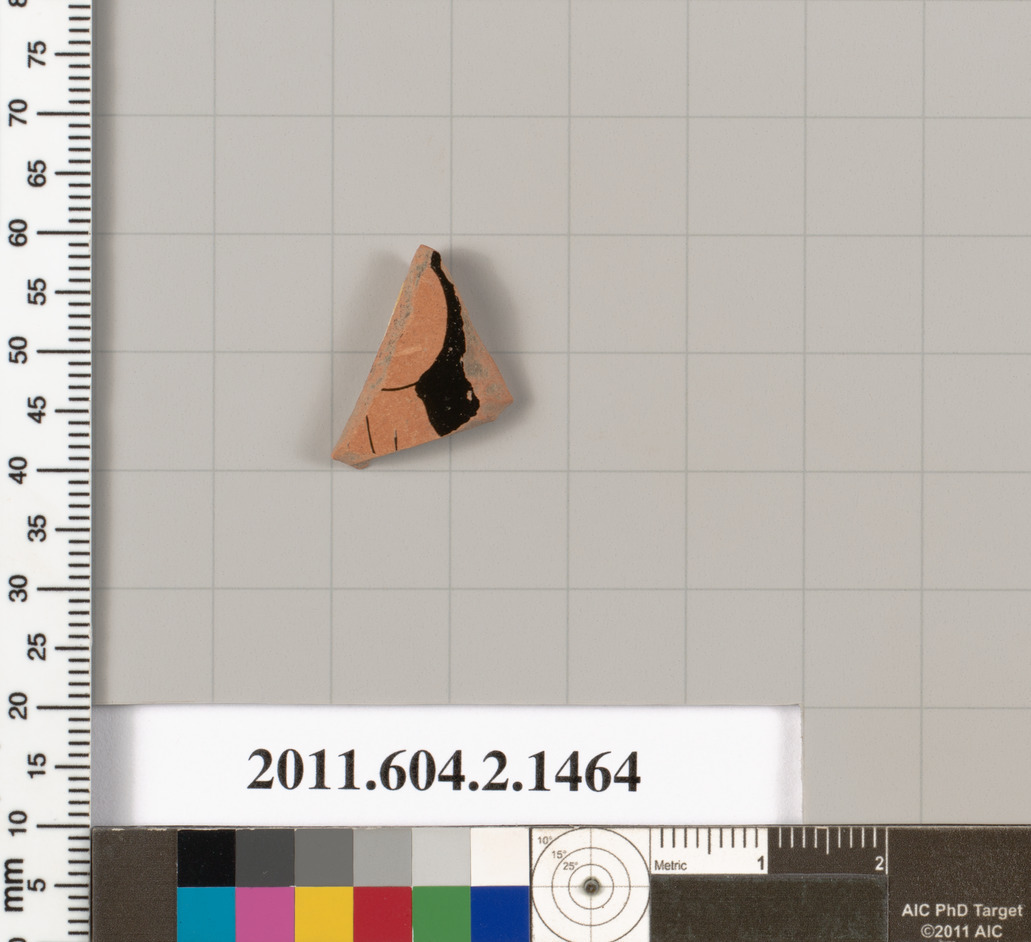
The artifact in question—a terracotta fragment of a skyphos, likely dating to the 5th century BCE—presents a deceptively simple profile. Its surviving curvature, a segment of the vessel’s deep bowl, reveals a masterful interplay of negative space and structural mass. The clay, fired to a warm, earthy umber, bears the faint incised lines of a potter’s wheel, evidence of a hand that understood the rhythm of containment. Unlike the ornate, narrative-driven decoration of later Greek pottery, this fragment’s power lies in its unadorned geometry: the sharp, clean lip, the subtle flare of the body, and the implied stability of a broad, flat base. This is not a vessel of excess, but of essential form—a container defined by what it holds, yet silent about its contents.
This aesthetic of controlled tension resonates deeply with the Eastern principle of “空寂” (kōng jì), or serene emptiness, as seen in the “Udumbara” temple plaque. The skyphos, like the wooden plaque, does not shout its purpose. Instead, it invites contemplation through its very reticence. The potter’s choice to leave the surface unglazed, to allow the terracotta’s natural grain and firing marks to speak, mirrors the calligrapher’s decision to let the wood grain and ink bleed into a state of “空” (emptiness). Both artifacts reject the tyranny of the decorative in favor of the primacy of the essential. For the 2026 Old Money silhouette, this translates into a rejection of superfluous embellishment—no loud logos, no aggressive tailoring, no ephemeral trends. Instead, the silhouette must be a vessel of presence, its power derived from the purity of its line and the integrity of its material.
The Silhouette as a Vessel: Translating the Skyphos into Fabric
The skyphos’s defining characteristic—its deep, capacious bowl that tapers to a stable base—offers a direct architectural metaphor for the 2026 Old Money silhouette. The garment must contain the body not by constriction, but by graceful envelopment. This is achieved through three key elements:
1. The Shoulder as the Rim: The skyphos’s lip is its most assertive feature—a clean, unbroken line that defines the vessel’s opening. In the 2026 silhouette, the shoulder line must function similarly. It should be structured yet soft, with a slight extension that recalls the potter’s wheel’s centrifugal force. Think of a tailored blazer in a heavy wool or cashmere, where the shoulder pad is not a weaponized appendage, but a subtle architectural gesture—a rim of authority that frames the torso without overwhelming it. This echoes the Han mirror’s “动的韵律” (rhythm of movement), where the flowing lines of the chariot horses and the phoenix’s crest are rendered with a controlled, dynamic energy. The shoulder, like the skyphos’s rim, must direct the eye without arresting it.
2. The Torso as the Bowl: The skyphos’s body is its most generous element—a curved volume that suggests both fullness and restraint. The 2026 Old Money silhouette must replicate this through draped, unconstructed forms that fall away from the body. A coat or a dress should not cling, but hover, creating a negative space between fabric and form. This is the “留白” (liú bái) of the Eastern aesthetic—the deliberate emptiness that gives the garment its power. The terracotta’s warm, earthy hue, when translated into a heritage-black wool or a deep charcoal cashmere, becomes a canvas for absence. The garment’s volume is not about excess fabric, but about potential energy—the suggestion of movement held in check, much like the skyphos’s capacity to hold wine without spilling. This aligns with the Han mirror’s “密不透风” (dense yet breathable) principle, where the intricate relief of the divine beasts and celestial chariots creates a fullness that is never suffocating.
3. The Hem as the Base: The skyphos’s base, though absent from the fragment, is implied by the vessel’s stability. In the 2026 silhouette, the hem must anchor the garment to the ground, providing a sense of grounded permanence. This is achieved through a weighted finish—a slightly longer hemline, a heavier fabric at the bottom, or a subtle A-line cut that mimics the vessel’s taper. The hem is not a termination, but a foundation, allowing the garment to stand as a monument to stillness even as the wearer moves. This echoes the “优昙钵华” (Udumbara flower) of the temple plaque—a bloom that appears only once in three millennia, its rarity a testament to its enduring presence.
The Synthesis of East and West: A New Lexicon of Restraint
The Attic skyphos, when read through the lens of Eastern aesthetics, ceases to be a mere drinking vessel and becomes a philosophical object. Its terracotta body, like the wooden plaque, is a material meditation on the nature of containment and release. The 2026 Old Money silhouette, informed by this synthesis, must reject the visual noise of contemporary fashion in favor of a quiet authority. This is not a return to the austerity of the 1990s minimalism, but a reclamation of the sacred in everyday dress. The garment is no longer a tool for self-expression, but a vessel for being—a shell that allows the wearer to exist in a state of uninterrupted grace.
Consider the application: a heritage-black double-breasted coat, cut from a heavy wool that holds its shape like fired clay. The lapels are wide but not exaggerated, their fold echoing the skyphos’s curve. The silhouette is generous through the chest and back, tapering slightly at the waist before falling to a hem that brushes the mid-calf. There are no buttons visible, no pockets that break the line. The coat is a single, unbroken volume—a vessel for the body that, like the skyphos, is defined by its capacity to hold. This is the “象外之象” (image beyond image) of the Eastern tradition—a garment that points not to itself, but to the infinite space it contains.
Conclusion: The Enduring Power of the Essential
The terracotta fragment of the Attic skyphos, in its humble, broken state, offers a profound lesson for the 2026 Old Money silhouette. It reminds us that true luxury is not found in ornament, but in the mastery of form. The garment, like the vessel, must be a container of meaning, its power derived from what it does not say. As the Udumbara flower blooms only in the rarest of moments, so too must the 2026 silhouette be a rare and considered presence—a testament to the enduring dialogue between the ancient and the modern, the East and the West, the vessel and the void. In this synthesis, we find not a nostalgia for the past, but a blueprint for the future—a future where fashion is once again a sacred art, and the wearer, a living monument to the beauty of restraint.