The Lithic Lexicon: Terracotta Fragments and the Architecture of Old Money Silhouettes for 2026
Introduction: The Fragment as a Generative Principle
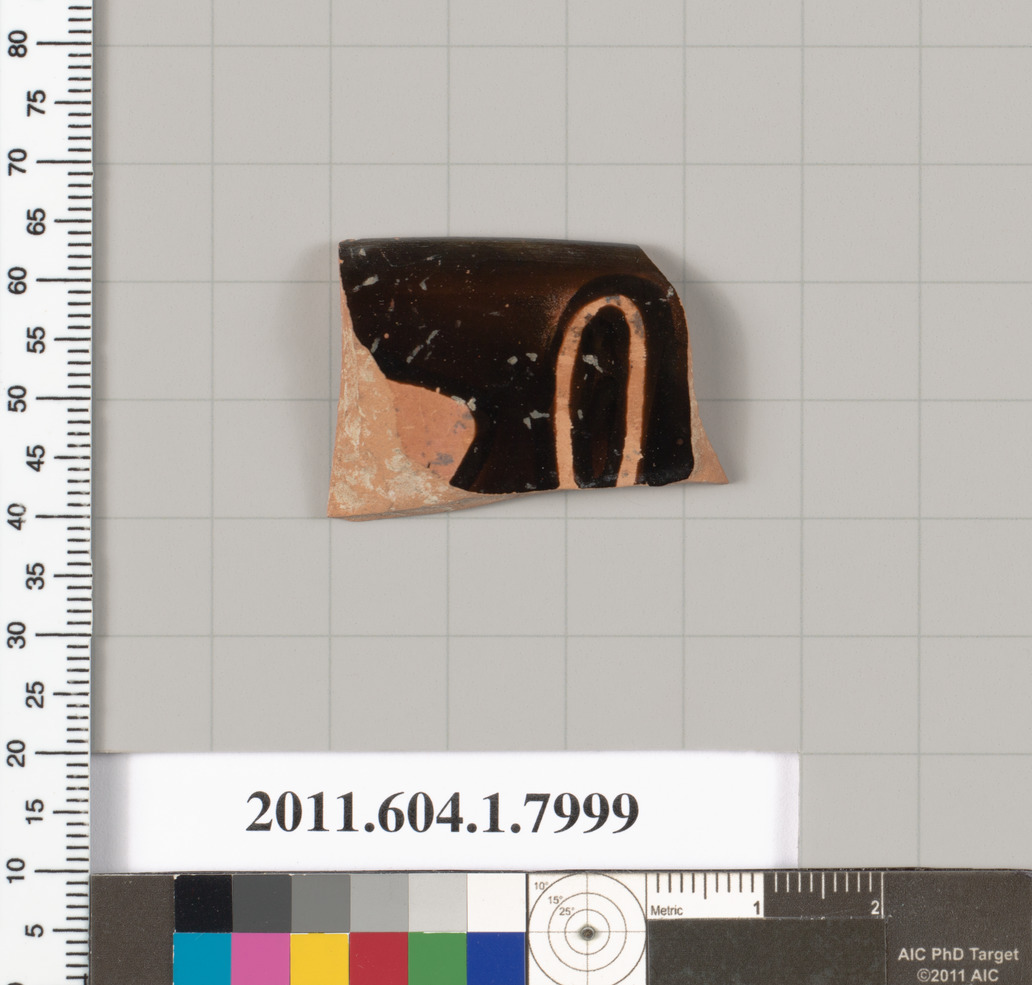
The archaeological fragment—a terracotta rim from an Attic kylix, circa 5th century BCE—presents a paradox of absence and presence. Its broken edge is not a termination but a threshold, a site where material memory meets speculative reconstruction. For the Lauren Fashion Heritage Lab, this shard is not merely an artifact of ancient symposium culture; it is a generative lexicon for the 2026 Old Money silhouette. The Old Money aesthetic, rooted in quiet luxury, inherited permanence, and the patina of time, finds a profound analogue in this ceramic remnant. Just as the Chinese scholar’s rock (靈璧石) from the internal genetic code embodies “useless utility” and the metaphysical dialogue between earth and spirit, this Greek fragment offers a tectonic grammar for garments that reject transient fashion in favor of enduring, sculptural form. The 2026 silhouette, therefore, will not be a revival of Grecian draping but a lithic reconstruction—a sartorial architecture built from the principles of fracture, weight, and the beauty of the incomplete.
I. The Fragmentary Aesthetic: From Broken Rim to Unfinished Hem
The kylix rim, with its precise curvature and abrupt termination, introduces a critical design principle: the intentional break. In the Old Money wardrobe, perfection is suspect; it suggests newness, effort, and the anxiety of display. The fragment, by contrast, signals lineage, endurance, and a disregard for the merely decorative. For 2026, this translates into silhouettes that are deliberately unfinished—jackets with raw, un-hemmed edges; trousers that terminate mid-ankle as if sheared by time; coats whose shoulders slope not from tailoring but from geological wear. The terracotta’s orange-brown hue, fired from iron-rich clay, becomes a chromatic anchor: a deep, sun-baked terracotta, not as a trend color but as a foundational neutral, layered with charcoal, ivory, and the black of obsidian. This palette echoes the scholar’s rock’s mineral permanence, rejecting the ephemeral for the elemental.
II. Tectonic Draping: The Weight of the Earth
Unlike the fluid, liquid draping of Hellenistic chitons, the Attic kylix fragment suggests a different relationship between body and garment: weight. The terracotta is heavy, fired, and brittle; its rim is a load-bearing edge. In the 2026 Old Money silhouette, this translates into tectonic draping—fabrics that behave like stone. Consider a double-faced cashmere coat, cut with the severity of a Doric column, its collar folding like a geological stratum. The fabric does not flutter; it settles. The silhouette is built from the shoulder down, with the weight of the material dictating the fall. This is the antithesis of the “floaty” luxury of resort wear. Instead, the garment anchors the wearer, much as the kylix anchored the symposium—a vessel for ritual, not for display. The internal genetic code’s “瘦皱漏透” (thinness, wrinkling, leakage, transparency) finds a Western parallel here: the terracotta’s porous surface, its micro-fractures, become textural details in wool or brocade—subtle slubs, irregular weaves, and deliberate “flaws” that mimic the stone’s geological memory.
III. The Rim as Silhouette Edge: A Study in Negative Space
The kylix rim is a circle, but a broken one. Its missing arc creates a negative space that is as significant as the ceramic itself. For the 2026 silhouette, this inspires a new approach to the garment’s perimeter. The hemline, the cuff, the neckline—these are no longer simple boundaries but thresholds that invite the eye to complete the form. A jacket’s lapel might be asymmetrically cropped, its edge echoing the fragment’s jagged line. A skirt’s hem might rise sharply on one side, creating a visual “break” that suggests a missing piece. This is not deconstruction in the 1990s sense—a violent undoing—but a reverent incompletion, a nod to the archaeological condition. The Old Money wearer, like the scholar contemplating the rock, finds completion in the void. The garment’s “hole” is its most sacred space, where the body’s movement becomes the missing fragment of the design.
IV. Chromatic Geology: The Palette of the Earth’s Crust
The terracotta fragment’s color is not a single hue but a stratigraphy—the orange of the core, the darker burnish of the surface, the white of calcareous deposits from millennia in the soil. The 2026 Old Money palette must be equally layered. The base is Heritage-Black, not as a void but as a deep, absorbing field. Upon this, we layer terracotta, ochre, burnt sienna, and slate grey—colors that read as mineral rather than vegetable. These are not colors that “pop”; they are colors that persist. They recall the scholar’s rock’s “surface wrinkles” (皴纹), which record time’s passage. A cashmere sweater in terracotta, paired with wool trousers in charcoal, creates a chromatic dialogue between the kylix’s fired clay and the rock’s weathered surface. The effect is one of geological authority—the wardrobe as a core sample of the earth’s crust.
V. The Synthesis: “器以载道” in Western Form
The internal genetic code’s concept of “器以载道” (the vessel carrying the Way) finds its Western expression in the kylix fragment. The drinking cup was a vessel for wine, for conversation, for the symposium’s philosophical discourse. Its broken rim now carries a different “Way”—the way of enduring style, of material memory, of the beauty that accrues through use and time. The 2026 Old Money silhouette is not a costume of antiquity but a vessel for contemporary life, built from the same principles as the scholar’s rock: “无用之用” (the utility of the useless). The garment’s weight, its broken edges, its mineral palette—these are not decorative flourishes but philosophical propositions. They assert that true luxury is not the new but the permanent; not the perfect but the patinated; not the whole but the fragment that contains the whole.
Conclusion: The Fragment as Future Archive
In the Lauren Fashion Heritage Lab, the terracotta kylix rim is not a relic to be preserved but a blueprint to be inhabited. Its broken geometry, its fired weight, its earth-born color—these become the foundational elements of a silhouette that speaks to the Old Money ethos of 2026: inherited, not acquired; geological, not seasonal; fragmentary, yet complete. The garment, like the scholar’s rock, becomes a microcosm—a wearable landscape that carries the memory of the symposium, the wisdom of the kiln, and the patience of the earth. In wearing it, the individual does not merely dress; they dwell in a material philosophy that bridges the Attic symposium and the Chinese studio, the broken rim and the fantastic mountain, the fragment and the eternal.