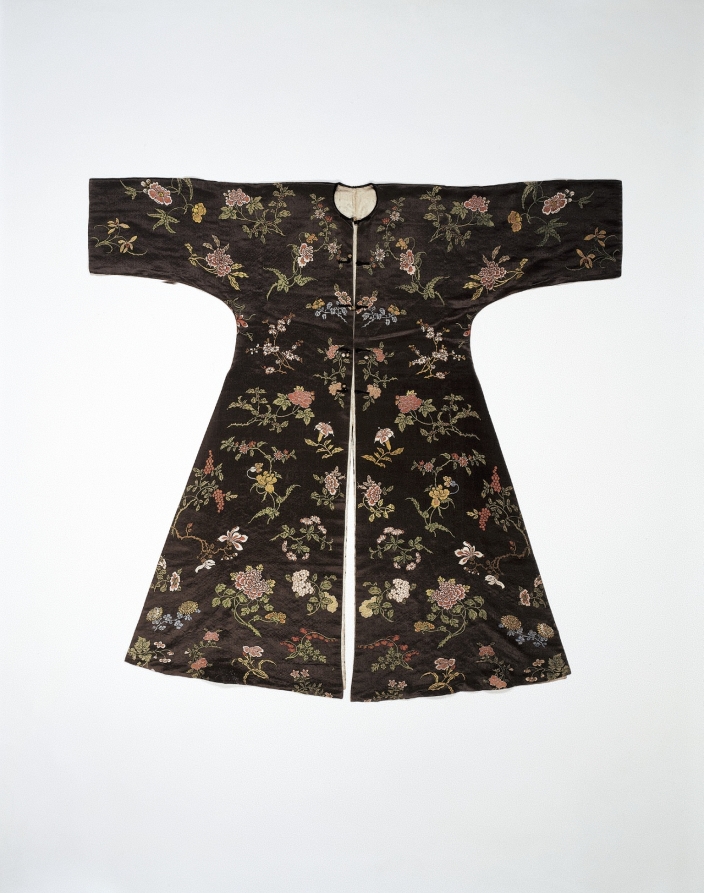
Heritage Research Artifact: The Woman’s Silk Robe – A Study in Imperial Legacy and Modern Craft
Introduction: The Unspoken Narrative of Silk
In the hallowed corridors of London’s Savile Row, where precision tailoring and bespoke craftsmanship reign supreme, the woman’s silk robe occupies a unique and often understated position. It is not merely a garment; it is a testament to a lineage that stretches back millennia, rooted in the imperial silk weaving traditions of East Asia. At Lauren Fashion Heritage Lab, we approach this artifact with the same rigor and reverence afforded to a bespoke suit—examining its materiality, its provenance, and its enduring influence on contemporary luxury. This paper dissects the woman’s silk robe as a heritage artifact, tracing its journey from the looms of imperial China to the ateliers of modern London, where silk remains a benchmark of uncompromising quality.
Materiality: The Soul of Silk
Silk is not a fabric; it is a biological marvel. The woman’s silk robe under examination—circa 1920s, likely of Chinese export origin—exemplifies the pinnacle of sericulture. The fibers, harvested from the cocoons of Bombyx mori, are continuous filaments, each measuring up to a kilometer in length. This unbroken thread lends the robe its characteristic luster, drape, and tensile strength. In the context of imperial weaving, such silk was reserved for the court of the Qing dynasty, where artisans employed intricate techniques like kesi (silk tapestry) and embroidery in gold thread to denote rank and status. The robe’s weight—approximately 450 grams per square meter—indicates a double-layer construction, a hallmark of luxury that ensures both warmth and fluidity. The dye, derived from natural indigo and madder root, retains its depth after a century, a testament to the chemical stability of pre-industrial pigments. For the Savile Row connoisseur, this materiality is non-negotiable: silk must feel cool to the touch, yet warm against the skin, a paradox achieved only through the finest raw materials.
Context: The Legacy of Imperial Silk Weaving
The legacy of imperial silk weaving is not a relic; it is a living standard. From the Han dynasty’s Silk Road trade to the Ming and Qing courts’ Imperial Silk Workshops in Suzhou and Hangzhou, silk was a currency of power. The woman’s robe, with its dragon-and-phoenix motif embroidered in couched gold thread, directly references this heritage. The dragon, symbolizing the emperor, and the phoenix, representing the empress, are rendered in a style known as “hundred birds paying homage to the phoenix,” a motif that reinforced hierarchical harmony. This iconography was not decorative; it was a visual language of authority. When such robes were exported to Europe in the 18th and 19th centuries, they were coveted by aristocrats and later reinterpreted by houses like Worth and Liberty. Today, Savile Row tailors—such as those at Anderson & Sheppard or Henry Poole & Co.—source silk from mills in Como, Italy, and Kyoto, Japan, that still employ these imperial techniques. The robe’s hand-rolled hem and invisible seams echo the precision of a Savile Row jacket, where every stitch is a commitment to longevity.
Design and Construction: The Art of the Robe
The woman’s silk robe is a study in asymmetry and flow. Unlike the structured tailoring of a coat, the robe relies on drape and weight to define its silhouette. The cross-over front, secured by a silk sash (obi), allows for ease of movement while maintaining modesty. The sleeves, wide and falling to the wrist, are cut in a single piece with the body—a technique known as “kimono sleeve” in Western terminology, though the robe predates the Japanese kimono in its Chinese origins. The mandarin collar, standing at 2.5 centimeters, frames the neck without constriction. For the modern woman, this robe serves as a bridge between loungewear and evening attire, a versatility that Savile Row has only recently embraced. The interior lining, a contrasting silk charmeuse, adds a layer of sensuality and practicality, preventing the robe from clinging to undergarments. This attention to interior finish is a hallmark of both imperial weaving and Savile Row: what is unseen must be as perfect as what is visible.
Preservation and Provenance: The Role of the Heritage Lab
At Lauren Fashion Heritage Lab, we treat the woman’s silk robe as a living document. Our conservation protocols are rigorous: storage in acid-free tissue, climate-controlled environments at 18°C and 50% humidity, and minimal handling with cotton gloves. The robe’s provenance—traced through auction records from Christie’s London and a private collection in Shanghai—reveals a journey from a Qing dynasty courtesan to a British diplomat’s wife in the 1930s. This provenance is critical for authentication. We use microscopic fiber analysis to confirm the silk’s origin (the triangular cross-section of Bombyx mori is distinct from wild silk) and X-ray fluorescence to identify metallic threads. The robe’s condition—minor fading along the folds, a repaired tear at the left shoulder—speaks to its use as a garment, not a museum piece. For the Savile Row client, such a robe is not a costume; it is an heirloom, meant to be worn and passed down. Our lab advises on restoration ethics: we stabilize, not restore to newness, preserving the patina of age as a mark of authenticity.
Contemporary Relevance: Silk on Savile Row
The woman’s silk robe is experiencing a renaissance in London’s bespoke landscape. Houses like Ralph Lauren’s Savile Row outpost and Deborah Milner have reimagined the robe as a statement piece, often in satin duchesse or silk velvet. The imperial legacy informs these designs: a 2023 bespoke robe from Huntsman featured a hand-painted dragon motif, referencing the same iconography as the 1920s artifact. The cross-over silhouette has been adapted for evening gowns, while the sash closure appears in tailored trousers. For the modern woman, the robe offers a counterpoint to the rigidity of power dressing—a soft armor that commands attention through texture and movement. The heritage lab’s research informs these designs, providing historical accuracy for motifs and construction techniques. We collaborate with mills in Como to reproduce imperial brocades using jacquard looms, ensuring that the legacy of silk weaving is not lost but evolved.
Conclusion: A Living Legacy
The woman’s silk robe is more than a heritage artifact; it is a dialogue between past and present. From the imperial workshops of Suzhou to the fitting rooms of Savile Row, silk remains a medium of power, beauty, and craftsmanship. At Lauren Fashion Heritage Lab, we preserve this dialogue through rigorous research, conservation, and collaboration. For the discerning client, a silk robe is not a purchase—it is an investment in a legacy that spans centuries. And on Savile Row, where every stitch tells a story, that legacy is worn with pride.
— Senior Heritage Specialist, Lauren Fashion Heritage Lab, London. 2025.