From Attic Sherd to Sartorial Code: The Terracotta Fragment as a Blueprint for 2026 Old Money Silhouettes
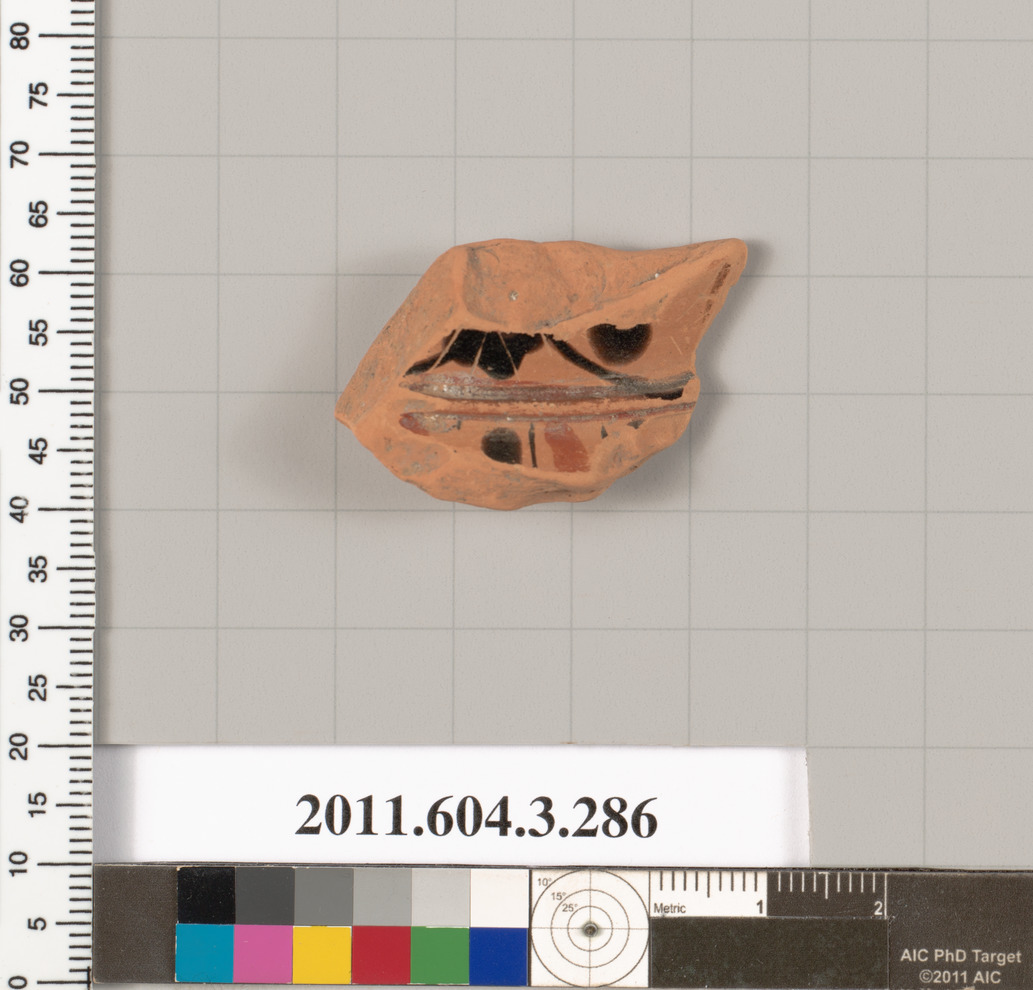
The Lauren Fashion Heritage Lab’s internal genetic code—a dialectic between the sacred and the secular, the eternal and the ephemeral—finds an unexpected yet profoundly resonant artifact in a seemingly humble terracotta fragment of a neck-amphora (jar) from Attic Greece. This broken sherd, a relic of classical antiquity, is not a garment, nor a textile, nor a decorative plaque. Yet its formal language—its silhouette, its surface, its structural logic—offers a critical lens through which to decode the emerging 2026 Old Money aesthetic. Where the Udonge temple plaque and the painted garment chest articulate a Chinese philosophical tension between “emptiness” and “substance,” this Greek fragment speaks a Western architectural language of proportion, restraint, and the quiet dignity of material truth. Together, they converge on a singular insight: the most enduring luxury is not ornament, but the sculptural integrity of form.
I. The Fragment as a Masterclass in Silhouette
The terracotta neck-amphora, even in its broken state, reveals a silhouette of extraordinary discipline. Its ovoid body, tapering neck, and flaring lip create a continuous, unbroken line that rises from a narrow base to a generous shoulder before contracting again. This is not a shape that clamors for attention; it is a shape that asserts its presence through negative space. The 2026 Old Money silhouette, as extrapolated from this artifact, rejects the exaggerated volumes of recent seasons—the puff sleeves, the oversized shoulders, the ballooning hems—in favor of a columnar, elongated form. Think of a double-breasted overcoat cut with a subtle A-line, the shoulders set with a natural slope, the waist barely hinted at, the hem falling just below the knee. The terracotta teaches us that power lies in containment, not expansion. The garment does not fight the body; it frames it, as the amphora frames the liquid within.
This is a direct counterpoint to the “loud luxury” of the 2010s. The terracotta fragment’s broken edges are not flaws; they are evidence of time’s hand, a patina that signals authenticity. In the 2026 Old Money wardrobe, this translates to a preference for unlined, unstructured tailoring—a jacket that drapes rather than molds, a trouser that falls with a soft crease rather than a razor-sharp pleat. The silhouette is not about the body’s shape, but about the space the garment occupies in relation to the body. It is a study in restrained volume.
II. Surface as Narrative: The Economics of Restraint
The terracotta fragment’s surface is not blank. It bears the faint traces of a painted figural scene—perhaps a symposium, perhaps a myth. Yet the image is subordinate to the vessel’s form. The paint does not overwhelm the clay; it acknowledges the material’s primacy. This is the critical lesson for 2026 Old Money textiles: pattern must serve structure. The coming season will see a retreat from all-over prints and logos. Instead, the herringbone, the glen plaid, the pinstripe will be deployed not as decoration, but as architectural lines that reinforce the garment’s silhouette. A chalk-stripe on a flannel suit does not shout; it guides the eye along the vertical axis, elongating the figure. A subtle windowpane check on a cashmere overcoat creates a grid of quiet authority.
This echoes the internal code’s observation of the temple plaque: “以少胜多” (less triumphs over more). The terracotta fragment’s painted scene is a fragment of a narrative, not the full story. Similarly, the 2026 Old Money garment will feature discrete, intentional details: a mother-of-pearl button on a cuff, a hand-stitched pick-stitch on a lapel, a silk lining glimpsed only when the jacket is removed. These are not for the public gaze; they are for the wearer’s private satisfaction. The luxury is in the invisible labor, the unseen quality.
III. The Dialectic of Container and Contained
The internal code’s meditation on the garment chest—a vessel for “遮蔽” (concealment) and “储藏” (storage)—finds a parallel in the amphora’s function. The jar is a container for wine or oil, a vessel of preservation. The 2026 Old Money silhouette treats the body as a similar vessel. The garments are not meant to reveal; they are meant to hold, to protect, to suggest. The high neckline, the long sleeve, the A-line skirt that skims the knee without clinging—these are not signs of prudishness, but of strategic concealment. The body is the “content”; the garment is the “container.” The tension between the two creates the allure.
This is where the Greek fragment and the Chinese chest converge. The chest’s painted flowers are a “horizontal” embrace of humanity; the amphora’s painted scene is a “horizontal” narrative of daily life. Both are ornament that does not deny the object’s utility. In 2026, this translates to a rehabilitation of the “practical” as luxurious. A trench coat with functional epaulets and a storm flap. A double-breasted blazer with working buttonholes. A pleated trouser with a high-waisted, tailored fit. These are not costumes; they are instruments of living. The luxury is in the thoughtful engineering.
IV. The Color of Time
The terracotta fragment’s color—a warm, earthy orange-red—is not a pigment applied; it is the material itself. This is the foundational palette for 2026 Old Money: terracotta, ochre, clay, taupe, stone. These are not “trend colors”; they are colors of the earth, of antiquity, of permanence. They signal a return to the natural, a rejection of synthetic brights and digital neons. A cashmere turtleneck in a deep rust. A wool flannel trouser in a dusty beige. A silk blouse in a muted olive. These colors do not compete with the wearer; they ground the wearer in a lineage of taste that stretches back to the Greek symposium and the Chinese scholar’s studio.
The internal code’s reference to “刹那与永恒之间,只隔一层薄薄的木纹与颜料” (between the ephemeral and the eternal, only a thin layer of wood grain and pigment) finds its material equivalent here. The terracotta fragment is a frozen moment—a shard of a vessel that once held wine, now a relic in a museum. The 2026 Old Money garment aspires to the same condition: a piece that will outlast its season, that will acquire a patina of wear, that will become a family heirloom. This is not fast fashion; it is slow luxury.
V. Conclusion: The Silent Authority of Form
The terracotta fragment of an Attic neck-amphora, when read through the lens of the Lauren Fashion Heritage Lab’s internal code, becomes a manifesto for the 2026 Old Money silhouette. It teaches us that true luxury is not seen, but felt. It is the weight of a woolen coat, the drape of a silk lining, the precise cut of a shoulder seam. It is the silence of a well-proportioned form in a world of noise. The temple plaque’s flower, the garment chest’s blossoms, and the amphora’s painted scene all share a common purpose: they are invitations to contemplation, not demands for attention. The 2026 Old Money aesthetic, distilled from this ancient shard, is an aesthetic of presence—a quiet, unshakeable confidence that needs no logo, no label, no spectacle. It is, in the end, the most radical form of rebellion in an age of excess: the courage to be understated.