The Vessel of Finality: Terracotta Fragment and the Architecture of Inherited Silence
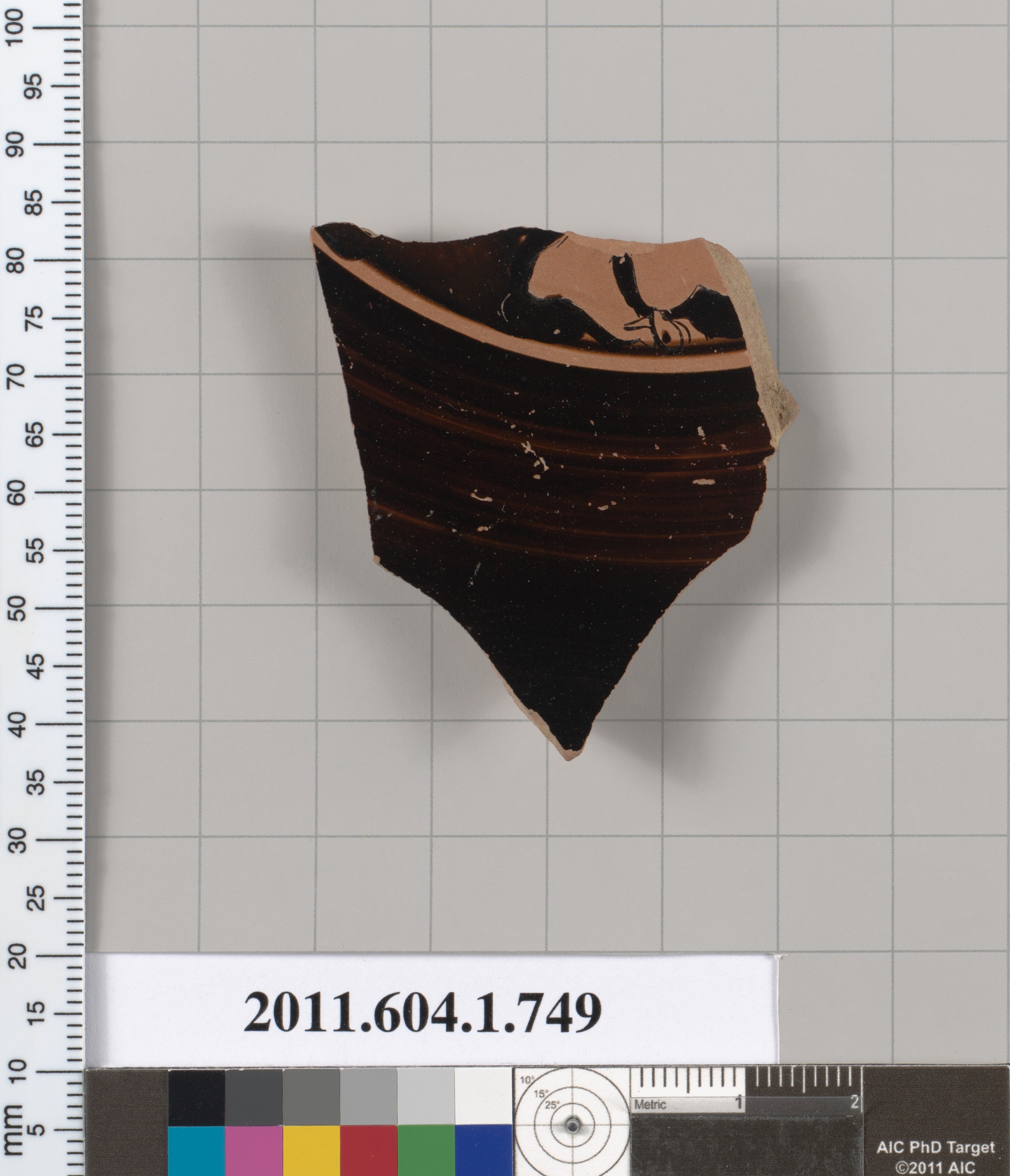
The terracotta fragment of an Attic kylix—a drinking cup, broken, its red-figure glaze now a palimpsest of antiquity—serves as a material witness to a paradox that Lauren Fashion Heritage Lab has long studied: how the vessel of consumption becomes the vessel of cessation. This shard, once held in the hand of a symposiast, now rests in a museum vitrine, its broken edge a literal cut into time. It is not merely a relic; it is a hermeneutic key to understanding how the 2026 Old Money silhouette can embody the aesthetic of the “after”—the moment when action has ceased, and only the object remains.
The internal genetic code’s juxtaposition of The Death of Socrates and The Hunt provides the theoretical framework. The kylix fragment belongs squarely to the first paradigm: the static object that anchors death. In The Death of Socrates, the cup is the central prop—the instrument of philosophical suicide, the vessel that transforms hemlock into a sacrament of reason. The terracotta fragment, though unadorned with the philosopher’s image, carries the same semiotic weight. It is a cup that once held wine, water, or poison; its function is to contain, to deliver, to leave behind a residue. The broken rim, the missing handle, the faded glaze—these are not flaws but traces of a completed gesture. The cup has been used. The drink has been consumed. The hand that held it is gone. What remains is the object as tomb.
This material philosophy directly informs the 2026 Old Money silhouette. The Old Money aesthetic, in its most refined iteration, is not about ostentation but about inherited stillness. It is the look of a garment that has been worn, passed down, and worn again—not as a costume, but as a second skin of lineage. The terracotta fragment teaches us that true luxury is the ability to carry the weight of time without breaking. The 2026 silhouette, therefore, must reject the kinetic frenzy of the hunt—the stretched muscles, the imminent release—and instead embrace the gravity of the static.
The Silhouette as Vessel: Shoulder, Sleeve, and the Architecture of Containment
Drawing from the kylix’s formal properties—its rounded bowl, its flaring lip, its stable base—the 2026 Old Money silhouette privileges volume that contains rather than volume that expands. The shoulder of a tailored jacket, for instance, should not be exaggerated to suggest power or aggression (the hunt’s dynamic tension), but rather softly structured to suggest a vessel’s curve. The fabric—whether cashmere, wool, or the heritage-black silk that gives this analysis its category—should drape with a weighted fall, as if the garment itself is settling into its own history. The sleeve, cut with a gentle fullness at the upper arm and tapering to the wrist, echoes the kylix’s transition from bowl to stem. The cuff becomes the lip of the cup—a precise, clean edge that signals completion.
The color palette, too, must be read through the terracotta lens. The fragment’s original red-figure decoration—now largely faded to a muted umber—suggests a chromatic language of earthy permanence. For 2026, this translates to a rejection of bright, fleeting tones in favor of oxidized hues: burnt sienna, deep ochre, charcoal, and the aforementioned heritage-black. These are not colors that shout; they are colors that have weathered the centuries. They are the colors of a vase that has been buried and exhumed, of a garment that has been stored in cedar and unwrapped for a new generation.
The Fabric as Fragment: Weave, Weight, and the Aesthetics of Rupture
The kylix’s broken edge is not a flaw to be hidden but a formal feature to be translated. In the 2026 Old Money silhouette, this manifests as deliberate, subtle asymmetry—a hem that dips slightly lower on one side, a shoulder seam that is set back a quarter-inch, a pocket flap that is cut on the bias rather than the straight grain. These are not gestures toward deconstruction (a postmodern trope) but rather acknowledgments of wear. They signal that the garment has been lived in, that it has a past. The fabric itself—whether a heavy wool twill or a matte silk crepe—should possess a density that resists transparency. The kylix fragment does not allow light to pass through it; it absorbs and reflects in equal measure. So too should the 2026 silhouette: it should hold its shape against the body, not cling or float, but stand as a second architecture.
The interior construction of the garment becomes as important as the exterior. Just as the kylix’s interior glaze once held liquid, the garment’s lining—perhaps in a contrasting silk or a subtle stripe—becomes the hidden surface of the vessel. This is a nod to the Old Money ethos of invisible quality: the parts that no one sees are as meticulously finished as those on display. The lining is the memory of the cup’s interior, the trace of what was once contained.
The Hermeneutic of the After: Death, Time, and the 2026 Wardrobe
Returning to the internal genetic code’s central insight: the kylix fragment, like The Death of Socrates, presents death as a completed act, a residue, a thing to be contemplated. The 2026 Old Money silhouette does not chase the thrill of the hunt; it inhabits the stillness of the aftermath. This is a wardrobe for those who have inherited not just wealth, but the weight of time itself. The garments are not designed to impress in a fleeting moment, but to endure across generations. They are the material equivalent of the philosopher’s cup: objects that have witnessed the end and remain, unbroken in their essence, to tell the story.
In practical terms, this means the 2026 silhouette prioritizes long, unbroken lines—a coat that falls to the mid-calf, a trouser that breaks just above the shoe, a skirt that skims the ankle. These lines echo the verticality of the kylix’s stem, grounding the wearer in a posture of composure and finality. The silhouette does not rush; it settles. It is the opposite of the hunt’s acceleration. It is the slow descent of the philosopher’s hand as it releases the cup.
The terracotta fragment, in its broken perfection, teaches that the most powerful garment is the one that knows it will end. It does not fight time; it becomes time’s vessel. For the 2026 Old Money wardrobe, this is the ultimate lesson: to dress not for the moment of the hunt, but for the eternity of the after. The cup is empty. The drink is taken. The silhouette remains.