← BACK TO ARCHIVES
Heritage-Black
Heritage Synthesis: Terracotta fragments of kylikes (drinking cups)
Curated on Jun 17, 2026 // Node: LDN-01
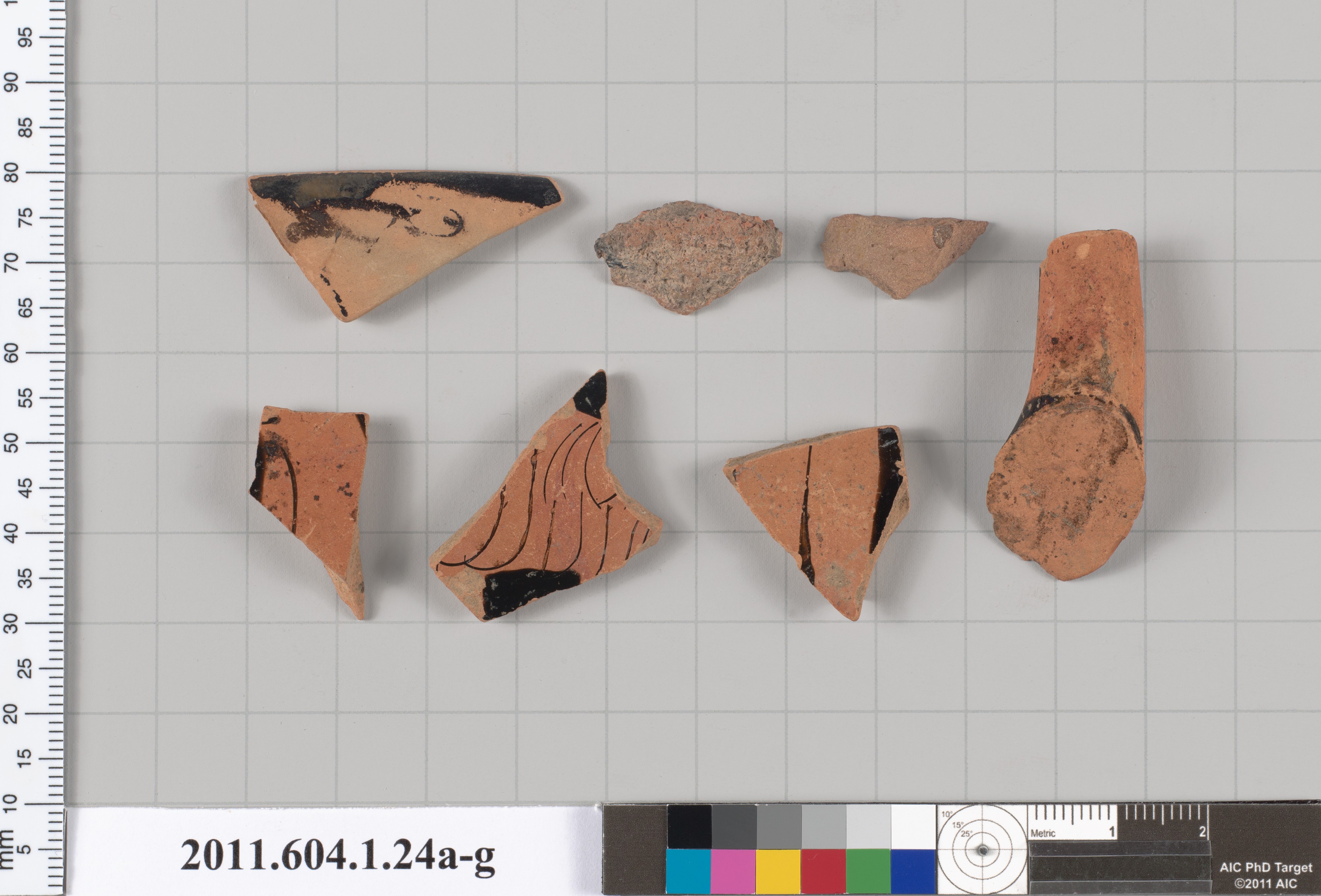
The Ontology of Absence: Terracotta Fragments and the Architecture of Old Money Silence
The fragmented terracotta kylikes of Attic Greece, unearthed from the red earth of antiquity, are not merely drinking vessels. They are archaeological witnesses to a civilization that understood the profound relationship between form, function, and the void. In the context of the Lauren Fashion Heritage Lab’s 2026 Old Money collection, these shards—broken rims, faded handles, the ghostly imprint of wine-dark lips—offer a radical blueprint for a silhouette that does not shout, but *resonates*. The internal genetic code of our inquiry—the juxtaposition of Socrates’ rational transcendence with the Eastern jar’s silent capacity—finds its material synthesis in these terracotta fragments. They teach us that true heritage is not about preservation, but about the eloquent articulation of what is missing.
The Void as Architectural Principle
The kylix, a shallow drinking cup with two handles, was designed for the symposium—a ritual of philosophical discourse, wine, and democratic fellowship. Its most striking feature is its *tondo*, the circular interior base, which was often painted with an image that would only be revealed as the drinker drained the cup. This is a design of revelation through consumption. The image exists, but its full meaning is contingent upon the act of emptying. The 2026 Old Money silhouette must embody this principle. It is not a garment of excess or display, but one of *controlled revelation*. The cut of a double-breasted jacket, the precise fall of a wool trouser, the deliberate absence of a tie—these are the contemporary *tondos*. The wearer’s identity is not announced by logos or ostentation, but by the quiet spaces between the seams, the negative space that the body creates within the fabric.
The terracotta fragments, broken and incomplete, are more powerful than a whole cup. They force the viewer to complete the form in their mind. This is the essence of the Old Money aesthetic: a power that is assumed, not asserted. The 2026 silhouette, therefore, will be characterized by *incompleteness* as a deliberate design strategy. A jacket with a slightly unfinished hem, a shirt with a missing collar button (replaced by a simple, aged brass stud), a trouser with a single, subtle crease that hints at a lifetime of wear. These are not signs of decay, but of a cultivated *patina of presence*. Like the kylix fragment, the garment’s history is its most potent ornament.
The Rational Geometry of the Symposium
Socrates’ death, as depicted in the internal genetic code, is an act of supreme rational choice. He does not flee; he drinks the hemlock with the same composure he brought to a dialectical argument. The kylix that held the poison was not a symbol of tragedy, but of philosophical completion. The 2026 Old Money silhouette must mirror this *rational geometry*. It is a silhouette of clean lines, sharp shoulders, and precise waist suppression—a form that suggests the wearer has made a conscious, intellectual decision about their place in the world. There is no room for the chaotic, the trendy, or the emotional.
The terracotta fragments, with their sharp, clean break lines, inform this geometry. The silhouette will be constructed from *structural* fabrics: a heavy, milled wool that holds a crease like a theorem, a crisp cotton poplin that stands away from the body, a dense, matte cashmere that falls in a single, unbroken plane. These fabrics are the *logos* of the garment. They do not drape; they *define*. The color palette, drawn from the terracotta itself, will be a study in earth tones: burnt umber, ochre, deep rust, and the black of aged Greek pottery. This is not a palette of warmth, but of *gravitas*. It is the color of the earth from which the kylix was born, and to which Socrates returned.
The Eastern Jar and the Immersive Silhouette
The internal genetic code contrasts Socrates’ rational transcendence with the Eastern jar’s silent, immersive presence. The jar does not argue; it *contains*. Its beauty is not in its decoration, but in its capacity for emptiness. The 2026 Old Money silhouette must also be a vessel. It is not a statement to be read from a distance, but a space to be inhabited. This is the *immersive* quality of true luxury. The garment does not cling or constrict; it *envelops*. The cut of a coat, for instance, will be generous enough to allow for a full range of movement, but precise enough to maintain its architectural integrity. The fabric, a heavy, felted wool or a dense, double-faced cashmere, will create a microclimate around the body—a private space of quiet and composure.
The terracotta kylix, when whole, held wine. When broken, it holds the earth. The 2026 silhouette, in its most advanced form, will be designed to *change* with the wearer. A jacket that can be worn fully buttoned for a formal meeting, or open and unlined for a weekend in the country. A trouser that can be cuffed or left long. These are not features; they are *philosophical choices*. The garment is not a fixed object, but a *process*. It is a vessel for the wearer’s life, and its beauty will be determined by the life it contains.
Conclusion: The Hermeneutics of the Fragment
The terracotta fragments of Attic Greece are not ruins; they are *hermeneutic objects*. They demand interpretation. They ask us to complete the story. The 2026 Old Money silhouette, informed by this heritage, will be a fragment of a larger narrative. It will not be a complete, polished, and perfect garment. It will be a *question* posed to the wearer and the observer. It will ask: What is the void you carry? What is the rational choice you have made? What is the life you will pour into this vessel?
The answer, as Socrates knew and the jar knows, is that the most profound beauty is found in the space between presence and absence. The 2026 silhouette is not about the fabric; it is about the air the fabric holds. It is not about the body; it is about the soul that animates the body. It is a garment for those who understand that true power is not in what you possess, but in what you are willing to let go. The terracotta fragments have spoken. The 2026 Old Money silhouette will be their echo.
Heritage Lab Insight
Genetic Bridge: Archive node focusing on Heritage-Black craftsmanship.