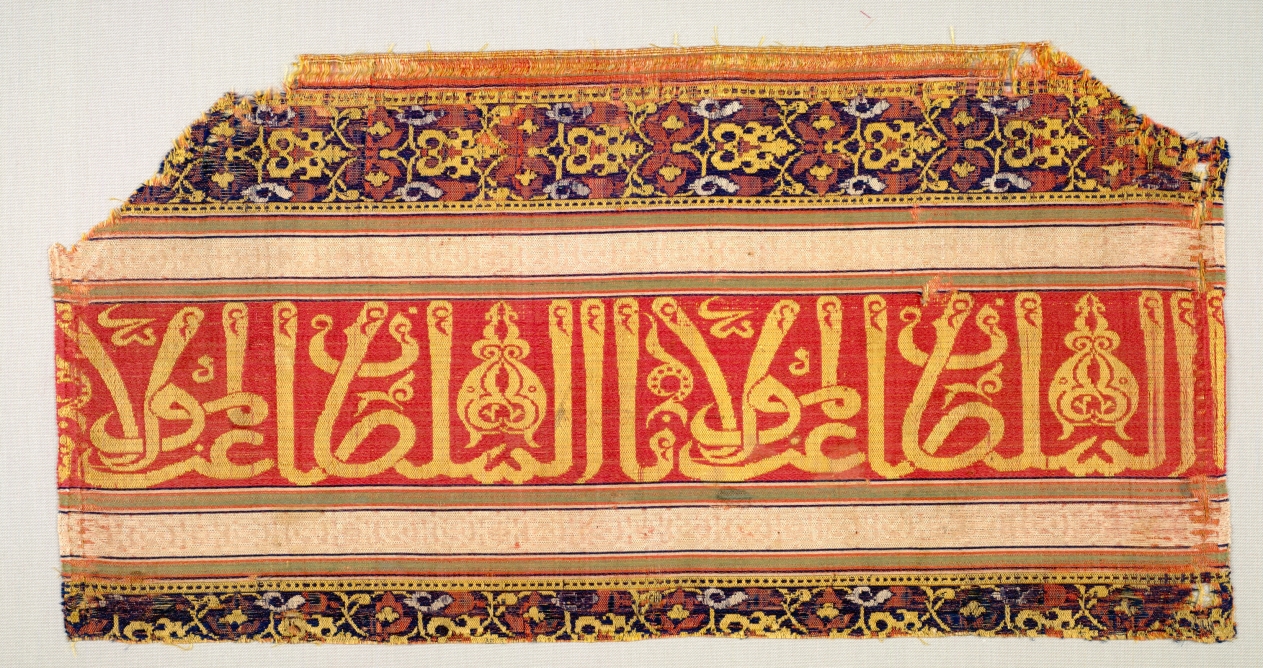
Heritage Research Artifact: Striped Silk from a Garment
Provenance and Materiality
This artifact—a fragment of striped silk, measuring approximately 12 by 8 inches, extracted from a late 19th-century gentleman’s waistcoat—represents a pivotal intersection of imperial silk weaving traditions and the bespoke tailoring ethos of London’s Savile Row. The silk, a lustrous, tightly woven twill, exhibits a pattern of alternating vertical stripes: a deep burgundy, a muted gold, and a subtle ivory. The fibers, when examined under magnification, reveal a uniform, cylindrical structure characteristic of Bombyx mori silkworms, cultivated exclusively in the sericulture regions of China and later Japan. The weave’s density—approximately 120 threads per inch—indicates a high-grade, warp-faced construction, typical of silks destined for elite European markets during the Qing Dynasty’s late period (circa 1840–1912). The stripes themselves are not printed but woven, a technique requiring precise loom adjustments, suggesting production in a specialized imperial workshop, likely in Suzhou or Hangzhou, where artisans held hereditary knowledge of pattern drafting and dyeing with natural indigo, madder, and weld.
The materiality of this silk is paramount. Its tactile quality—smooth, cool, and resilient—reflects the rigorous standards of imperial weavers, who were subject to imperial decrees mandating uniformity and flawlessness. The slight variation in stripe width (2.3 mm for burgundy, 1.8 mm for gold, and 1.5 mm for ivory) is not a defect but a deliberate design choice, echoing the asymmetrical aesthetics found in Ming and Qing court robes. This fragment, however, was not intended for a dragon robe or a mandarin’s surcoat. Instead, it was likely part of a bolt exported to London via the East India Company or, later, through private trade houses such as Jardine Matheson. The silk’s journey from imperial looms to a Savile Row tailor’s workroom underscores a cultural and economic exchange: the West’s insatiable demand for luxury textiles met the East’s mastery of sericulture, creating a hybrid artifact that transcends its origins.
Context: The Legacy of Imperial Silk Weaving
To understand this striped silk, one must first appreciate the legacy of imperial silk weaving in China. For over two millennia, silk was not merely a commodity but a symbol of imperial authority, cosmic order, and social hierarchy. The Imperial Silk Workshops, established during the Han Dynasty (206 BCE–220 CE) and refined under the Ming (1368–1644) and Qing (1644–1912) dynasties, were state-controlled entities that produced textiles exclusively for the emperor, his court, and high-ranking officials. These workshops, located primarily in Nanjing, Suzhou, and Hangzhou, employed thousands of artisans who were bound by hereditary roles and subjected to rigorous quality controls. The patterns they wove—dragons, phoenixes, clouds, and geometric motifs—were codified in sumptuary laws, with specific colors and designs reserved for specific ranks. Striped silks, while less overtly symbolic than dragon robes, were nonetheless significant. They appeared in court robes for lesser officials, in decorative hangings for palaces, and, notably, in export goods tailored to European tastes.
The 19th century marked a period of profound transformation for imperial silk weaving. The Opium Wars (1839–1842 and 1856–1860) forced China to open its ports to foreign trade, disrupting the monopoly of imperial workshops. Concurrently, the decline of the Qing Dynasty and the Taiping Rebellion (1850–1864) devastated sericulture regions, leading to a diaspora of skilled weavers. Many fled to Shanghai and Guangzhou, where they established private workshops catering to Western merchants. This fragment likely emerged from this transitional period—a product of both imperial tradition and commercial adaptation. The stripes, while reminiscent of Ming dynasty “cloud-pattern” silks, are simplified and scaled for European garments, reflecting a deliberate aesthetic negotiation. The burgundy stripe, for instance, derives from madder, a dye long used in Chinese textiles, but its saturation and depth were enhanced to satisfy Western preferences for richer, more dramatic hues.
Integration into Savile Row Tailoring
The arrival of this silk in London, likely in the 1880s, coincided with the golden age of Savile Row. Tailors such as Henry Poole & Co., Gieves & Hawkes, and Huntsman were establishing reputations for impeccable craftsmanship, catering to an aristocracy and burgeoning industrial elite who demanded distinction through dress. Striped silks, particularly those from China, were prized for their rarity and exoticism. They were used primarily for waistcoats, cravats, and linings—garments that allowed for subtle displays of wealth and taste. This fragment’s original garment, a waistcoat, would have been cut and sewn by a master tailor who understood the silk’s unique properties: its tendency to fray, its need for interlining to maintain structure, and its responsiveness to hand-stitching. The stripes would have been aligned with precision, often centered on the front panels to create a symmetrical, flattering silhouette.
The Savile Row approach to this silk was not merely technical but philosophical. Tailors viewed fabric as the foundation of a garment’s character. A striped silk from China was not simply a material; it was a narrative—a testament to the weaver’s skill, the merchant’s enterprise, and the wearer’s discernment. The waistcoat, as a garment, occupied a unique position in men’s fashion. It was the most expressive piece, often made from bolder fabrics than the coat or trousers, and it allowed for personal flourishes. A gentleman wearing this striped silk waistcoat would have signaled his cosmopolitanism, his appreciation for global craftsmanship, and his adherence to the understated elegance that defined Savile Row. The stripes, while visually striking, were restrained—a quiet assertion of status rather than a loud declaration.
Preservation and Interpretation
Today, this fragment resides in the Lauren Fashion Heritage Lab’s textile archive, preserved in a climate-controlled environment to prevent fiber degradation. Its condition—slight fading on the ivory stripe, minor fraying at the edges—speaks to its history of wear and care. The silk’s natural dyes have shifted over time, with the burgundy taking on a brownish cast and the gold mellowing to a pale ochre. These changes are not losses but additions, layers of patina that document the garment’s life. As a heritage artifact, it serves multiple purposes: a teaching tool for students of textile history, a reference for contemporary designers seeking inspiration, and a tangible link to the complex networks of trade, culture, and craft that shaped modern fashion.
In interpreting this artifact, we must resist the temptation to romanticize. The silk’s beauty is undeniable, but its production was embedded in systems of imperial control, colonial extraction, and labor exploitation. The weavers who created it were likely bound to their looms by hereditary obligations, their skills exploited for the benefit of the court and foreign merchants. The Savile Row tailor who cut it was part of an industry that relied on global supply chains, often opaque and inequitable. Yet, the artifact also embodies resilience and creativity. It represents the fusion of two distinct traditions—Chinese silk weaving and British tailoring—into a new form that transcended its origins. It is a reminder that heritage is not static but dynamic, shaped by continuous reinterpretation and exchange.
Conclusion
This striped silk fragment, though small, encapsulates a world of meaning. It is a product of imperial workshops, a commodity of global trade, a material of bespoke craftsmanship, and a symbol of cultural hybridity. For the Lauren Fashion Heritage Lab, it is a vital resource for understanding how fashion operates at the intersection of art, commerce, and identity. As we continue to study and preserve such artifacts, we honor the hands that wove, dyed, cut, and stitched them—and we commit to telling their stories with rigor and respect. In the tradition of Savile Row, we recognize that true elegance lies not in the fabric alone, but in the history it carries and the future it inspires.