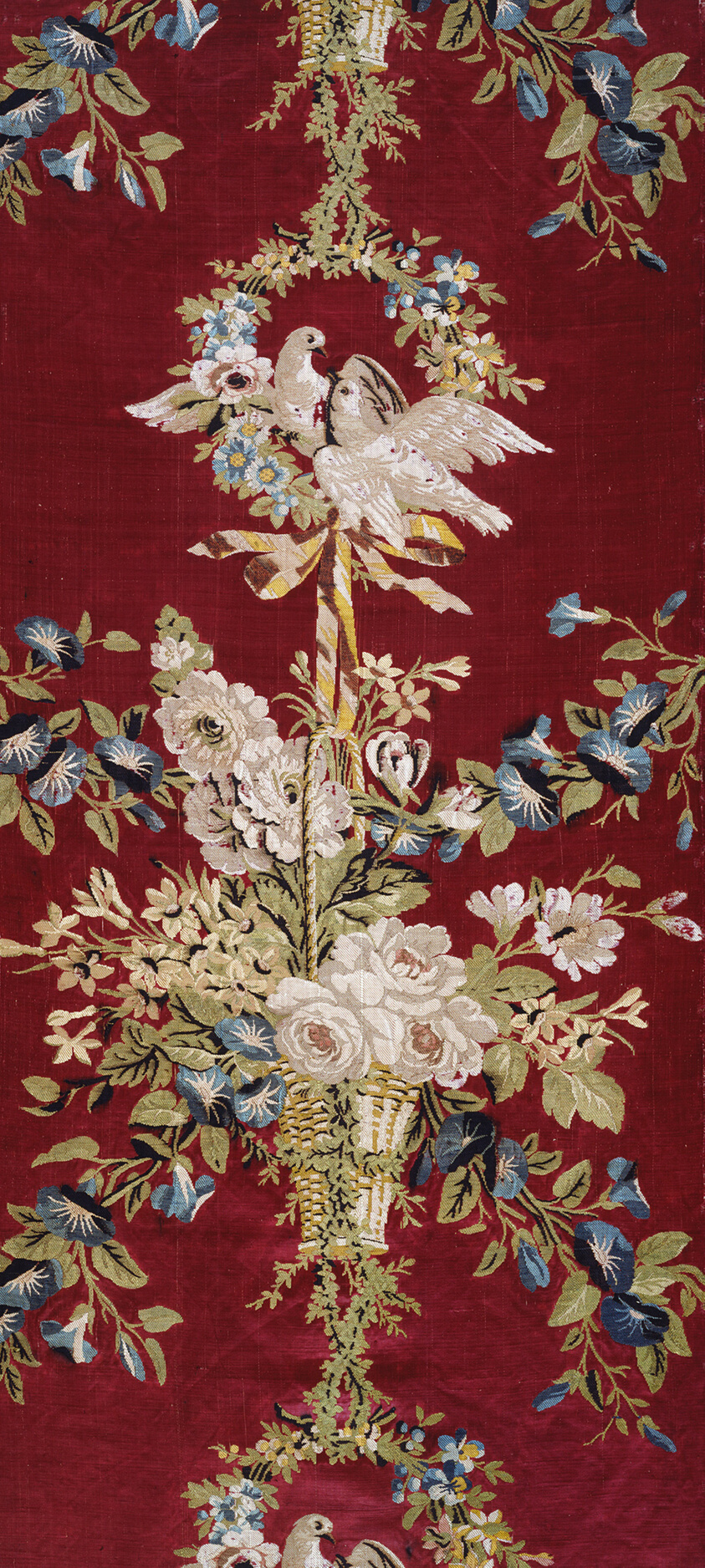
The Panel as Paradigm: A Study in Materiality and the Savile Row Aesthetic
Within the hallowed corridors of Lauren Fashion Heritage Lab, the study of heritage artifacts transcends mere antiquarian curiosity. It is an interrogation of craft, a dialogue between the hand of the artisan and the enduring principles of elegance. The subject of this paper—a silk and linen panel, executed in a satin weave with brocading wefts and finished with painted detail—serves as a singularly instructive artifact. It is not merely a textile; it is a thesis on the convergence of material integrity, structural precision, and fluid grace. This analysis, framed through the discerning lens of London’s Savile Row, will dissect the panel’s materiality, its construction, and its profound resonance with the sartorial philosophy that prizes timelessness over trend.
I. Materiality: The Dialogue Between Silk and Linen
The foundational choice of silk and linen is neither arbitrary nor merely decorative. It is a deliberate act of balancing opposing virtues. Silk, with its luminous, proteinaceous filaments, offers unparalleled luster, drape, and a tactile softness that speaks of luxury. Linen, derived from the flax plant, introduces a contrasting grammar: strength, breathability, and a subtle, textural irregularity that grounds the silk’s opulence. In the context of Savile Row, where a suit’s structure is paramount, this hybridity is instructive. The silk provides the fluid elegance—that characteristic fall and movement that distinguishes a garment from a mere covering. The linen provides the scaffolding, the tensile integrity that prevents the panel from becoming limp or unstructured. This is not a compromise; it is a synthesis. The panel’s materiality echoes the Row’s own philosophy: that true luxury is not about excess, but about the intelligent, harmonious pairing of elements to achieve a singular, enduring result.
The satin weave further amplifies this dialogue. By floating the warp yarns over multiple wefts, satin creates a surface of maximal light reflection, yielding a deep, liquid sheen. This is the weave of ceremony, of evening wear, of the moments when a gentleman’s presence is most felt. Yet, the inclusion of brocading wefts introduces a counterpoint. Brocading is a technique of discontinuous, supplementary wefts, woven only where the pattern demands. This creates a raised, textured relief—a deliberate interruption of the satin’s smooth plane. The effect is akin to a tailored lapel’s subtle roll or the precise pick-stitching on a hand-finished buttonhole: a detail that does not shout, but rather rewards the discerning eye. The brocading wefts, likely in a contrasting or metallic thread, add a layer of architectural interest, a quiet pattern that emerges from the fabric’s surface rather than being printed upon it.
II. The Painted Element: A Deliberate Intervention
The final material component—painted detail—represents the most audacious yet disciplined intervention. In the lexicon of Savile Row, painting is not a common technique for suiting, yet its presence here is not a violation of tradition but an expansion of its vocabulary. The paint is applied not as a garish splash, but as a controlled, almost calligraphic accent. It likely highlights the brocaded pattern, adding depth and shadow, or introduces a subtle, abstract motif that echoes the fluidity of the silk. This is the equivalent of a master tailor’s hand-stitched monogram inside a jacket pocket: a mark of authorship, a signature that elevates the object from the industrial to the personal. The paint, when applied to the satin’s surface, must be carefully formulated to maintain the fabric’s drape and hand. It is a testament to the artisan’s understanding that decoration must never compromise structure. The painted element is not a mask; it is a finishing touch, a final, considered stroke that completes the composition without overwhelming it.
III. Craftsmanship and the Savile Row Ethos
To understand this panel is to understand the classic silk craftsmanship that defines the highest echelons of textile production. The weaving of a satin with brocading wefts requires a loom of exceptional precision, operated by a weaver who understands the tension and rhythm of each thread. The painting, likely executed by hand with a fine brush, demands a steady hand and an eye for proportion. This is not mass production; it is the slow, deliberate work of a studio. This ethos aligns perfectly with the Savile Row tradition, where a single suit can require over 80 hours of handwork, dozens of fittings, and the collaboration of multiple specialists—cutter, tailor, finisher, and, in this case, weaver and painter.
The panel’s fluid elegance is not an accident of material; it is a product of this meticulous craftsmanship. The satin weave, when properly tensioned, allows the fabric to fall in soft, uninterrupted folds. The linen’s structure prevents it from collapsing. The brocading wefts add weight and texture, creating a subtle, three-dimensional topography that catches the light differently from every angle. The painted accents, if applied with restraint, guide the eye along the fabric’s surface, creating a sense of movement even when the panel is at rest. This is the same principle that governs a well-cut jacket: the fabric must move with the body, not against it. The panel, in its static form, is a study in potential energy, a promise of motion.
IV. Heritage and the Enduring Object
As a heritage research artifact, this panel is a repository of knowledge. It speaks to the technical capabilities of its era—the loom technology, the dyeing and painting methods, the aesthetic preferences of its patron. It also speaks to a philosophy of making that prioritizes longevity over disposability. In an age of fast fashion and synthetic blends, this panel’s silk and linen composition is a rebuke. It is a material that will age gracefully, its satin sheen mellowing, its linen fibers softening, its painted details acquiring a patina of use. This is the Savile Row ideal: an object that improves with time, that becomes a companion rather than a disposable commodity.
In conclusion, the silk and linen panel, with its satin weave, brocading wefts, and painted finish, is far more than a decorative fragment. It is a paradigm of material intelligence, a testament to the enduring power of classic craftsmanship, and a tangible expression of the fluid elegance that defines the Lauren Fashion Heritage Lab’s mission. It reminds us that true heritage is not about preserving the past in amber, but about understanding the principles that make an object worthy of preservation—principles of balance, integrity, and the quiet, confident assertion of quality. This panel, like a perfectly cut suit from Savile Row, does not demand attention; it commands respect. And that, in the final analysis, is the highest form of elegance.