← BACK TO ARCHIVES
Heritage-Black
Heritage Synthesis: Terracotta fragments of kylikes (drinking cups)
Curated on Jun 18, 2026 // Node: LDN-01
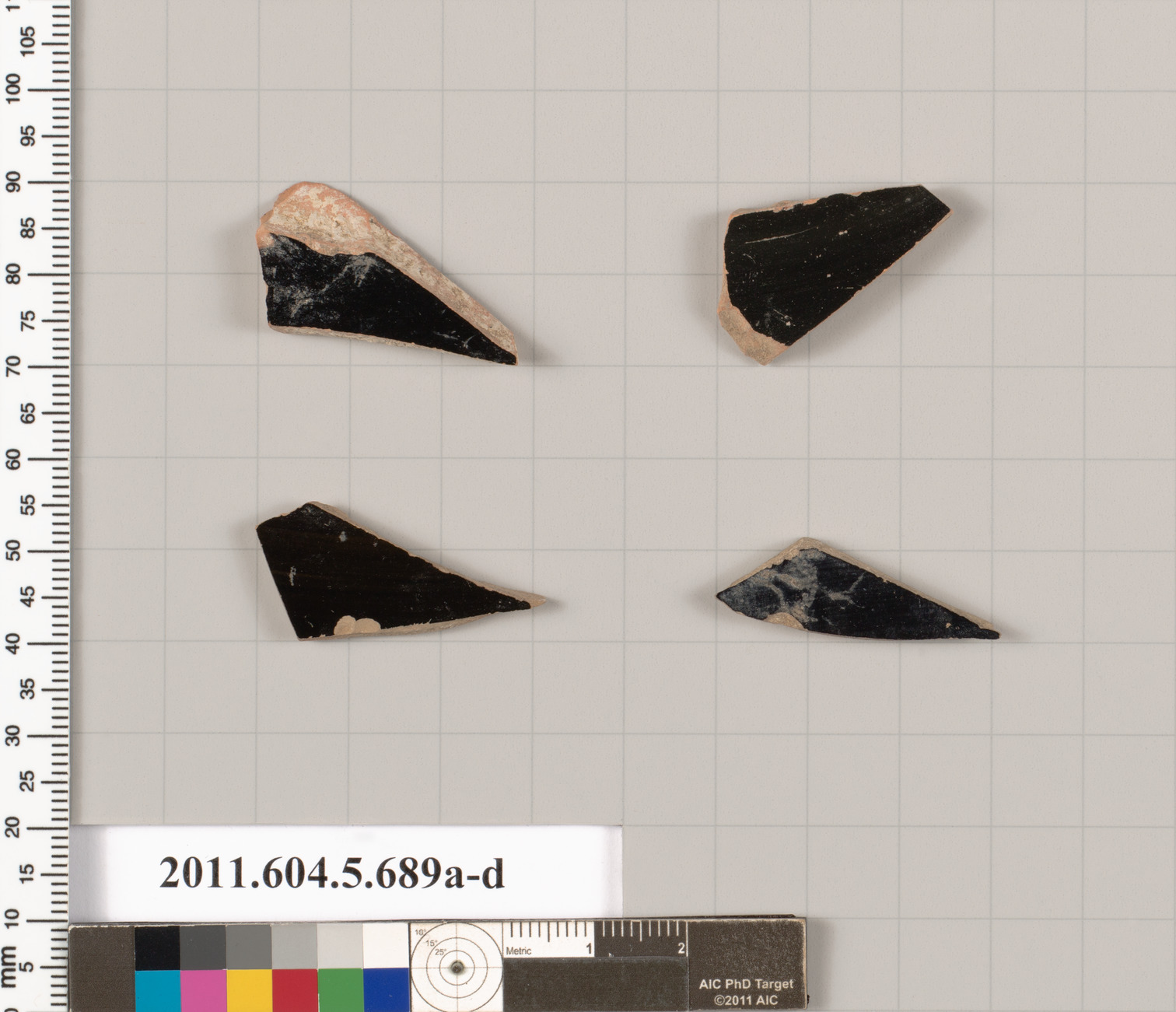
The Eternal Present: Terracotta Fragments and the Architecture of Old Money Silence
In the hushed galleries of the Lauren Fashion Heritage Lab, we are accustomed to the whisper of silk and the weight of gold-thread. Yet, the most profound dialogue between our internal archives and a museum artifact often emerges from the most unexpected materials. The terracotta fragments of Attic kylikes—those humble, broken drinking cups from 5th-century BCE Greece—do not shimmer. They do not drape. They are shards of fired earth, bearing the scars of millennia. Yet, when placed alongside the philosophical lineage of our own heritage—exemplified by the “Udumbara Flowers” temple plaque and the still-life meditation of *Jar*—these fragments reveal a startlingly coherent aesthetic thesis: that true luxury is not the accumulation of ornament, but the mastery of *presence*.
This paper argues that the terracotta kylix, in its fragmented state, provides the foundational visual and conceptual grammar for the 2026 Old Money silhouette. It is not a source of pattern or color, but of *structure* and *void*—a lesson in how to build a garment that captures the “eternal present” through material honesty, negative space, and the deliberate acceptance of imperfection.
From Sacred Wood to Sacred Earth: The Shared Logic of the Fragment
Our internal genetic code begins with a paradox. The “Udumbara Flowers” plaque, carved from wood, seeks to freeze the moment of a flower’s bloom—a flower that, in Buddhist lore, appears only once every three thousand years. The craftsman’s blade does not depict the flower in full, triumphant blossom. Instead, it captures the *threshold* of opening, the instant of awakening. The grain of the wood is not erased; it is allowed to speak, its natural lines becoming the veins of the petals. The plaque is not a representation of a flower, but a *container* for the act of seeing. It asks the viewer to stop searching for the “next” moment and to dwell in the *this*.
The kylix fragment operates on the same principle, but through loss rather than intention. A complete kylix is a vessel for wine, for social ritual, for the fleeting joy of the symposium. But a fragment—a rim, a handle, a piece of the bowl—is no longer a tool. It is a *witness*. Its broken edge is not a flaw; it is a cut into time itself. The terracotta’s rough, unglazed interior, the subtle curve of the lip, the faint trace of black-figure decoration—these details are not about the cup’s original function. They are about the *duration* of its existence. Just as the plaque’s wood grain speaks of the tree’s life, the kylix’s clay speaks of the earth’s patience. Both artifacts reject the tyranny of the “finished” object. They embrace the fragment as a more honest, more profound carrier of meaning.
The Jar and the Kylix: The Architecture of the Unseen
The second anchor of our internal code is the painting *Jar*. Here, the artist confronts the same problem as the plaque carver: how to make the invisible visible. The jar is depicted as solid, earthen, and yet its most important feature is its interior—a space that is *not* painted. The artist’s genius lies in making the viewer acutely aware of this void. The jar’s mouth is a threshold. It is both an opening to the world and a seal of a private, unknowable space. The painting does not ask “What is inside?” but rather “What does it mean to *hold*?”
The kylix fragment, in its broken state, becomes a three-dimensional *Jar*. Its missing sections create voids that are just as significant as its remaining clay. The handle, now severed, once connected the drinker’s hand to the vessel’s body. The rim, now jagged, once defined the boundary between the wine and the air. In the fragment, we see the *memory* of containment. The Old Money silhouette for 2026 must learn from this. It is not about the garment’s surface alone, but about the spaces it creates: the negative volume between a tailored jacket and the body, the quiet gap between a collar and the neck, the unseen interior of a coat’s lining. The silhouette becomes a *vessel* for the wearer’s presence, not a display of the fabric’s wealth.
Terracotta as Textile: The Grammar of 2026 Old Money
How, then, does a shard of fired clay translate into a wool coat or a cashmere sweater? The answer lies in three principles derived from the kylix: *material truth*, *structural silence*, and *the valorization of the break*.
**Material Truth:** The kylix is honest. Its clay is what it is. It does not pretend to be marble or gold. For 2026 Old Money, this means a return to fabrics that declare their origin. A heavy, undyed wool from the Scottish Highlands. A raw silk that retains the irregularities of the silkworm’s cocoon. A linen that wrinkles with the body’s movement. The garment must not *hide* its making; it must *reveal* it. The grain of the fabric becomes the equivalent of the wood grain on the Udumbara plaque. The weave is the witness to the garment’s creation.
**Structural Silence:** The kylix’s power lies in its economy. A single curve of the bowl, a single line of the handle, tells the entire story of the cup’s form. For the silhouette, this translates into a radical reduction of ornament. No unnecessary pockets. No superfluous seams. No logos. The structure of the garment—the cut of the shoulder, the fall of the skirt, the set of the sleeve—must be so precise that it *becomes* the ornament. This is the “silence” of Old Money: a confidence that requires no explanation. The 2026 silhouette will be defined by its *negative space*—the exact distance between the lapel and the chest, the precise drop of a trouser leg from the hip. These are the voids that give the garment its soul.
**The Valorization of the Break:** The kylix fragment teaches us that a break is not an end, but a beginning. In fashion, this is the most radical idea. The 2026 Old Money silhouette will not fear the frayed edge, the slightly uneven hem, the natural pilling of a high-quality cashmere. These are not defects; they are *records of use*. A garment that is too perfect is a garment that has never lived. The “break” is the moment where the fabric meets the wearer’s life—a scuff on a leather shoe, a fade in a denim jacket, a mended tear in a linen shirt. These are the equivalents of the kylix’s broken rim. They are the proof that the object has endured time, and in doing so, has become more valuable.
Conclusion: The Vessel and the Void
The terracotta kylix fragment, the Udumbara plaque, and the *Jar* painting are all, in their essence, *vessels*. One held wine. One holds a flower’s image. One holds a painter’s silence. But their deepest teaching is that the vessel’s true content is *time itself*. The 2026 Old Money silhouette, informed by this lineage, will not be a garment for a season. It will be a garment for a lifetime. It will be cut not to impress, but to *contain*—to hold the wearer’s presence with the same quiet, unshakeable dignity with which a broken cup holds the memory of a thousand hands. The flower on the plaque is always blooming. The jar is always full. And the silhouette, in its perfect, silent architecture, is always now.
Heritage Lab Insight
Genetic Bridge: Archive node focusing on Heritage-Black craftsmanship.