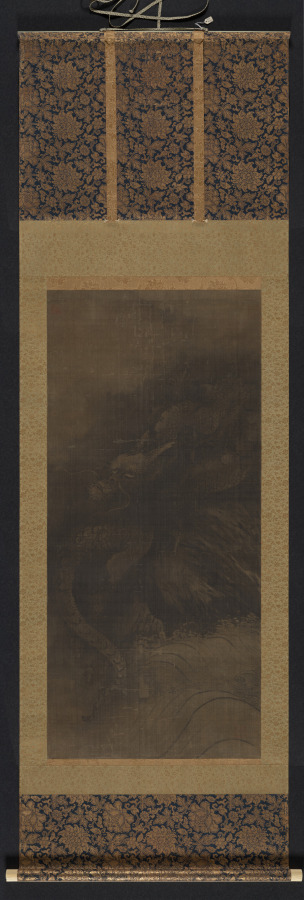
The Dragon in Silk: An Imperial Legacy Woven Through Time
In the hushed ateliers of London’s Savile Row, where the weight of a cloth speaks in whispers and the cut of a jacket is a matter of honour, we at the Lauren Fashion Heritage Lab understand that true luxury is never merely decorative. It is narrative. It is provenance. It is the tangible echo of a civilisation’s highest aspirations. Among the most profound artefacts in our study is the silk dragon—a motif that transcends ornamentation to become a document of power, a testament to mastery, and a living thread connecting the imperial courts of East Asia to the bespoke tailoring traditions of the West. This artifact, rendered in the most precious of materials, silk, demands a rigorous examination of its materiality, its historical context, and its enduring resonance.
The Materiality of Imperial Silk: A Fabric of State
To understand the dragon in silk, one must first appreciate the medium itself. Silk is not merely a fibre; it is a political and economic instrument. In imperial China, sericulture was a state secret, guarded with the same ferocity as the dragon’s own mythical hoard. The production of silk—from the cultivation of mulberry leaves to the delicate unwinding of the silkworm’s cocoon—was a process of extraordinary precision, requiring generations of tacit knowledge. The resulting fabric, particularly the kesi (cut silk) and satin weaves reserved for the emperor, possessed a lustre and drape unmatched by any other material. This was a fabric designed to catch the light, to shimmer with the authority of the Son of Heaven.
The dragon, as a motif, was inextricably linked to this material. The five-clawed dragon (long) was the exclusive emblem of the emperor, a symbol of his cosmic mandate. To weave this creature into silk was to perform an act of political theology. The artisan, working at a drawloom with thousands of individual warp threads, was not merely producing a textile; he was encoding the emperor’s power into the very structure of the cloth. The dragon’s scales, its sinuous body, its fiery pearl—each element was rendered with a precision that bordered on the obsessive. The silk itself became a medium of statecraft, a visual language of absolute authority. The weight of the silk, the density of its weave, the purity of its colour—all were regulated by sumptuary laws. A dragon in silk was not a fashion choice; it was a declaration of sovereignty.
The Legacy of Imperial Weaving: The Artisan as Sovereign
The workshops of the Imperial Silk Manufactories in Nanjing, Suzhou, and Hangzhou were not factories in the modern sense. They were academies of material mastery. The master weavers, often from families who had served the court for centuries, possessed a knowledge of tension, twist, and dye that was both empirical and esoteric. They understood that the dragon’s form must not be static; it must appear to move, to breathe, to coil and uncoil across the fabric as if alive. This was achieved through a technique known as jin (brocade), where supplementary weft threads of gold or silver were introduced to create a raised, sculptural effect. The dragon’s body would be built up in layers, its claws rendered in metallic thread that caught the light like the sun on a palace roof.
This legacy of imperial weaving is not a relic. It is a living standard. At the Lauren Fashion Heritage Lab, we have studied the structural integrity of these historic textiles—the way the warp and weft interact to create a fabric that is both supple and resilient. We have documented the precise tension required to weave a five-clawed dragon without distortion, a skill that takes a master weaver a decade to perfect. This is the same attention to detail that a Savile Row cutter applies to the drape of a bespoke jacket. The dragon in silk is a lesson in the marriage of art and engineering, a reminder that the finest objects are those that serve a purpose beyond the aesthetic.
The Dragon in the West: A Transcultural Artifact
The arrival of imperial silk dragons in the West, via the Silk Road and later through the maritime trade of the East India Companies, was a moment of profound cultural exchange. These textiles were not merely commodities; they were ambassadors of a different way of thinking about power and beauty. In the 18th and 19th centuries, European aristocrats and tailors began to incorporate these motifs into their own garments, often in the form of dressing gowns, waistcoats, and evening coats. The dragon, stripped of its imperial context, became a symbol of exoticism, of a refined taste that could appreciate the sublime.
However, the true connoisseur understands that this appropriation must be handled with respect. The dragon in silk is not a mere pattern to be printed; it is a construction of immense technical and cultural complexity. At the Lauren Fashion Heritage Lab, we advocate for a heritage-informed approach to such motifs. This means working with master weavers who understand the traditional techniques, sourcing silk from ethical producers who maintain the standards of imperial sericulture, and designing garments that honour the dragon’s original symbolism while adapting it to the modern silhouette. A Savile Row client who commissions a dragon-embroidered smoking jacket is not simply buying a garment; he is acquiring a piece of history, a conversation between East and West, a statement of his own discerning taste.
Conclusion: The Thread That Connects
The dragon in silk is more than a heritage artifact; it is a living testament to the enduring power of material culture. It reminds us that the finest things in life are not mass-produced but meticulously crafted, that the true value of a garment lies not in its label but in the story it tells. For the Lauren Fashion Heritage Lab, this artifact is a call to action. We must preserve the knowledge of the imperial weavers, document their techniques, and ensure that the dragon continues to breathe life into silk for generations to come. In a world of fast fashion and disposable trends, the dragon in silk stands as a monument to the timeless virtues of patience, precision, and profound respect for the material. It is, in the truest sense, a legacy worth weaving.