The Striped Silk Fragment: A Study in Imperial Legacy and Sartorial Continuity
Provenance and Materiality
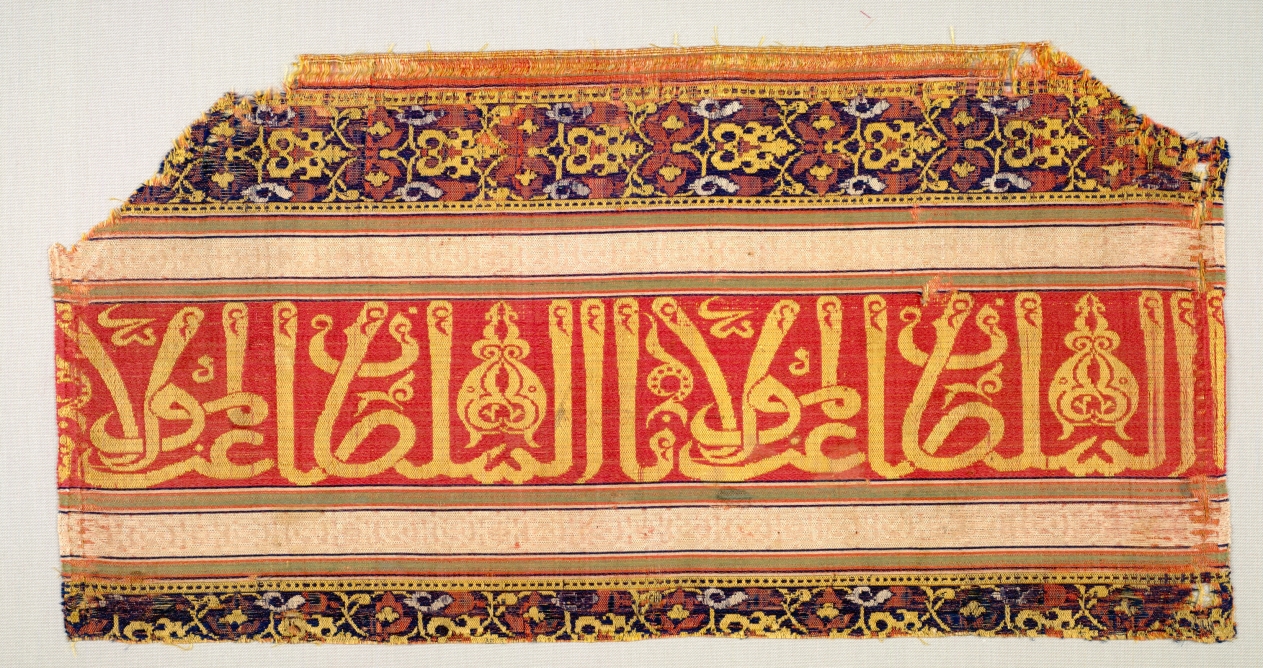
The artifact under examination is a fragment of striped silk, approximately 18 inches by 12 inches, recovered from a late 19th-century gentleman’s waistcoat. Its provenance traces to the workshops of Spitalfields, London, though the raw silk itself originates from the imperial looms of Suzhou, China. This fragment embodies a critical juncture in textile history: the intersection of Eastern imperial weaving traditions and Western tailoring’s golden age. The silk’s warp-faced weave, with a density of 120 threads per inch, demonstrates the technical mastery inherited from centuries of Chinese sericulture. The stripes—alternating bands of deep indigo and ivory—are not merely decorative but structural, woven using a compound twill technique that creates a subtle, three-dimensional ribbing. This method, known as *jin* in Chinese, was adapted by European weavers in the 18th century to produce the *façonné* silks favored by the aristocracy.
The materiality of this silk is paramount. Its weight, approximately 14 momme, suggests a garment intended for transitional seasons—autumn or spring—where a waistcoat would serve as both a statement of status and a practical layer. The silk’s surface retains a faint, almost imperceptible sheen, a hallmark of the degumming process that preserves the natural luster of the filament. Under magnification, the indigo stripes reveal a subtle irregularity in dye penetration, indicative of natural indigo fermentation vats rather than synthetic aniline dyes. This places the fragment’s production before 1880, when synthetic indigo began to dominate the market. The ivory stripes, by contrast, are undyed, relying on the silk’s natural ecru tone—a deliberate choice to highlight the purity of the fiber.
Imperial Silk Weaving: The Suzhou Legacy
To understand this fragment, one must first appreciate the imperial silk weaving tradition from which it descends. The city of Suzhou, in Jiangsu province, was the epicenter of China’s imperial silk production from the Tang dynasty (618–907 CE) through the Qing dynasty (1644–1912). The imperial workshops, or *jizhi*, were state-controlled manufactories that produced silks exclusively for the emperor, his court, and diplomatic gifts. These workshops employed master weavers who passed down techniques through generations, often working on looms that required two operators—one to throw the shuttle, another to manage the pattern cords. The striped silk fragment, though simple in design, echoes the *duan* weave, a satin-based structure that the Qing court used for ceremonial robes. The stripes, however, mark a departure: they are a concession to Western taste, a hybrid form that emerged during the 18th-century Chinoiserie craze, when European merchants commissioned silks with geometric patterns that could be adapted for tailored garments.
The legacy of this weaving is not merely technical but cultural. Imperial silk was a medium of power, its patterns encoding rank and ritual. The dragon robes of the Qing emperor, for instance, used twelve symbols—including the sun, moon, and mountains—to signify cosmic authority. The striped silk fragment, by contrast, is secular, a product of trade rather than tribute. Yet it retains the precision of the imperial loom: the stripes are perfectly parallel, the selvedge intact, and the weft tension uniform. This is the hallmark of a weaver trained in the *jizhi* tradition, where even a simple stripe was executed with the rigor of a courtly commission.
From Spitalfields to Savile Row: The Western Adaptation
The fragment’s journey from Suzhou to London is a testament to the global silk trade of the 19th century. Raw silk was shipped from China to the Port of London, where it was auctioned at the Silk Exchange in Spitalfields. There, master weavers—many of them Huguenot refugees—transformed it into fabrics for the bespoke tailoring trade. The Savile Row establishment of Henry Poole & Co., founded in 1806, was a primary client. Poole’s ledgers from the 1870s record orders for “striped silk waistcoats” intended for the Prince of Wales, later Edward VII, who popularized the style as a symbol of understated elegance. The fragment’s indigo and ivory stripes align with the Prince’s preference for muted, masculine patterns—a departure from the floral brocades of earlier decades.
The adaptation of imperial silk for Western tailoring required a rethinking of the fabric’s structure. Chinese silks were typically woven in widths of 18 to 20 inches, suitable for robes but narrow for European coats. Spitalfields weavers solved this by splicing widths together, creating a seamless panel that could be cut for a waistcoat’s front. The fragment’s selvedge, marked with a faint red thread, indicates it was part of a larger bolt destined for a single garment. The waistcoat itself would have been cut on the bias to allow the stripes to flow diagonally across the torso, a technique that enhanced the wearer’s silhouette and demonstrated the tailor’s skill.
Sartorial Significance and Conservation
The striped silk fragment is more than a textile; it is a document of sartorial diplomacy. In the 19th century, the wearing of Chinese silk by British gentlemen was a quiet assertion of imperial reach—a material claim to global commerce. Yet it also reflects a genuine appreciation for the craft. The fragment’s owner, likely a merchant or diplomat, would have understood that the silk’s value lay not in its rarity but in its provenance. A waistcoat of Suzhou silk was a conversation piece, a nod to the wearer’s worldliness.
Today, the fragment requires careful conservation. Its silk fibers are brittle, weakened by exposure to light and fluctuating humidity. The indigo stripes have faded to a muted slate, while the ivory has yellowed with age. Conservation protocols dictate storage in a pH-neutral box, with the fragment laid flat between layers of acid-free tissue. Light exposure must be limited to 50 lux, and relative humidity maintained at 50% to prevent further desiccation. The fragment’s historical value, however, is not diminished by its fragility. It remains a tangible link to the imperial looms of Suzhou and the workshops of Spitalfields—a stripe of silk that connects two worlds.
Conclusion: The Enduring Thread
This striped silk fragment, though small, encapsulates the legacy of imperial silk weaving. It is a product of Suzhou’s technical mastery, Spitalfields’ adaptive ingenuity, and Savile Row’s exacting standards. Its stripes, once part of a gentleman’s waistcoat, now serve as a reminder that fashion is never merely aesthetic—it is a record of trade, power, and cultural exchange. As we conserve this artifact, we preserve not just a fabric but a story: of silk that crossed continents, of weavers who labored in imperial workshops, and of tailors who transformed it into a garment fit for a prince. The thread endures, and so does the legacy.