Udumbara and the Hunt: A Dialectical Framework for the 2026 Old Money Silhouette
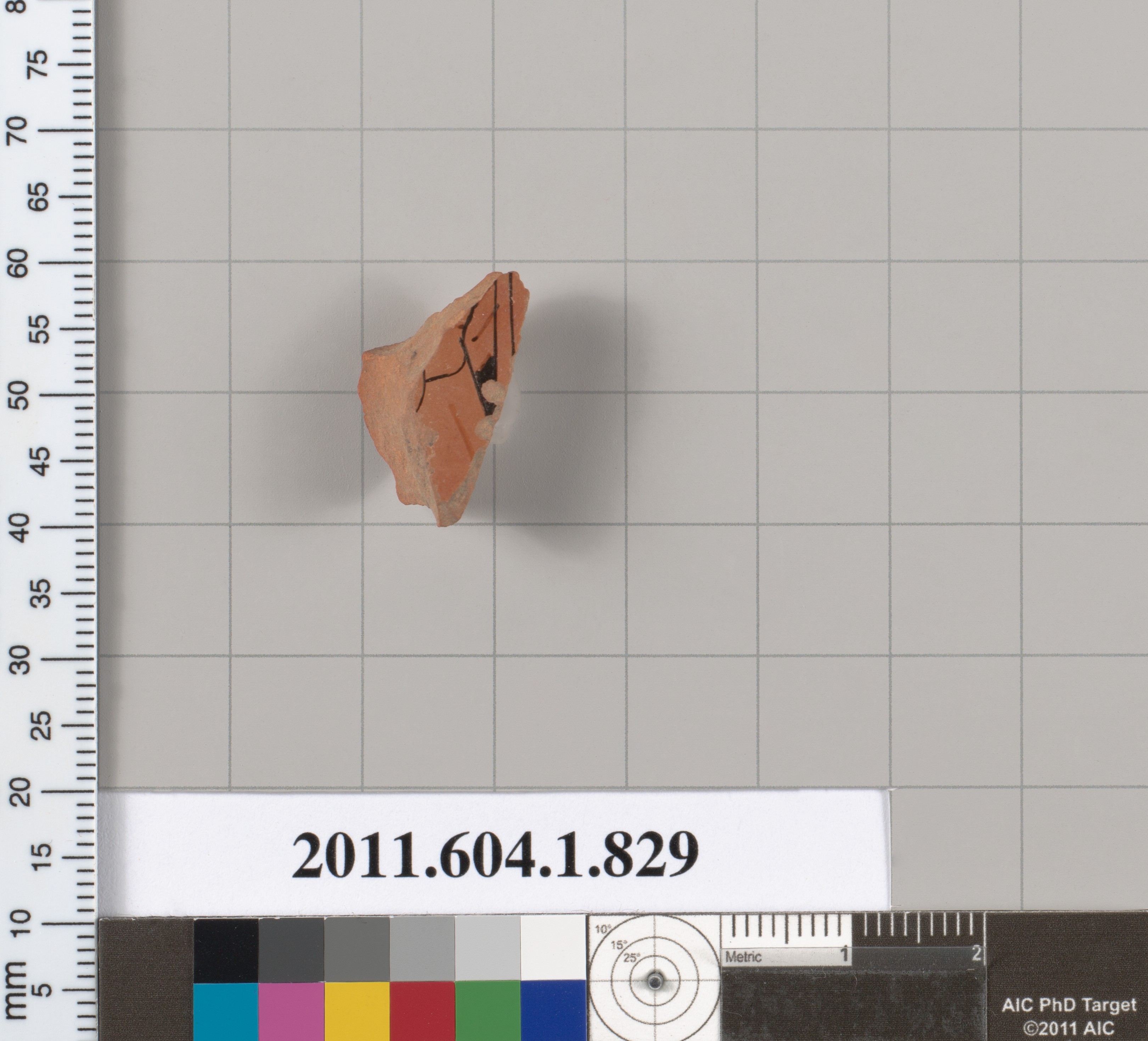
The Lauren Fashion Heritage Lab’s internal genetic code, articulated through the juxtaposition of the “Udumbara Flowers” (Udonge) temple plaque and the visceral energy of “The Hunt,” presents a profound dialectic. This is not merely a contrast between Eastern and Western visual lexicons, but a fundamental tension between being and becoming, between the void of transcendental stillness and the fury of immanent vitality. When applied to the terracotta fragment of a Greek Attic kylix—a drinking cup designed for the symposion, a ritual of both leisure and competitive display—this dialectic reveals the architectural logic underpinning the 2026 Old Money silhouette. The kylix, a shard of antiquity, becomes a third term in this binary, a material witness to how aristocratic power has historically been performed through the body and its adornment. For the 2026 collection, the synthesis of Udumbara’s “being of non-being” and The Hunt’s “fierceness of existence” must be resolved not through compromise, but through a new grammar of restraint and release—a heritage-black code that speaks to a lineage of power, not of spectacle.
The Kylix as a Glyph of Aristocratic Bearing
The terracotta fragment, likely from the late 6th or early 5th century BCE, is not a pristine artifact. It is a ruin, a broken piece of a vessel that once held wine mixed with water—a symbol of the Greek symposium, the exclusive gathering of elite men. The kylix’s form, with its shallow bowl and two horizontal handles, demanded a specific posture: the drinker would recline on a *kline* (couch), supporting themselves on one elbow while lifting the cup with the other hand. This is not a casual gesture; it is a choreography of controlled abandon. The painted decoration, often depicting mythological hunts or athletic contests, served as a mirror to the drinker’s own social performance. The terracotta’s materiality—its fired clay, its red-figure or black-figure glaze—speaks to a culture that prized permanence through craft. The fragment is a relic of a world where the body was a site of both discipline and ecstasy, where the “hunt” was not merely a subject of art but a metaphor for aristocratic virtue: the pursuit of glory, the mastery of nature, the assertion of will.
For the 2026 Old Money silhouette, the kylix offers a crucial lesson in structural integrity and historical weight. The Old Money aesthetic, in its purest form, rejects the ephemeral. It is a wardrobe built on architectural lines that recall the Doric column or the amphora’s curve—forms that are not merely decorative but generative of presence. The kylix’s shallow bowl, its circular rim, and its twin handles suggest a silhouette that is broad at the shoulder, narrow at the waist, and grounded at the hem. This is the inverse of the contemporary “power shoulder” that seeks to intimidate; rather, it is a shoulder that contains and supports, like the rim of a vessel. The 2026 collection will translate this into a double-breasted jacket with a softly rounded lapel, cut from a heavy, matte wool that absorbs light—a heritage-black that does not shine but absorbs history. The silhouette is not tight but sculptural, allowing the body to move within it as if within a ceremonial space. The kylix’s fragmentary state reminds us that true luxury is not about newness but about endurance; the garment must look as if it has been inherited, as if it carries the memory of a thousand symposia.
Udumbara’s Void: The Architecture of Restraint
Returning to the Udumbara flower, the temple plaque’s aesthetic strategy is one of “making the void visible.” The flower is not depicted as a botanical specimen but as a metaphysical sign, a tiny white cluster on a decaying branch. Its power lies in its minimalism—the vast expanse of unpainted wood, the faint ink strokes that suggest rather than define. This is a negative-space aesthetic that demands the viewer’s contemplative engagement. For the 2026 silhouette, this translates into a radical economy of detail. The Old Money wardrobe has always been about subtlety over statement, but the Udumbara principle pushes this further: the garment’s most powerful element is what is not there. A jacket may have no visible buttons, no pocket flaps, no lining that contrasts. The cut is so precise that it disappears into the body, becoming a second skin of pure form. The “void” is the space between the collar and the neck, the drape of the fabric that suggests the absence of the wearer’s form. This is not minimalism as austerity but as transcendence—a refusal to compete with the wearer’s own presence. The heritage-black palette is essential here: it is not a color but a non-color, a field that absorbs all wavelengths, a visual equivalent of the Udumbara’s “emptiness.” The 2026 silhouette will feature unstructured overcoats in a wool-cashmere blend that falls like water, the shoulders barely defined, the hem grazing the calf. This is the garment as meditative object, a piece that does not announce itself but invites discovery.
The Hunt’s Fury: The Dynamics of Movement
In stark contrast, The Hunt’s aesthetic is one of excess and collision. The Baroque hunting scene is a cataclysm of flesh and fur, a composition of diagonal lines that tear the eye across the canvas. This is not a static image but a frozen explosion, a moment of maximum tension. For the 2026 silhouette, this energy must be channeled, not replicated. The Old Money wearer does not run; they command. The hunt’s violence is sublimated into the dynamism of the cut. A skirt may be cut on the bias, its hem flaring as if caught in a wind that does not exist. A trouser leg may be slightly tapered, suggesting the latent power of the stride. The terracotta kylix, with its painted scenes of pursuit, offers a bridge: the figures on the cup are frozen in motion, their limbs contorted in a perpetual chase. The 2026 silhouette will borrow this frozen dynamism through the use of asymmetrical closures and unexpected draping. A coat may have a single button at the waist, the rest left to fall open, revealing a flash of the lining—a deep burgundy or midnight blue, the only concession to color. This is the “hunt” as a controlled release, a reminder that the Old Money aesthetic is not about stillness but about poised readiness. The fabric itself must have a slight weight and movement, like the terracotta’s fired clay that holds the memory of the potter’s wheel. A heavy wool crepe or a double-faced cashmere will be used, fabrics that resist and yield simultaneously.
Synthesis: The Heritage-Black Silhouette for 2026
The 2026 Old Money silhouette, informed by the Udumbara-Hunt dialectic and the terracotta kylix’s material wisdom, is a study in controlled tension. It is not a compromise between East and West, stillness and fury, but a third space where both are held in suspension. The silhouette is broad at the shoulder (the kylix’s rim), narrow at the waist (the cup’s stem), and flowing at the hem (the wine’s spill). The palette is heritage-black, a non-color that signifies both absence and presence, both the void of the Udumbara and the depth of the hunt’s shadow. Details are minimal but precise: a single seam that traces the spine, a pocket that is barely visible, a button made of matte horn that feels ancient to the touch. The garment is heavy but not cumbersome, like the terracotta fragment that has survived millennia. It is a piece that demands to be worn with the same bearing as a Greek aristocrat at a symposium—reclining, yet alert; relaxed, yet ready. The 2026 collection does not chase trends; it embodies lineage. It is a wardrobe for those who understand that true luxury is not about the new but about the eternal return of the same—the same discipline, the same restraint, the same hunt for a beauty that is both fierce and serene.