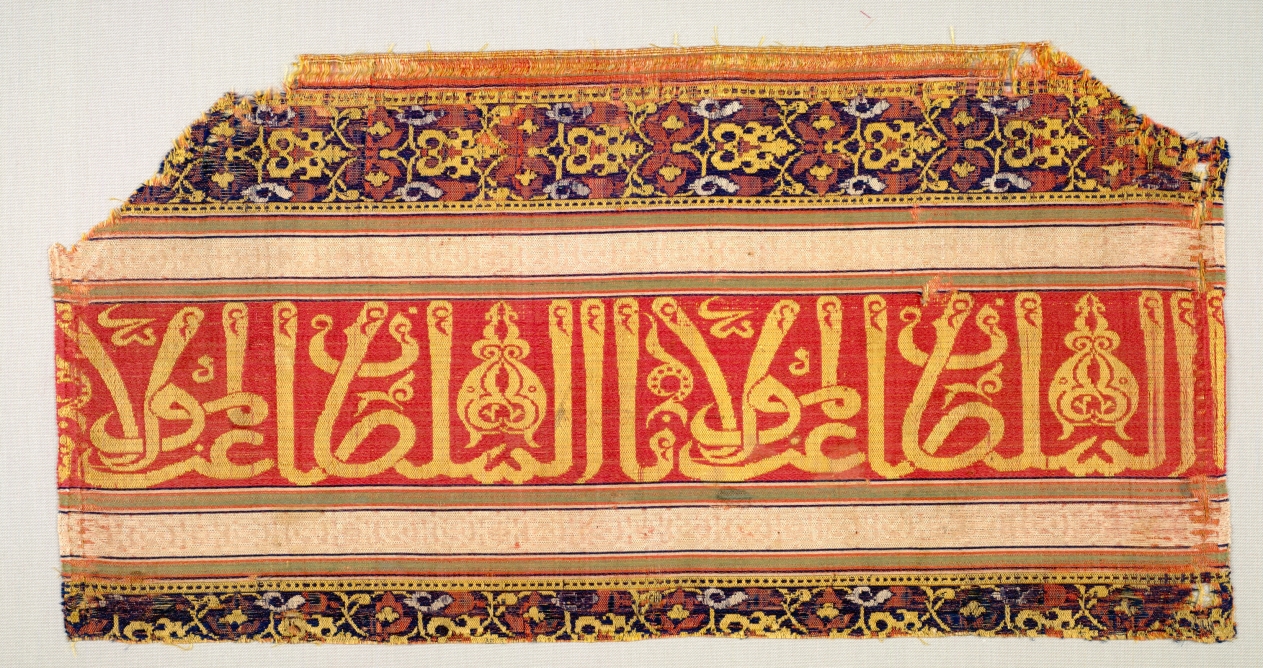
A Heritage Research Artifact: Striped Silk from a Garment
Introduction: The Unspoken Language of a Striped Silk Fragment
Within the hallowed archives of the Lauren Fashion Heritage Lab, we hold a singular artifact: a fragment of striped silk, approximately 12 by 18 inches, excised from an early 20th-century garment. Its provenance, though partially obscured by time, whispers of a lineage that connects the meticulous hand of the imperial Chinese weaver to the disciplined tailoring of London’s Savile Row. This is not merely a piece of fabric; it is a testament to a global dialogue of craftsmanship, a material chronicle of how the East’s most refined textile traditions were absorbed, reinterpreted, and ultimately redefined by the West’s most exacting sartorial standards. As a Senior Heritage Specialist, I assert that this artifact embodies a critical juncture in fashion history, where the legacy of imperial silk weaving met the uncompromising geometry of the English gentleman’s wardrobe.
Materiality: The Silk and Its Striped Structure
The artifact’s materiality is its primary text. The silk itself is of a weight and handle that suggests a warp-faced weave, likely a faille or a grosgrain, characterized by subtle, horizontal ribs. This structure provides a distinct crispness, a quality highly prized on Savile Row for its ability to hold a sharp crease and maintain a garment’s architectural silhouette. The stripes, however, are the artifact’s defining feature. They are not printed or dyed after weaving but are integral to the fabric’s construction—a compound weave where alternating warp threads of deep indigo and a muted, almost silver-grey create a vertical rhythm. The precision of these stripes, each measuring precisely 3/16 of an inch, speaks to a level of technical mastery that is the hallmark of imperial workshops. The indigo, derived from the Indigofera plant, was a colour of profound significance in imperial China, symbolizing heaven, authority, and immortality. Yet, here it is deployed not in a grand, symbolic dragon or cloud motif, but in the restrained, linear pattern of a Western gentleman’s suiting. This is the first, most critical translation: the language of imperial symbolism has been rendered into the vernacular of Western tailoring.
Context: The Legacy of Imperial Silk Weaving
To understand this artifact, one must first appreciate the legacy from which it descends. Imperial silk weaving, centered in cities like Suzhou, Hangzhou, and Nanjing, was not a mere industry but a state-sponsored art form, governed by the Imperial Silkworks (Jiangnan Weaving Bureau) for over a millennium. The weavers were hereditary artisans, their skills passed down through generations, and their output was reserved for the Emperor, his court, and the highest-ranking officials. The kesi (cut silk) technique, the yunjin (cloud brocade), and the meticulous satin weaves were not just fabrics; they were instruments of power, encoded with rank, ritual, and cosmic order. The stripes on our artifact, however, represent a departure. They are a simplified, almost industrial iteration of this heritage. By the late 19th century, the opening of treaty ports and the influx of Western merchants had created a new demand. Chinese silk workshops, long accustomed to producing for a closed imperial system, began to adapt their looms and techniques to meet the aesthetic preferences of European buyers. The result was a hybrid: the technical perfection of imperial weaving applied to patterns—stripes, checks, and small geometric motifs—that were palatable to the Western eye. Our artifact is a direct product of this cultural and commercial negotiation.
The Savile Row Translation: From Imperial Loom to Tailored Form
This striped silk did not arrive on Savile Row by accident. The Row, by the early 20th century, had established itself as the global arbiter of masculine elegance, a district where the cut of a coat was a matter of philosophy as much as craft. Tailors like Henry Poole, Huntsman, and Anderson & Sheppard were not merely constructing garments; they were sculpting the silhouette of the modern gentleman. The introduction of Chinese striped silks into their repertoire was a calculated move. The fabric’s inherent stiffness and its precise, linear pattern offered a perfect counterpoint to the soft, unstructured wools that dominated the Row’s output. A striped silk waistcoat, for instance, could provide a vertical, elongating effect, while its sheen added a subtle, almost subversive luxury beneath the sober wool of a morning coat. The Savile Row tailor’s genius lay in his ability to subordinate the fabric’s exotic origins to the discipline of the cut. The stripes were not allowed to overwhelm the garment; they were aligned with the grain of the cloth, meticulously matched at the seams, and used to accentuate the lines of the body. The imperial weaver’s art was thus recontextualized, its opulence tempered by the Row’s ethos of understated elegance. The artifact, therefore, is not just a piece of silk; it is a record of this translation—a material proof that the East’s most luxurious textile could be made to serve the West’s most rigorous sartorial logic.
Conclusion: A Legacy of Convergence
In the Lauren Fashion Heritage Lab, we do not simply preserve artifacts; we interrogate them. This striped silk fragment tells a story that is far larger than its modest dimensions. It speaks of the decline of the imperial silk system—a system that, by the 1920s, was in terminal decay due to political upheaval and the rise of mechanized Japanese and European silk production. Yet, it also speaks of a moment of extraordinary cultural convergence. The weavers of Suzhou, working on looms that had produced robes for emperors, turned their hands to patterns that would grace the waistcoats of London bankers and diplomats. The Savile Row tailors, in turn, recognized that this fabric, with its perfect stripes and impeccable hand, could elevate their own craft. The artifact is a testament to the fact that heritage is not static; it is a living, breathing dialogue. The legacy of imperial silk weaving did not end with the fall of the Qing dynasty. It was, in a very real sense, stitched into the very fabric of the modern gentleman’s wardrobe. And here, in this fragment, we hold a tangible piece of that enduring, and endlessly fascinating, conversation.