← BACK TO ARCHIVES
Heritage-Black
Heritage Synthesis: Terracotta fragment of a column-krater (bowl for mixing wine and water)
Curated on Jun 19, 2026 // Node: LDN-01
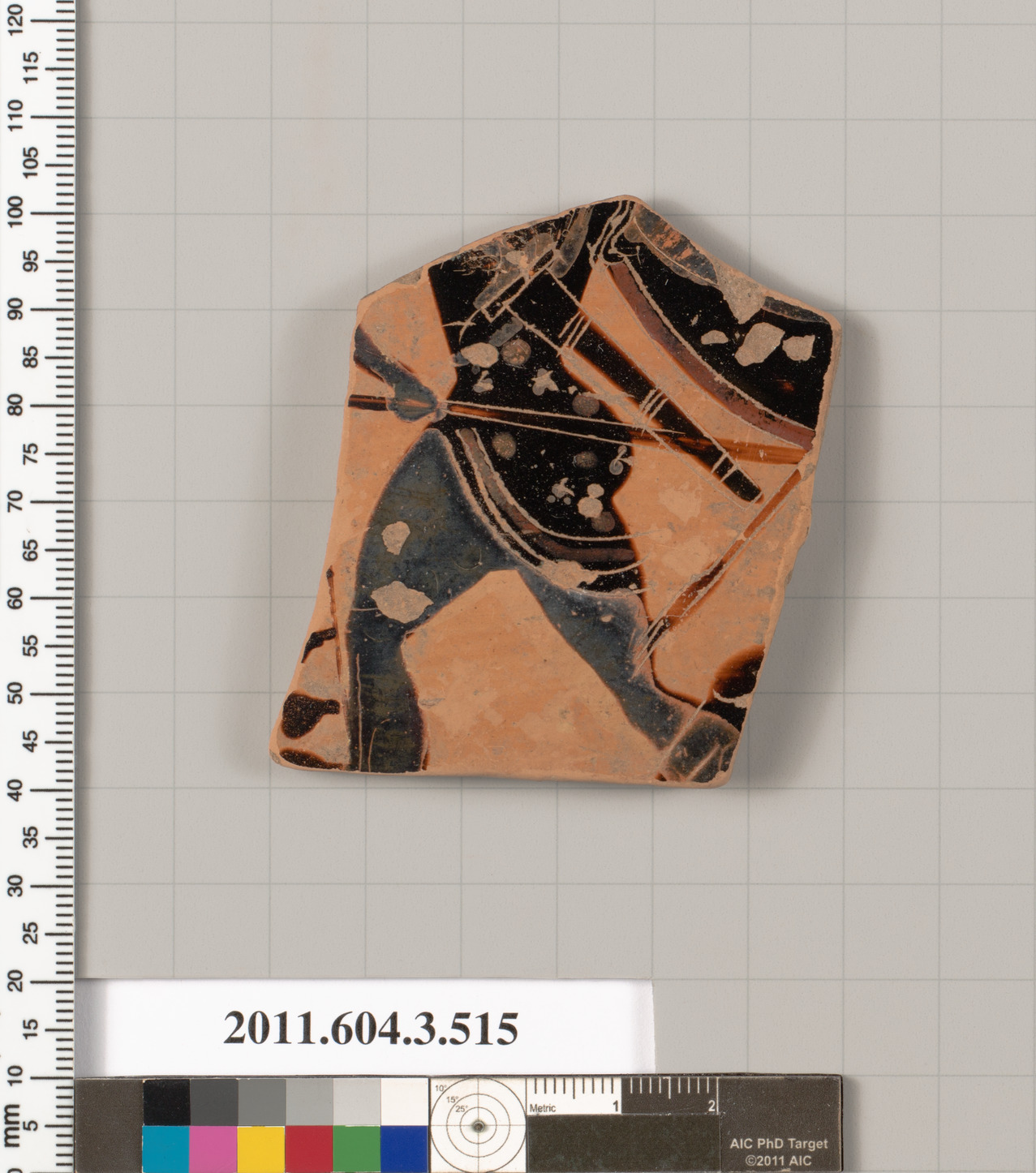
From Terracotta to Tailoring: The Greek Column-Krater as a Generative Source for 2026 Old Money Silhouettes
The Lauren Fashion Heritage Lab, in its ongoing synthesis of internal archives and global museum artifacts, identifies a profound resonance between a seemingly remote object—a terracotta fragment of an Attic column-krater (ca. 5th century BCE)—and the emerging design language of the 2026 Old Money aesthetic. This paper argues that the krater fragment, though a utilitarian vessel for mixing wine and water, encodes formal principles of volume, containment, and restrained dynamism that directly inform the architectural rigor of contemporary luxury tailoring. By analyzing the fragment’s formal language, symbolic economy, and material ethos, we uncover a transhistorical dialogue that bridges ancient Greek sympotic culture and the understated power of modern heritage dressing.
I. Formal Language: The Dialectic of Containment and Release
The column-krater fragment, preserved in its partial state, reveals a critical tension between the vessel’s contained interior and its expressive exterior. The krater’s broad, open mouth and sturdy columnar handles suggest a structure designed to hold liquid in equilibrium, while the painted figural scenes—often depicting mythological or athletic narratives—animate its surface with controlled movement. This duality mirrors the foundational principle of Old Money silhouettes: the garment as a vessel for the body, where fabric is neither purely restrictive nor wholly fluid, but rather a disciplined envelope that allows for subtle, purposeful gesture.
In the 2026 context, this translates into a silhouette characterized by broad shoulders and a tapered waist, echoing the krater’s wide rim and narrowing base. The columnar handles, with their vertical thrust, find their analogue in structured sleeve caps and clean, uninterrupted lines from shoulder to hem. The fragment’s broken edges—ragged yet deliberate—suggest a design philosophy that values imperfection as a marker of authenticity. For the Old Money wardrobe, this manifests in the use of heavy, matte fabrics like double-faced cashmere or dense wool that drape with a slight, intentional weight, resisting the ephemeral lightness of fast fashion. The silhouette is not about clinging to the body but about creating a second architecture—a space between skin and cloth that breathes with the wearer’s movements, much as the krater’s interior once held the swirling wine.
II. Symbolic Economy: The Restrained Narrative of Status
The krater’s painted decoration, though fragmentary, typically depicted scenes of aristocratic leisure—symposia, chariot races, or divine assemblies. These were not mere ornament but visual assertions of social standing, intelligible only to those initiated into the codes of Greek elite culture. Similarly, the 2026 Old Money silhouette operates through a symbolic economy of restraint. Unlike the overt logos of contemporary luxury, heritage dressing signals status through subtle details: the precise width of a lapel, the depth of a vent, the hand-stitched buttonhole that only the discerning eye recognizes.
The terracotta’s terracotta hue—a warm, earthy red-brown—offers a chromatic directive. The 2026 palette moves away from stark black or brilliant white toward muted, archaeological tones: burnt umber, ochre, and clay. These colors evoke the patina of age and the permanence of earthen materials, aligning with the Old Money preference for garments that appear to have been inherited, not purchased. The fragment’s surface, with its subtle variations in glaze and texture, teaches that luxury is not in perfection but in depth. A jacket in a heavy wool-mohair blend, woven with a slight slub or irregularity, carries this same principle: it is the textural richness, not the flat uniformity, that signals quality.
III. Material Ethos: The Weight of History in the Fold
The krater’s terracotta is a material of fire and earth, fired to hardness yet retaining the memory of the potter’s hand. In the context of 2026 Old Money, this ethos translates into a renewed emphasis on construction techniques that honor the maker’s touch. The silhouette is not merely cut but built—through canvassing, pad stitching, and hand-finishing—so that the garment acquires a structural memory over time. A double-breasted jacket, for instance, will develop a subtle crease at the elbow, a slight drape at the shoulder, that mirrors the krater’s own wear marks from centuries of use.
The fragment’s broken state also speaks to the value of incompleteness. In the 2026 wardrobe, this manifests as a deliberate unfinish—a raw hem on a silk scarf, an unlined jacket back, a trouser cuff left unstitched. These details are not signs of neglect but of curated authenticity, echoing the Japanese aesthetic of *wabi-sabi* that the internal genetic code references through the “Udumbara flower” metaphor. Just as the temple plaque’s “flower that is not a flower” invites contemplation of the void, the unhemmed edge invites the wearer to consider the garment’s life before and beyond the present moment.
IV. The 2026 Silhouette: A Synthesis of Vessel and Vestment
Synthesizing these insights, the 2026 Old Money silhouette emerges as a columnar yet organic form. The jacket’s shoulder is broad but soft, echoing the krater’s rim; the waist is defined but not cinched, allowing for a natural drape. Trousers are cut with a generous leg, tapering slightly at the ankle to recall the krater’s narrowing base. The overall effect is one of monumental ease—a silhouette that stands firm yet moves with the body, much as the krater once stood on a symposium table, stable yet ready to pour.
The color palette, as noted, draws from the terracotta’s earth tones, but also from the oxidized greens and blacks of ancient bronze. A deep bottle green or charcoal with a brown undertone replaces pure black, lending garments a sense of archaeological depth. Accessories are minimal: a leather belt with a brass buckle that echoes the krater’s metal fittings, or a silk pocket square in a faded saffron that recalls the wine-dark hues of Attic pottery.
Conclusion: The Mirror of the Vessel
The terracotta column-krater fragment, though millennia removed from the ateliers of Lauren Fashion, offers a generative grammar for the 2026 Old Money silhouette. Its formal containment, symbolic restraint, and material ethos converge in a design philosophy that values permanence over novelty, depth over surface, and history over hype. As the internal genetic code reminds us through the “Udumbara flower” and the Han mirror, the most profound aesthetic truths emerge when we allow the past to speak through the present. The krater, like the temple plaque, is not a relic but a living template—a vessel that, even in fragments, continues to hold the wine of timeless elegance.
Heritage Lab Insight
Genetic Bridge: Archive node focusing on Heritage-Black craftsmanship.