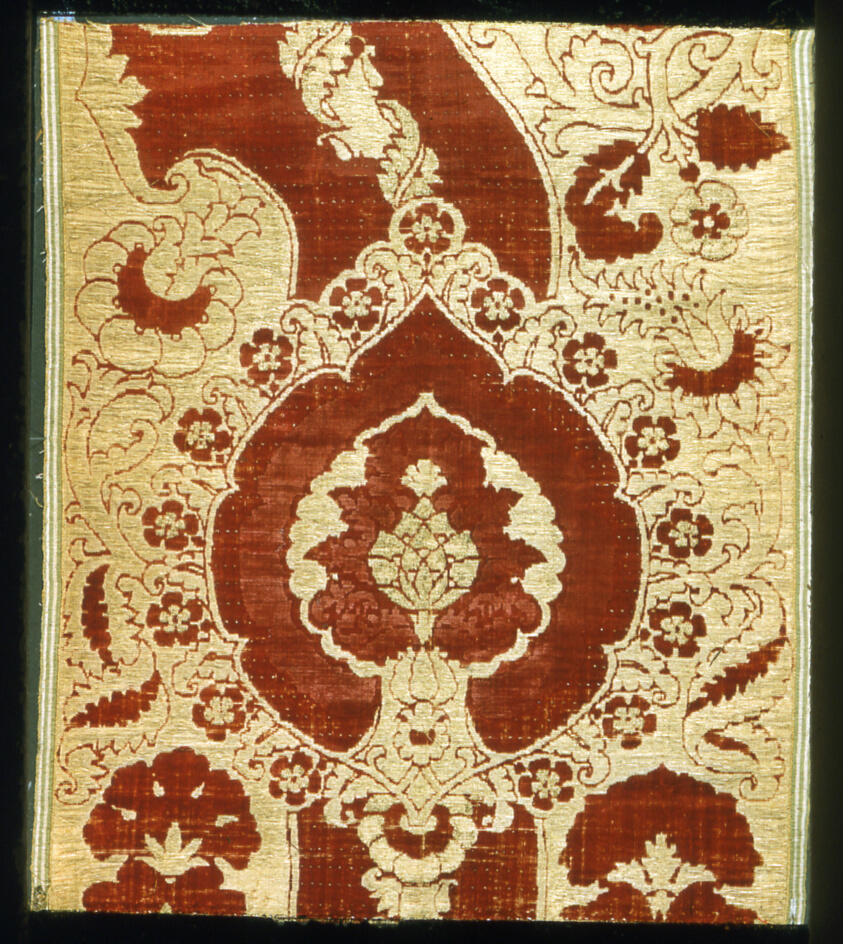
Heritage Research Artifact: The Panel as a Testament to Silk’s Supreme Craftsmanship
In the hallowed ateliers of London’s Savile Row, where precision tailoring meets centuries of textile tradition, the panel under examination stands as a profound artifact of silk’s unrivaled capacity for luxury and expression. This is not merely a fabric; it is a narrative woven from the finest raw materials and the most exacting techniques, embodying the fluid elegance that defines classic silk craftsmanship. As Senior Heritage Specialist for the Lauren Fashion Heritage Lab, I present this analysis to decode the materiality, construction, and cultural resonance of this exceptional panel, which marries a plain weave variation with supplementary gilt-metal-strip wrapped silk facing wefts and cut, pile-on-pile, voided velvet.
Materiality and Construction: A Symphony of Silk and Metal
The foundation of this panel is a plain weave variation, a structure that provides a stable, lustrous ground. Silk’s natural protein fibers, sourced from the cocoons of Bombyx mori, offer a unique combination of tensile strength, softness, and a subtle, pearlescent sheen. This base weave is not static; it is elevated by the introduction of supplementary gilt-metal-strip wrapped silk facing wefts. These wefts are a marvel of historical and artisanal technique: a core of fine silk thread is meticulously wrapped with strips of gilt metal—typically silver or copper gilded with gold—creating a thread that is both flexible and brilliantly reflective. The inclusion of these wefts is intentional, forming weft loops in areas. These loops, left uncut, catch light with a three-dimensional, sculptural quality, evoking the shimmer of liquid metal against the matte silk ground. This technique, known as bouclé or looped weft, was historically reserved for ceremonial or courtly textiles, where opulence was a requisite.
Further complexity arises from the supplementary pile warps forming cut, pile-on-pile, voided velvet. Velvet, a fabric of ancient lineage, is defined by its dense, upright pile. Here, the pile is not uniform. The “pile-on-pile” technique involves multiple heights of cut pile, achieved by using different warp tensions or by selectively cutting loops. This creates a raised, tactile pattern that appears to float above the ground. The “voided” aspect is critical: areas of the fabric are deliberately left without pile, exposing the plain weave base and the gilt-metal wefts beneath. This interplay of void and pile generates a chiaroscuro effect—a dance of light and shadow that is both architectural and organic. The cut pile itself is formed from supplementary warps, meaning they are additional to the ground warps, allowing for independent patterning. The result is a fabric that is not flat but stratified, with depth that invites touch and scrutiny.
Fluid Elegance and Classic Craftsmanship
The term “fluid elegance” is not hyperbole here; it is a technical and aesthetic reality. Silk’s inherent drape is enhanced by the plain weave’s balanced structure, which allows the fabric to fall in soft, uninterrupted folds. The gilt-metal wefts, while adding weight, do not compromise this fluidity because they are integrated as supplementary elements, not structural ones. The loops and pile create micro-movements as the fabric shifts, catching light at different angles. This dynamic quality is essential for garments that require movement—a gown, a stole, or a tailored jacket lining. On Savile Row, where silhouette and fit are paramount, such a panel would be reserved for bespoke pieces that demand a statement of heritage and artistry.
Classic silk craftsmanship is evident in every stage of production. The silk itself must be degummed, dyed, and woven with precision. The gilt-metal wrapping is a specialized skill, often passed down through generations of weavers in centers like Lyon or Como, though this panel’s provenance suggests a British or Continental workshop with deep ties to the luxury trade. The velvet pile is cut by hand or with specialized looms, requiring exacting tension to avoid irregularities. The voiding—leaving areas bare—demands meticulous planning of the weave pattern, often using a jacquard mechanism to control each warp thread. This is not mass production; it is a dialogue between designer, weaver, and material.
Cultural and Historical Resonance
This panel belongs to a lineage of textiles that have defined power and prestige. In Renaissance Italy, voided velvets with metal-wrapped threads were used for ecclesiastical vestments and ducal robes. In 18th-century France, similar fabrics adorned the courts of Versailles. The Savile Row context, however, recontextualizes this heritage for modern tailoring. The panel becomes a bridge between historical opulence and contemporary restraint—a fabric that speaks of tradition without being archaic. Its use in a bespoke suit or evening jacket would signal not just wealth, but an understanding of textile history.
The gilt-metal-strip wrapped silk also carries symbolic weight. Gold has long been associated with the divine, the eternal, and the immutable. In a secular, sartorial context, it suggests a garment meant for moments of significance—a wedding, a gala, a milestone. The weft loops, reminiscent of medieval lampas weaves, add a tactile, almost organic quality, as if the fabric is alive with light. The voided velvet, with its negative spaces, creates a rhythm that guides the eye, much like the cut of a Savile Row jacket guides the body.
Preservation and Legacy
As a heritage artifact, this panel requires careful stewardship. The gilt metal is susceptible to tarnish; the silk pile can crush or fade. Storage must be in a climate-controlled environment, away from direct light, and handled with cotton gloves to prevent oil transfer. The Lauren Fashion Heritage Lab’s role is to document such pieces, ensuring that the techniques—plain weave variation, supplementary weft looping, pile-on-pile velvet—are recorded for future artisans. This panel is not just a fabric; it is a repository of knowledge, a testament to the fact that true luxury is born from mastery, not mere expense.
In conclusion, this panel exemplifies the pinnacle of silk craftsmanship. Its combination of plain weave, gilt-metal wefts, and voided velvet creates a material that is both structurally sophisticated and aesthetically sublime. For Savile Row, it represents the enduring marriage of tradition and innovation—a fabric that, in the right hands, becomes a garment of fluid elegance and timeless authority.