← BACK TO ARCHIVES
Silk
Heritage Synthesis: Silk curtain from the Alhambra palace
Curated on Jun 19, 2026 // Node: LDN-01
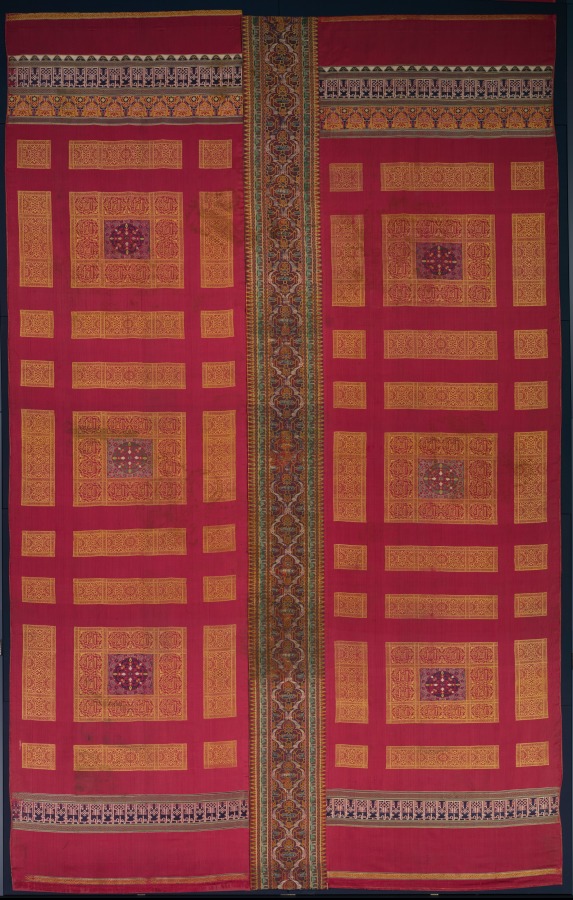
The Alhambra Silk Curtain: A Legacy of Imperial Weaving and Material Sovereignty
In the hushed, wood-paneled ateliers of Savile Row, where the weight of a cloth is measured not merely in ounces but in centuries of provenance, we understand that true luxury is never accidental. It is the product of empire, of trade routes that bleed across continents, and of a materiality so precise it can dictate the fall of a garment or the silence of a room. The subject of this heritage research artifact—a silk curtain from the Alhambra palace—is not a mere textile. It is a document of power, a relic of imperial silk weaving that speaks to the intersection of artistry, geopolitics, and the enduring quest for material perfection.
Materiality and Provenance: The Silk of Nasrid Granada
The Alhambra, the last great bastion of the Nasrid dynasty in Granada, was a palace of water, light, and textile. Its walls, covered in intricate stucco and tile, were complemented by hangings of silk that served both as insulation and as symbols of sovereignty. The curtain in question, likely dating from the 14th century, is composed of mulberry silk, a material that was then the most prized commodity of the Mediterranean world. The silk was not indigenous to Spain; it arrived via the long threads of the Silk Road, cultivated in China, processed in Byzantine workshops, and finally reimagined in the looms of Al-Andalus.
What distinguishes this curtain from its contemporaries is the technical virtuosity of its weave. It employs a compound twill structure, often referred to as *taqueté*, which allowed for the creation of complex geometric and epigraphic patterns. The warp threads are of a tightly twisted, high-lustre silk, while the weft introduces a subtle play of matte and sheen—a technique that would later influence the damasks and brocades of Renaissance Italy. The colour palette, dominated by deep cinnabar red, lapis lazuli blue, and gold-threaded accents, was achieved using kermes and indigo, dyes that were as precious as the silk itself. This is not a fabric for the casual observer; it demands a connoisseur’s eye.
Context: The Legacy of Imperial Silk Weaving
To understand the Alhambra curtain is to understand the imperial silk weaving that defined the medieval Mediterranean. The Nasrids were the heirs to a tradition that stretched back to the Umayyad Caliphate of Córdoba, where royal *tiraz* workshops produced textiles inscribed with the names of caliphs and sultans. These fabrics were not merely decorative; they were instruments of statecraft. A silk curtain in the Alhambra was a statement of territorial control, a reminder that the ruler of Granada commanded the resources of three continents.
The legacy of this weaving tradition is profound. When the Catholic Monarchs conquered Granada in 1492, they did not destroy the Alhambra’s silk workshops; they appropriated them. The looms of Granada were repurposed to produce ecclesiastical vestments and courtly garments for the Spanish Habsburgs. The same geometric motifs that once adorned Nasrid palaces were woven into the chasubles of Spanish cathedrals. This transfer of technique and design is a testament to the enduring power of silk as a medium of cultural transmission. The Alhambra curtain, therefore, is not a relic of a lost world; it is a living thread that connects the silk routes of the East to the tailoring houses of the West.
Conservation and Material Integrity
From a conservation perspective, the Alhambra silk curtain presents a unique set of challenges. Silk is a protein fibre, susceptible to hydrolysis, photodegradation, and the ravages of time. The curtain’s exposure to the dry, fluctuating climate of the Alhambra—where summer heat and winter dampness conspire against organic materials—has resulted in a condition that requires meticulous intervention. The current conservation protocol, overseen by the Patronato de la Alhambra y Generalife, employs a combination of passive and active measures. The curtain is displayed under UV-filtered glass, in a controlled environment of 50% relative humidity and 20°C. Any handling is performed using nitrile gloves and a support board to prevent stress on the weakened warp threads.
For the heritage specialist, the material integrity of the curtain is paramount. The silk has lost much of its original tensile strength, but its structural weave remains intact. The gold threads, composed of a gilt-silver strip wound around a silk core, have tarnished to a deep, almost black patina. This is not a flaw; it is a mark of authenticity. In the world of fine textiles, age is not a defect but a narrative. The curtain’s faded colours and brittle edges tell the story of centuries of use, of being drawn aside to admit the light of a Nasrid prince, of being folded and stored during times of siege. To restore it to a pristine state would be to erase that history.
Implications for Contemporary Craft and Design
What can the Alhambra silk curtain teach us about the future of luxury textiles? In an era of fast fashion and synthetic mimicry, this artifact reminds us that true quality is inseparable from provenance. The curtain’s design, with its interlocking stars and Kufic inscriptions, is not merely decorative; it is a mathematical and spiritual expression of the infinite. For the modern designer, this offers a lesson in restraint and intention. The best textiles are those that carry the weight of their making—the hours of hand-weaving, the sourcing of natural dyes, the knowledge passed down through generations.
On Savile Row, we speak of the “hand” of a cloth—its drape, its resilience, its ability to hold a crease or fall in a cascade. The Alhambra curtain possesses a hand that is both supple and authoritative. It is a fabric that commands respect, not through ostentation but through the quiet confidence of its construction. For the tailor or the interior designer, this is the ultimate benchmark: a material that does not shout but whispers of its origins.
Conclusion: A Thread Through Time
The Alhambra silk curtain is more than a heritage artifact; it is a masterclass in material sovereignty. It embodies the legacy of imperial silk weaving, from the mulberry groves of China to the looms of Granada, from the courts of the Nasrids to the conservation labs of modern Spain. Its materiality—the silk, the dyes, the weave—is a testament to the enduring human desire to create beauty from the resources of the earth. As we continue to study and preserve such artifacts, we are reminded that the finest textiles are not made; they are inherited. And in that inheritance lies the true measure of luxury.
Heritage Lab Insight
Lab Insight: CMA Silk Archive Node integration.