The Ontology of Absence: Terracotta Fragments and the Architecture of Unseen Luxury in 2026 Old Money Silhouettes
Introduction: The Fragment as a Portal
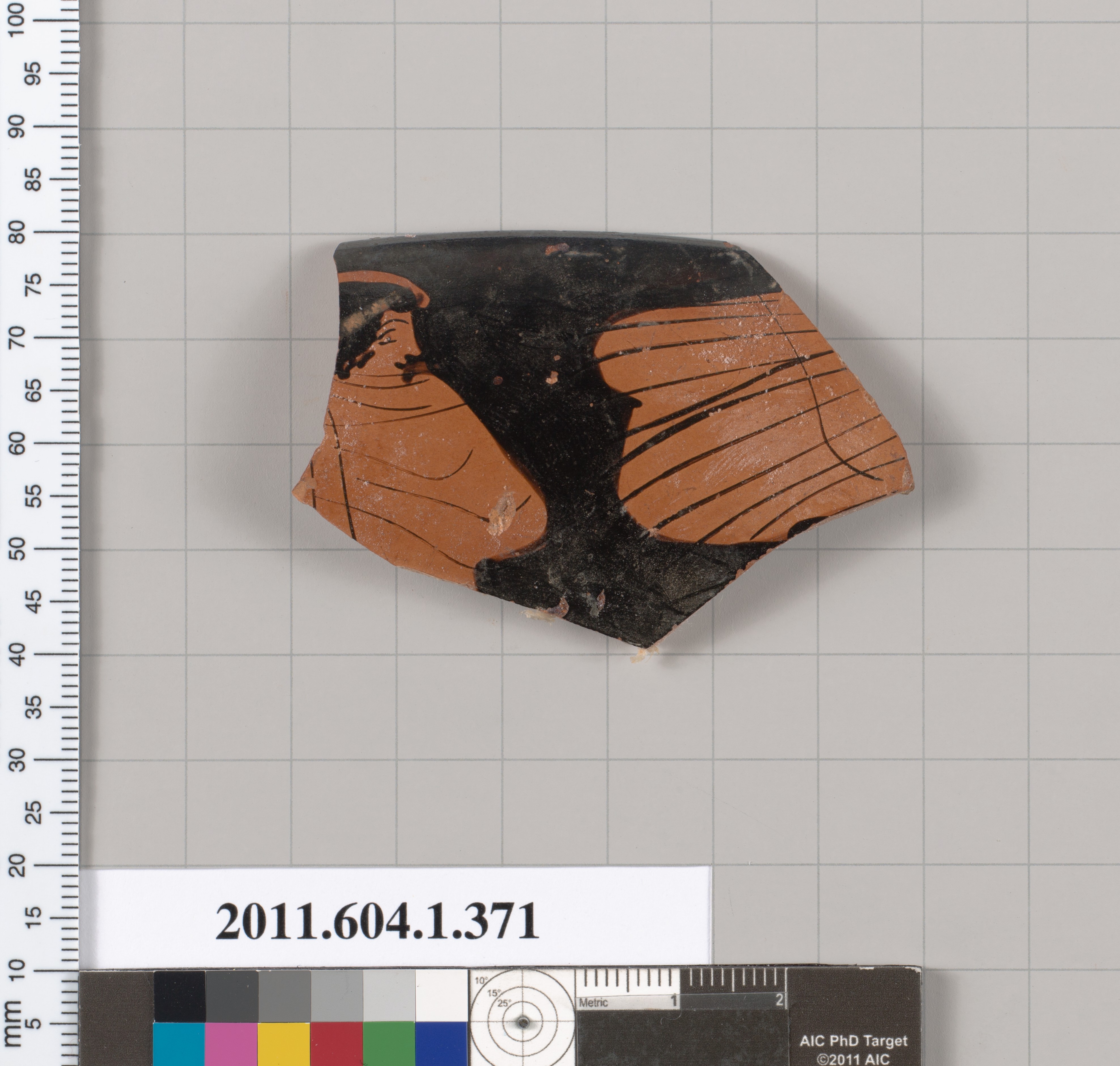
The terracotta rim fragment of a Greek Attic kylix—a drinking cup from the 5th century BCE—is, in its physical state, a study in incompleteness. A shard of fired clay, its painted surface now worn to a whisper of its former figural glory, it offers no narrative of heroic symposium or Dionysian revelry. Instead, it presents the heritage of a void. For the Lauren Fashion Heritage Lab, this artifact is not a historical curiosity but a profound design manifesto. It speaks directly to the 2026 Old Money aesthetic, a sensibility that has moved beyond the mere display of wealth into the articulation of unseen lineage, restrained power, and the quiet dignity of the incomplete. The kylix fragment, like the “Udumbara Flowers” inscription and the “Chest for Storing Garments,” teaches us that true luxury resides not in the object’s fullness, but in the eloquent space of its absence—a principle that will define the next generation of heritage silhouettes.
The Fragment as a Signifier of Time
The Old Money wardrobe has always been a repository of time. It is not about the new; it is about the patina of the enduring. The terracotta fragment embodies this temporal depth. Its broken edge, its faded glaze, its very incompleteness—these are not flaws but narratives of survival. In the 2026 silhouette, this translates into a deliberate archaeology of form. We see it in the unfinished hem of a double-faced cashmere coat, where the raw edge is left unbound, revealing the inner structure of the weave. We see it in the deliberately distressed leather of a heritage bomber jacket, where the surface wear mimics the erosion of ancient pottery. The fragment teaches us that the most powerful statement of permanence is the acceptance of transience. A 2026 Old Money silhouette will not shout its newness; it will whisper its history through subtle, almost invisible, imperfections—a single pulled thread on a silk blouse, a slightly irregular buttonhole on a bespoke suit. These are not accidents; they are intentional traces of a life lived, echoing the kylix’s silent testimony to centuries of use.
The Architecture of the Void: From Kylix to Silhouette
The kylix is a vessel defined by its interior emptiness. Its function—to hold wine—is secondary to its ontological condition of being a container. The terracotta fragment, by preserving only the rim, frames the void. It directs our gaze not to what was, but to what is no longer present. This is the core principle of the 2026 Old Money silhouette: the garment as a frame for the wearer’s presence, not a spectacle in itself. The exaggerated shoulder of a tailored jacket, for instance, is not a power statement but a structural boundary that creates a negative space around the neck and torso. The wide-leg trouser is not about volume; it is about the air that moves within the fabric, a breathing architecture. The asymmetric closure of a coat—one side longer than the other—creates a deliberate imbalance, a visual fragment that invites the eye to complete the form. This is the aesthetics of the “not-quite-there”, a direct translation of the kylix’s broken rim. The garment becomes a threshold, a liminal space between the wearer’s body and the world, much like the kylix rim is a threshold between the wine and the air.
The “Udumbara” Principle: The Flower That Never Blooms
Our internal genetic code speaks of the “Udumbara Flowers”—a flower that is named but never seen, a symbol of ultimate rarity through absolute absence. The kylix fragment, in its broken state, performs a similar function. The painted figures that once adorned its surface—perhaps a youth, a maenad, a god—are now ghosts of representation. We see only the residue of their presence: a line of black glaze, a curve of a limb, a patch of red. The 2026 Old Money silhouette must embrace this ghostly figuration. It is not about literal imagery, but about suggested form. Consider a jacquard weave that at first glance appears solid, but upon closer inspection reveals a faint, almost invisible pattern—a floral motif that exists only in the interplay of light and shadow. Or a double-layered silk where the inner layer’s color bleeds through the outer layer as a muted echo. This is the Udumbara effect: the flower that never fully materializes, yet defines the entire composition. The garment’s beauty lies in its refusal to declare itself, forcing the viewer into a state of active contemplation. The wearer of a 2026 Old Money piece is not a mannequin; they are a co-creator of meaning, completing the garment through their own presence and movement.
The Chest That Holds Nothing: The Silhouette as a Container of Memory
The “Chest for Storing Garments” is not a chest; it is a metaphor for interiority. It holds garments, but its true content is time, memory, and emotion. The kylix fragment, as a broken vessel, also points to an interior that is now empty. In the 2026 silhouette, this translates into the pocket as a philosophical statement. Not a functional pocket, but a suggested pocket—a flap that is sewn shut, a slit that leads nowhere, a hidden compartment that is visible only from the inside. This is the architecture of secrecy. The garment becomes a repository of the unspoken. The deep pleats of a skirt are not for movement; they are folds of time, each pleat a memory of a previous wear. The lining of a jacket is not just a functional layer; it is a private canvas, often in a contrasting color or pattern, visible only when the jacket is removed. This is the Old Money code: the most luxurious details are those that are hidden from public view, reserved for the wearer’s own knowledge. The kylix fragment, with its interior glaze now exposed to the air, teaches us that the inside is as important as the outside—perhaps more so.
Materiality as a Language of Restraint
The terracotta itself is a humble material—fired earth. Its value lies not in its rarity but in its transformation through craft. The 2026 Old Money silhouette will similarly elevate the ordinary. We see this in the use of heavy cotton twill for a trench coat, treated to a matte finish that mimics the texture of ancient pottery. We see it in the raw silk that is left unpolished, its slubs and irregularities becoming signatures of authenticity. The cashmere is not super-soft; it is structured, almost coarse, with a visible weave that speaks of traditional looms. The wool is not merino; it is tweed, with a tactile roughness that grounds the garment in the earth. These materials are not chosen for their overt luxury but for their ability to age gracefully, to develop a patina of use that mirrors the kylix’s weathered surface. The 2026 Old Money silhouette is anti-disposable. It is designed to be worn for decades, each wear adding a layer of invisible history.
Conclusion: The Silent Declaration
The terracotta kylix fragment, the “Udumbara Flowers” inscription, and the “Chest for Storing Garments” are not disparate artifacts. They are three manifestations of a single aesthetic truth: that the most profound beauty is found in the space between presence and absence. The 2026 Old Money silhouette, as synthesized by the Lauren Fashion Heritage Lab, will be a wearable philosophy of this truth. It will not shout. It will not perform. It will stand in silence, like the broken rim of a kylix, and invite the world to complete its story. The garment will be a fragment of a larger narrative—a narrative that includes the wearer’s own history, their own memories, their own unspoken depths. This is the heritage of the unseen, the luxury of the void, and the ultimate expression of Old Money in the coming era. The flower never blooms, but its potential is eternal. The chest never opens, but its contents are infinite. The cup is broken, but its form remains a perfect vessel for meaning. This is the 2026 silhouette: a silent declaration of a wealth that cannot be counted, only felt.