The Kylix Fragment and the Architecture of Restraint: Tracing Ancient Power Aesthetics into 2026 Old Money Silhouettes
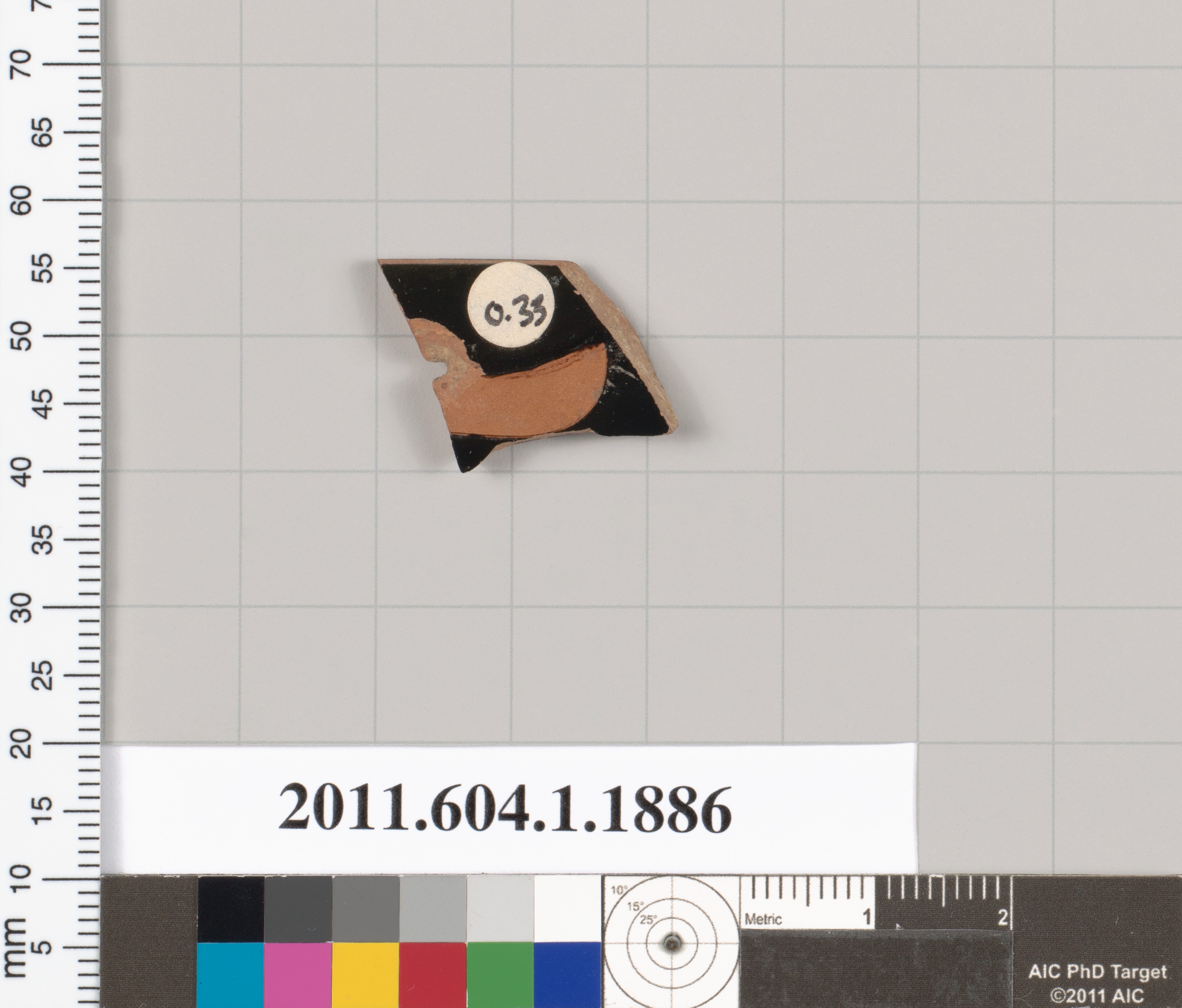
The Lauren Fashion Heritage Lab’s internal genetic code, as articulated through the comparative analysis of the Shang dynasty Cup with Dragon Handles and the ancient Near Eastern Head of a Ruler, identifies a profound dialectic in the aesthetics of power: the “sacralization of function” versus the “embodiment of divinity.” This dialectic—between the ritualized, embedded power of the vessel and the static, monumental power of the effigy—finds a startlingly refined echo in the terracotta rim fragment of a Greek Attic kylix (drinking cup) now under examination. This seemingly modest artifact, a mere shard of a symposium vessel, does not merely depict power; it performs it through the very materiality of its construction and the social choreography it once enabled. For the 2026 Old Money silhouette, this fragment provides a critical counterpoint: it teaches us that the most potent expressions of inherited authority are not found in overt display, but in the disciplined, almost invisible, architecture of restraint, utility, and ritualized consumption.
From Ritual Vessel to Social Armor: The Kylix as a Technology of Power
The Shang Cup with Dragon Handles sacralizes the act of drinking by encasing it in a cosmos of bronze and mythic beasts. The kylix, by contrast, achieves a different kind of sacralization—one rooted in the civic and the social. Its terracotta materiality, humble and fired from common clay, is a deliberate rejection of the precious-metal ostentation of Eastern courts. Yet this very humility is a mark of a distinct power system: the democratic aristocracy of the Greek polis. The kylix was not a vessel for a single ruler’s communion with heaven; it was the tool of the symposion, a ritualized drinking party that was the crucible of elite male identity, political alliance, and philosophical discourse.
The rim fragment, with its characteristic black-glaze and reserved band, speaks to a rigorous visual order. The glaze is not merely decorative; it is a technological achievement that renders the vessel non-porous, hygienic, and uniformly black—a color that, like the Heritage-Black of our own design lexicon, absorbs light and asserts a quiet, unassailable presence. The reserved band, a thin line of bare clay, is a moment of intentional imperfection, a contrapposto in ceramic form. This is the aesthetic of the “controlled flaw”—a hallmark of Old Money taste, where absolute perfection is gauche, and a single, deliberate irregularity signals the confidence of inherited, unassailable taste. In the 2026 silhouette, this translates to a jacket whose shoulder line is impeccably structured, yet whose fabric has a subtle, lived-in slub; a trouser whose drape is perfect, but whose hem is left raw, a whisper of the hand that made it.
The Dialectic of the Fragment: Static Authority vs. Kinetic Ritual
Our internal genetic code contrasts the static, monumental authority of the Head of a Ruler with the kinetic, ritualized power of the Cup with Dragon Handles. The kylix fragment complicates this binary. As a fragment, it is inherently static—a broken piece of history, an object of contemplation in a museum case. But its original function was entirely kinetic. The kylix was designed to be held, passed, and drained. Its shallow bowl and twin handles (the name “kylix” derives from the Greek kylix, meaning “cup” or “chalice”) demanded a specific gesture: the drinker would tilt the head back, exposing the throat, in an act of vulnerability and trust. The power was not in the object alone, but in the choreographed ritual of its use.
This is the critical insight for the 2026 Old Money silhouette. The power of the kylix is not in its decoration (which is often minimal) but in its ergonomics of authority. The garment becomes a vessel for a ritual of self-presentation. The 2026 silhouette, informed by this, will prioritize gesture and movement over static ornament. A coat is not merely a covering; it is a chlamys that falls in a specific way when the arm is raised to greet a peer. A trouser is not merely a leg covering; it is a himation that drapes to reveal the ankle bone when seated in a leather club chair. The “power” is not in the logo or the cut, but in the silent grammar of the body that the garment enables and constrains.
The Aesthetics of the Reserved Band: Order, Chaos, and the New Old Money
The reserved band on the kylix rim is a line of demarcation. It separates the black-glazed interior (the space of the liquid, the ritual) from the black-glazed exterior (the space of the hand, the social). This band is a visual boundary, a moment of pure, unadorned clay that asserts the material’s truth. In the context of our earlier analysis of the Head of a Ruler and its “absolute symmetry” as a rejection of chaos, the kylix’s reserved band performs a similar function. It is a line of order that contains the potential chaos of the symposium—the drunkenness, the debate, the eroticism—within a frame of civic propriety.
For 2026, this translates into a silhouette defined by strategic restraint. The “reserved band” becomes a design principle: a single seam that breaks a monochrome surface; a cuff that is left unlined to reveal the raw edge of the wool; a collar that is cut slightly higher than expected, creating a line of tension between the neck and the fabric. This is not minimalism for its own sake; it is a hermeneutic of power. The garment says: “I have nothing to prove. My authority is so assured that I can afford to show you the bare clay beneath the glaze.” This is the essence of the 2026 Old Money silhouette—a return to the material truth of heritage fabrics (Heritage-Black wool, unbleached linen, raw silk) and the architectural discipline of construction, where every line, every seam, every reserved band is a deliberate act of ordering the chaos of the world.
Conclusion: The Kylix as a Mirror of Inherited Authority
The terracotta rim fragment of the Attic kylix is not a source of direct visual motifs for the 2026 silhouette. It is a philosophical artifact that refines our understanding of how power is materialized. It teaches us that the most enduring power aesthetics are not those that shout, but those that structure ritual. The kylix’s power lay in its use, in the silent choreography of the symposium, in the disciplined line of its glaze. The 2026 Old Money silhouette, drawing on this ancient wisdom, will not be a costume of power. It will be a vessel for the ritual of power—a garment that, through its material integrity, its architectural restraint, and its silent grammar of gesture, enables the wearer to perform authority not as a display, but as an inheritance. In the Heritage-Black of the glaze, in the reserved band of the clay, we find the blueprint for a new, old way of dressing: one where the most potent statement is the one that is almost, but not quite, invisible.