A Consideration of the Fragment: On Imperfection as the Truest Archive
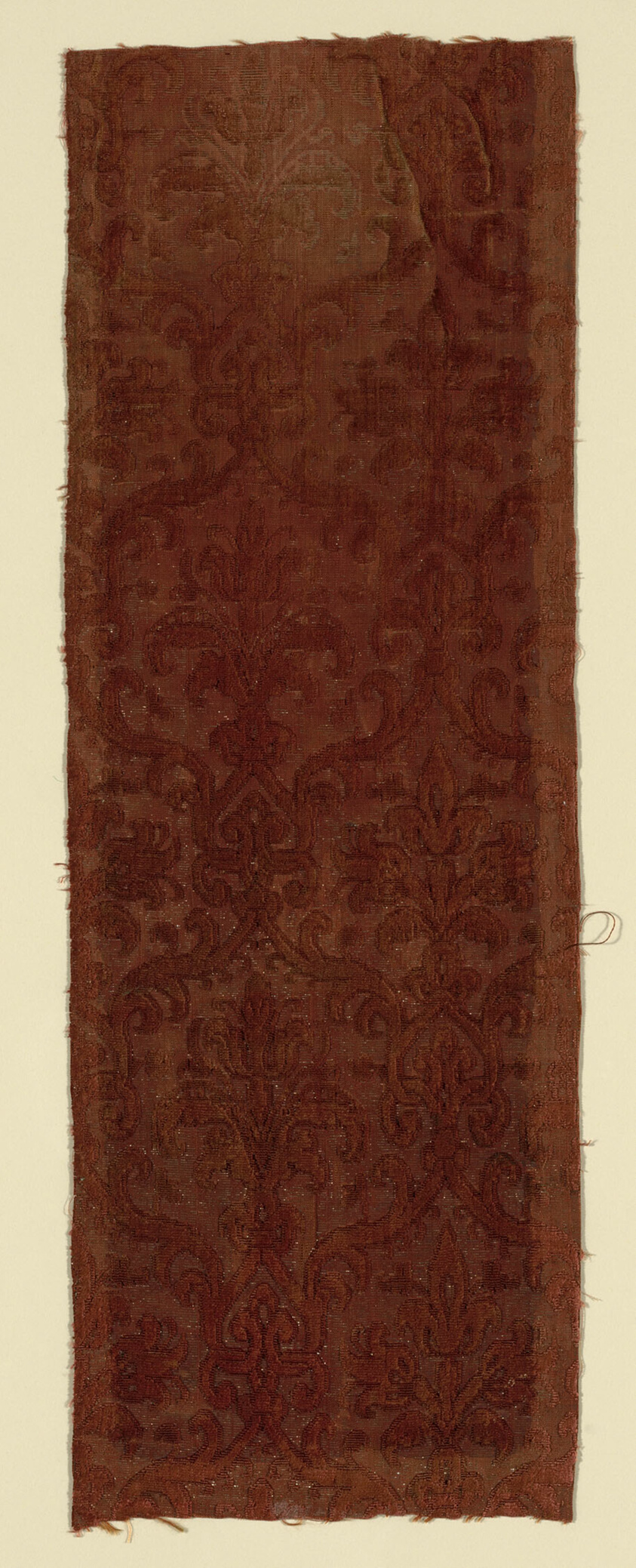
In the rarefied atmosphere of the atelier, where the pursuit of the flawless garment is the unspoken creed, the fragment exists as a quiet apostasy. It is an interruption in the narrative of completion, a deliberate pause in the procession from bolt to bespoke masterpiece. To the untrained eye, it is merely a remnant, a discard from the cutting room floor. To the connoisseur of heritage, however, it is the most candid of documents. This particular specimen—a voided velvet, its pile sheared to create a pattern of sublime texture against a plain weave foundation, further animated by the strategic intrusion of gold foil patterning wefts—demands a particular kind of reading. It speaks not of the finished form, but of the profound dialogue between material intelligence and artistic intent.
The Authority of the Unmade
Where the completed dinner jacket or gown presents a fait accompli, its history subsumed into a seamless whole, the fragment retains the raw authority of potential. Its edges are raw, the selvedge a stark boundary between the cultivated field of craftsmanship and the void beyond. In this state, one apprehends the material in its essential truth. The hand, assessing the weight and fall of the silk velvet, understands its inherent language before the shears ever commit to a pattern. The gold foil weft, glimpsed not as a distant accent on a cuff but as a bold, exposed stratum, reveals its purpose: not mere embellishment, but structural emphasis, a tensile thread of light woven into the very constitution of the cloth. This is the moment before the compromise of fit, where the material’s character is absolute.
Material Intelligence: A Dialogue in Pile and Plain
The genius of this specific fabrication lies in its orchestrated contrasts, best understood in isolation. The voided velvet is a technique of profound sophistication, a subtractive art where the pile is meticulously cut away to reveal the ground, creating a pattern in negative space and varying height. The tactile map it presents—the plush, yielding depth of the uncut velvet adjacent to the crisp, flat plane of the plain weave foundation—is a lesson in controlled sensation. It is a fabric engineered for drama under illumination, for the play of shadow and highlight that no printed pattern can emulate.
Into this textured landscape, the gold foil patterning wefts are introduced not as afterthoughts, but as integral, load-bearing elements of the design. They are the architectural details, the filigree on a stone façade. In the fragment, one sees how these metallic threads converse with both the velvet’s luxury and the foundation’s restraint. They bridge the gap between the two, a glinting suture that elevates the whole. This is the alchemy of classic silk craftsmanship: the transformation of fibre into experience, where visual splendour is inextricably linked to a complex, haptic reality.
The Cut: Where Intention Meets Permanence
The most eloquent aspect of our fragment may well be its severed edge. The cut is the irrevocable act, the point at which theory becomes practice. The clean incision through this complex, multi-layered textile is a testament to the cutter’s confidence and the quality of his tools. There is no hesitation, no fraying of purpose. This edge reveals the cross-section of the fabric’s history: the foundational warps and wefts, the lofty pillars of the velvet pile, the sporadic glint of the gold. It is a geological sample, a core drilled through strata of artistic and technical decision-making. To study this edge is to understand that true fluid elegance in the final garment is predicated on decisive, knowledgeable action at this primary stage. The cutter, like the surgeon, must respect the material’s integrity even as he divides it.
The Void as Negative Space
Finally, we must consider what is not there. The fragment is, by definition, a part excised from a larger whole. The void it once occupied—the missing portion of the pattern, the absent sleeve or lapel—hangs over our examination like a spectre. This negative space is as instructive as the material itself. It forces the mind to reconstruct, to imagine the grander scheme from which this piece descended. It is an exercise in sartorial archaeology, deducing the complete temple from a single, exquisite brick. This act of imaginative reconstruction is the very essence of heritage scholarship. We are not merely cataloguing objects; we are piecing together philosophies of making, the unspoken principles that guided the hand from the intact bolt to the strategic cut, from the assembled pieces to the final, fluid drape.
In conclusion, this fragment of voided silk velvet, with its whispers of gold, stands as a more potent archive than any finished garment could hope to be. It refuses the seduction of the complete. Instead, it offers us the privilege of witnessing process, decision, and material truth in suspended animation. It reminds us that heritage is not a static gallery of perfect forms, but a living continuum of knowledge, risk, and artistry—best understood, at times, through the eloquent, unfinished statement. In its imperfect state, it achieves a perfect honesty, becoming the ultimate testament to the classic craftsmanship it represents.