The Mourning Sampler: A Study in Materiality and Memorial
Introduction: The Threads of Remembrance
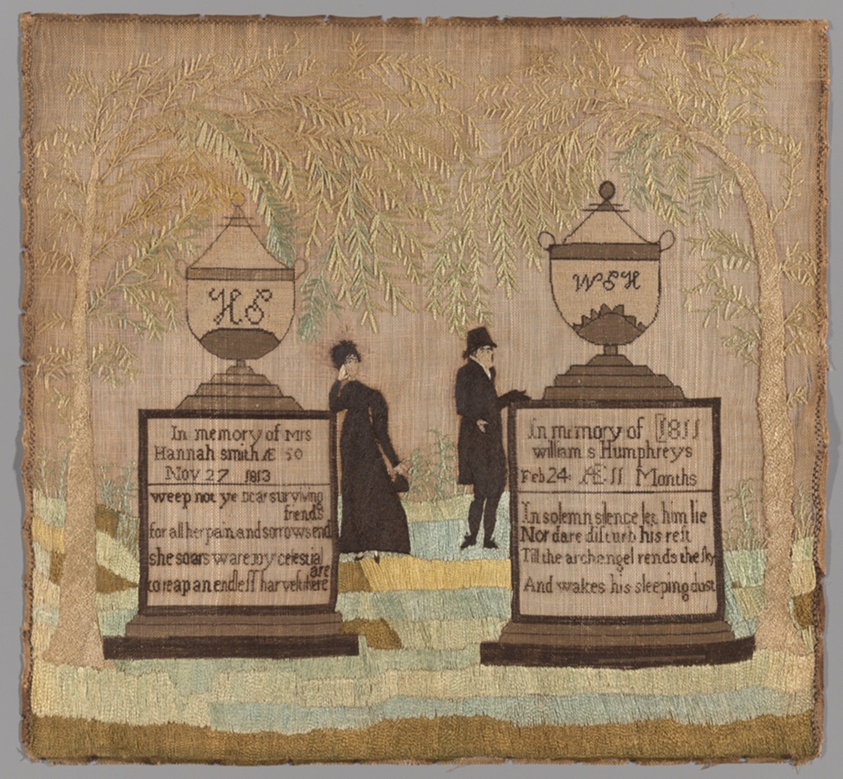
In the hushed, bespoke corridors of heritage preservation, few artifacts speak with such quiet eloquence as the mourning sampler. This piece, a testament to the intricate relationship between craft and commemoration, is not merely a textile; it is a document of grief, a ledger of loss, and a masterclass in the materiality of memory. As a Senior Heritage Specialist at Lauren Fashion Heritage Lab, I have the privilege of examining such objects through a lens that marries the rigorous standards of Savile Row tailoring with the scholarly demands of fashion history. The mourning sampler under review—executed on a ground of plain-weave linen and embroidered with silk floss—exemplifies the pinnacle of classic silk craftsmanship and fluid elegance. Its stitches, from the disciplined tent to the flowing stem, form a narrative that transcends the personal to touch upon the universal human experience of mourning.
Materiality: The Foundation of Elegance
The choice of materials in this sampler is deliberate and profound. Linen, plain weave, serves as the canvas—a fabric of strength and humility, often associated with purity and the domestic sphere. Its natural, unbleached tones provide a muted backdrop, allowing the silk floss to command attention. The linen’s plain weave structure, with its simple over-under pattern, offers a stable yet responsive surface for the embroiderer’s needle. This is a fabric that does not distract; it supports. In the context of mourning, linen’s association with shrouds and simplicity is poignant, grounding the piece in the solemnity of its purpose.
The silk floss, by contrast, is the voice of the sampler. Silk, a fibre of unparalleled luxury and delicacy, was historically reserved for the most significant expressions of status and sentiment. Its natural lustre catches light in a way that mimics the fleeting nature of life itself—a shimmer that fades and returns with each viewing. The floss used here is of exceptional quality, dyed in a palette of muted blacks, greys, and whites, with occasional touches of faded rose or lavender—colours that speak to Victorian mourning conventions. The silk’s fluidity allows for a range of stitches that create texture, depth, and movement, transforming a flat cloth into a three-dimensional record of emotion.
Stitching as Language: Techniques of Memorial
The embroiderer’s toolkit is a lexicon of grief, and each stitch in this sampler carries specific meaning. Tent stitch, a small diagonal stitch often used in needlepoint, provides a dense, uniform ground for lettering and geometric borders. Its precision mirrors the order sought in the chaos of loss. Cross stitch, the most iconic of embroidery stitches, forms the backbone of the sampler’s alphabets and numbers, creating a grid-like structure that speaks to the permanence of memory. Each ‘X’ is a marker, a small cross that echoes the Christian symbolism of resurrection and hope.
Long stitch and stem stitch introduce fluidity and narrative. The long stitch, with its extended threads, is used for foliage and flowing drapery, suggesting the organic growth of grief over time. Stem stitch, a line stitch that twists like a vine, outlines the sampler’s central motifs—perhaps a weeping willow or an urn—lending them a sense of continuous, unbroken sorrow. Whip stitch, a technique often used to secure edges or create raised details, adds dimension to the sampler’s borders, as if the very boundaries of the piece are reinforced against the encroachment of forgetting. Finally, couching stitches, where one thread is laid on the surface and secured by another, are employed for the most intricate elements: a name, a date, or a verse from a memorial poem. This technique, which requires both skill and patience, elevates the text to a state of reverence, as if each letter is a relic to be preserved.
Context: Silk Craftsmanship and Fluid Elegance
This sampler is a product of its time—the mid- to late-19th century, when mourning practices were codified into a rigid social script. Yet, within that script, the embroiderer found room for artistry. The classic silk craftsmanship evident here is not merely technical; it is philosophical. The silk floss, with its inherent sheen, creates a play of light and shadow that mimics the emotional fluctuations of grief. In the hands of a skilled artisan, the stitches become a form of calligraphy, each thread a stroke of ink on linen parchment. The fluid elegance of the piece—the way the willow branches curve, the gentle fall of the urn’s drapery—belies the rigid social expectations of the era. It is a reminder that even in prescribed mourning, there is space for personal expression.
The sampler’s composition follows a classic format: a central memorial scene, often featuring a tombstone, urn, or weeping willow, surrounded by borders of floral motifs and alphabets. The silk floss’s ability to hold fine detail allows for the inclusion of minute elements—a single tear on a cheek, the veins of a leaf—that reward close inspection. This attention to detail is a hallmark of the Savile Row ethos: the belief that the smallest stitch, the most subtle thread, contributes to the whole. In a mourning sampler, that whole is a narrative of loss, but also of resilience.
Conclusion: The Legacy of the Mourning Sampler
As a heritage artifact, this mourning sampler is more than a textile; it is a repository of cultural memory. Its materiality—the linen ground, the silk floss, the intricate stitches—speaks to the values of a society that saw craftsmanship as a form of devotion. For the scholar, it offers insights into the material culture of mourning, the role of women in preserving family history, and the evolution of embroidery as an art form. For the curator, it is a piece that demands respect, not only for its age but for the hands that shaped it. In the hushed galleries of the Lauren Fashion Heritage Lab, this sampler stands as a testament to the enduring power of silk and stitch to capture the ineffable. It is, in every sense, a thread of remembrance.