From Funerary Mirror to Festive Kylix: The Transcendent Line in Lauren Fashion’s 2026 Old Money Silhouette
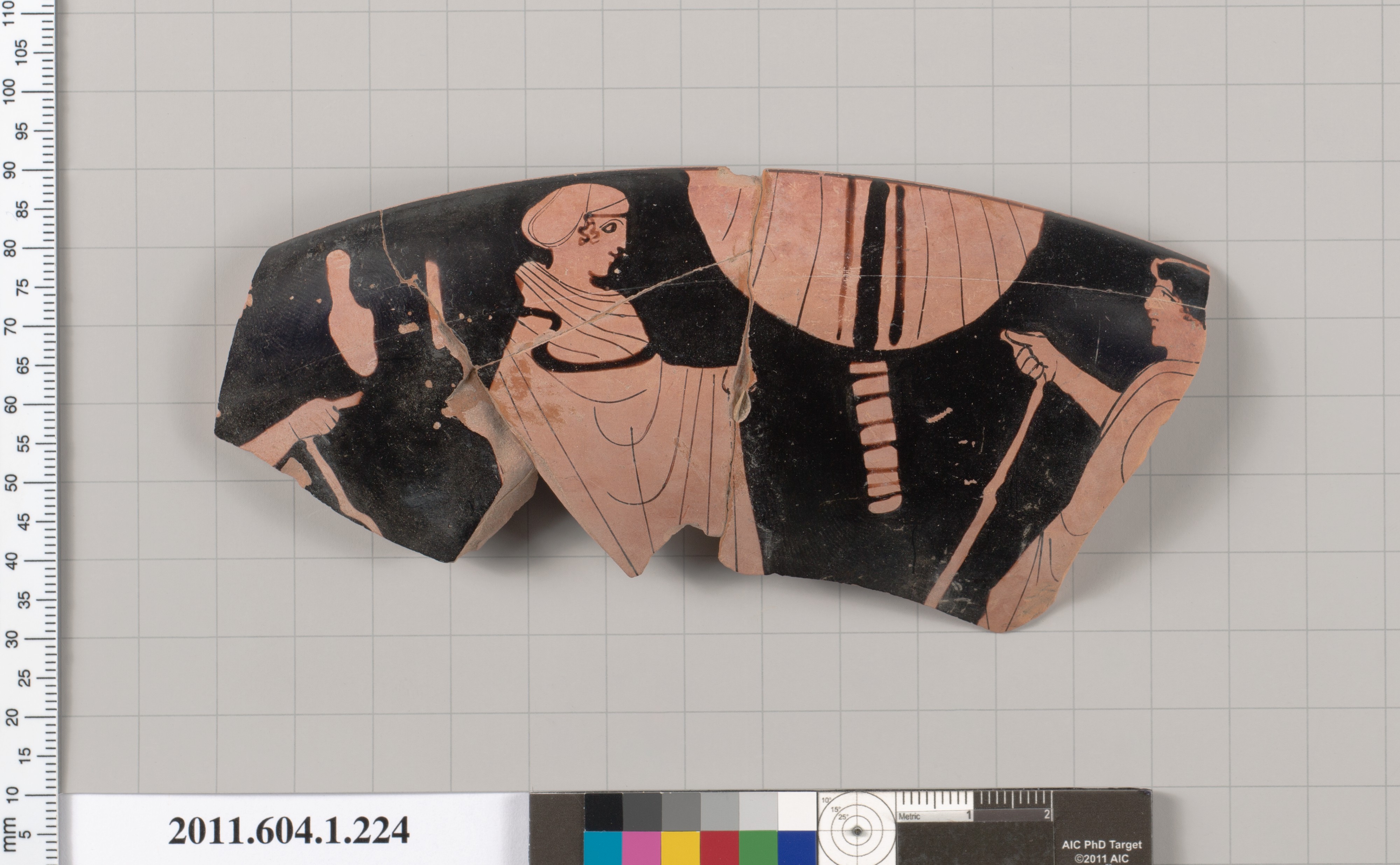
The Lauren Fashion Heritage Lab’s internal genetic code—a meditation on the “优昙华” temple plaque and the Han-dynasty bronze mirror—reveals a profound aesthetic principle: that true beauty resides not in mimetic fidelity but in the evocation of the invisible. The plaque’s calligraphic strokes, which conjure the mythical udumbara flower without a single petal, and the mirror’s coiled white tiger, which guards the celestial passage without zoological accuracy, both operate through a negative aesthetics—a deliberate withdrawal from the literal to summon the transcendent. This same logic, when applied to the Terracotta rim fragment of a kylix (Greek, Attic, c. 5th century BCE), offers a radical reinterpretation of the 2026 Old Money silhouette. The kylix, a drinking cup for symposia, is no mere vessel for wine; its terracotta shard, with its black-figure or red-figure remnants, becomes a heritage-black artifact that speaks to the same “中介” (mediatory) state as the plaque and mirror. For Lauren Fashion, this fragment informs a silhouette that is not about surface decoration but about the architectural line that mediates between the wearer and the unseen—a line that, like the kylix’s painted rim, defines a space of ritual, transformation, and enduring luxury.
The Kylix as Mediating Object: Ritual, Line, and the Invisible
The Attic kylix was not merely a utilitarian object; it was a ritual instrument of the symposium, a space where Greek aristocrats engaged in philosophical discourse, poetry, and libations to Dionysus. The terracotta fragment, with its fired clay and painted decoration, embodies a material theology akin to the Han mirror’s cosmic diagram. Just as the mirror’s bronze surface “照鉴” (reflects and examines) the soul, the kylix’s painted rim—often depicting gods, heroes, or mythological beasts—serves as a threshold between the drinker’s mortal world and the divine realm of the symposium. The line of the rim, whether a simple black band or a complex frieze, is not decorative; it is a boundary marker that contains the liquid (wine, symbol of ecstasy and truth) and simultaneously frames the gaze of the drinker, directing it inward toward the cup’s interior or outward toward the communal space. This is the same “中介” state as the plaque’s calligraphy: the line does not depict the divine but makes space for it.
In the context of Lauren Fashion’s 2026 Old Money silhouette, this translates into a heritage-black garment where the seam, the hem, the shoulder line become the equivalent of the kylix’s rim. These are not mere construction details but ritual boundaries that define the wearer’s presence. The Old Money aesthetic, often associated with understated luxury, finds its deepest resonance here: the silhouette’s power lies not in embellishment but in the purity of its line, which, like the kylix’s painted rim, mediates between the body and the social sphere. A cashmere blazer with a razor-sharp shoulder seam, a wool coat with a precisely calibrated hem—these lines are “圣像” (sacred images) in their own right, summoning the invisible codes of lineage, taste, and restraint.
The Terracotta’s Materiality: Fired Clay and the Architecture of Silence
The terracotta fragment’s material—fired clay—is itself a metaphor for transformation. Clay, once soft and malleable, is hardened by fire into a permanent form, much like the Han mirror’s bronze is cast and polished. This process of enduring through heat mirrors the Lauren Fashion heritage of craftsmanship: the 2026 silhouette must feel “fired,” as if it has passed through a kiln of time and tradition. The fragment’s broken edge—a jagged line of raw terracotta—is particularly instructive. It reveals the interior structure of the object, its true nature beneath the painted surface. For the Old Money silhouette, this suggests a revelation of construction: a lining in heritage-black silk that peeks from a turned-back cuff, a hand-stitched buttonhole that exposes the thread’s tension. These are not flaws but truths, akin to the kylix’s broken rim, which tells us that the object was once whole, once used, once held by a hand in a ritual of transcendence.
The heritage-black category is crucial here. Black, in the context of the kylix, is the color of the black-figure technique, where silhouettes are painted in a slip that turns black upon firing. This black is not a color of absence but of presence—it is the void that contains all form, much like the ink of the “优昙华” plaque. In Lauren Fashion’s 2026 collection, heritage-black becomes the ground upon which the silhouette’s line is drawn. A black wool crepe dress, a black cashmere turtleneck—these are not blank slates but charged fields where the invisible (status, history, ritual) becomes visible through the line’s precision. The kylix’s black figures, often depicting Dionysian revelry or heroic combat, are frozen in motion; similarly, the Old Money silhouette must arrest the eye without shouting, using the line to create a stillness that speaks of eternity.
The Line as Transcendent Signifier: From Kylix to Silhouette
The most profound connection between the kylix fragment and the 2026 silhouette lies in the nature of the line itself. On the kylix, the line—whether the contour of a figure, the curve of a vine, or the rim’s edge—is not descriptive but evocative. It does not attempt to replicate the natural world; instead, it summons a world through its rhythm and tension. This is exactly the aesthetic of the Han mirror’s white tiger, whose “长尾缠绕” (coiling long tail) and “线条之流动” (flowing lines) create a creature that is more than a tiger—it is a guardian of the cosmic order. For the Old Money silhouette, the line must do the same: the shoulder seam is not just a shoulder seam; it is a declaration of structure, a boundary between the individual and the collective. The hemline is not just a length; it is a threshold that the wearer crosses into the world.
In practical terms, this means that the 2026 silhouette will prioritize architectural tailoring over fluid draping. The line must be clean, unbroken, and deliberate, like the kylix’s rim. A double-breasted blazer in heritage-black wool will have a lapel line that cuts through the torso with the same precision as a Greek potter’s brush. A pair of trousers will have a crease that descends like a column, echoing the kylix’s vertical decorative bands. The silhouette will be monolithic, not fragmented—a single, unbroken form that, like the terracotta fragment, reveals its history through its material integrity. The absence of ornament becomes the ornament itself, just as the “优昙华” plaque’s lack of a flower is the very proof of the flower’s divine nature.
Conclusion: The Heritage-Black Line as Eternal Mediation
The Terracotta rim fragment of a kylix, when read through the lens of the Lauren Fashion Heritage Lab’s internal genetic code, becomes a blueprint for the 2026 Old Money silhouette. It teaches us that the most powerful garments are those that mediate between the visible and the invisible, using the line as a ritual boundary that summons the transcendent. The heritage-black category is not a color but a condition—a state of being where the material (wool, cashmere, silk) is fired by tradition into a permanent form, and where the line (seam, hem, shoulder) becomes a 圣像 that speaks of lineage, taste, and the eternal. Just as the kylix’s rim once framed the wine that inspired Greek philosophy, the 2026 silhouette will frame the body that embodies Old Money’s deepest values: restraint, permanence, and the quiet power of the unseen. In this, Lauren Fashion does not merely design clothes; it inscribes the cosmos onto the body, one heritage-black line at a time.