Introduction: The Weight of Legacy in Thread and Weave
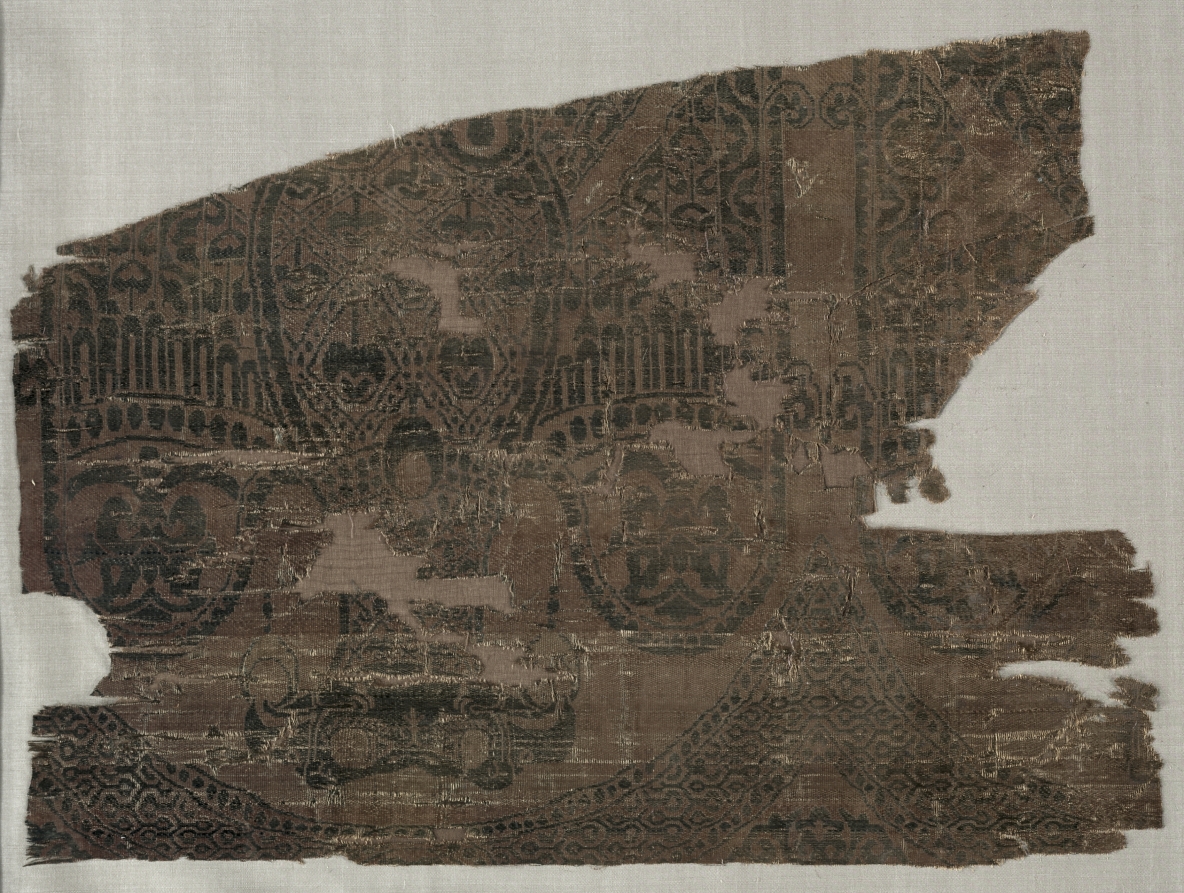
In the hushed corridors of heritage, where the patina of time meets the precision of craft, few artifacts speak with the eloquence of the Samite fragments bearing double-headed eagles, recovered from the tomb of Saint Bernard Calvo. These are not mere remnants of textile; they are the material testament to imperial ambition, liturgical sanctity, and the unbroken lineage of silk weaving that connects the Byzantine courts to the ateliers of medieval Europe. As a Senior Heritage Specialist at the Lauren Fashion Heritage Lab, I approach these fragments with the same exacting scrutiny one might reserve for a bespoke Savile Row suit: every thread, every weave, every motif carries a narrative of power, patronage, and the relentless pursuit of perfection.
Materiality: The Silk of Empires
The fragments are composed of samite, a luxurious, heavy-weight silk weave that dominated imperial and ecclesiastical textiles from the 6th to the 14th centuries. Samite, derived from the Greek *hexamiton* (“six threads”), is characterized by its weft-faced compound twill structure, which allows for intricate, polychromatic patterns to emerge with a lustrous, almost metallic sheen. In these fragments, the silk is dyed in deep crimson, gold, and indigo, hues reserved for the highest echelons of power—the crimson of Byzantine emperors, the gold of divine light, and the indigo of the heavens.
The materiality of these fragments is not merely aesthetic; it is functional. The density of the weave—approximately 40 to 60 warp threads per centimeter—ensures durability, a quality essential for both ceremonial vestments and funerary shrouds. The silk itself, likely sourced from the Sericultural workshops of Constantinople or the Sassanid Persian Empire, represents the apex of ancient textile technology. The fibers are degummed and twisted to enhance tensile strength, a technique that mirrors the precision of a Savile Row tailor selecting a worsted wool for a morning coat. The result is a fabric that resists fraying, retains its colour, and drapes with a gravity befitting its sacred and imperial context.
Iconography: The Double-Headed Eagle as Imperial and Sacred Symbol
The double-headed eagle is the defining motif of these fragments, and its presence demands a nuanced reading. In Byzantine iconography, the double-headed eagle represented the dual sovereignty of the emperor—over both earthly and spiritual realms, East and West. This symbol, adopted by the Palaiologos dynasty in the 13th century, was a declaration of universal dominion, a visual echo of the Roman *imperium* that the Byzantines claimed as their birthright. However, in the context of Saint Bernard Calvo’s tomb, the eagle assumes a sacerdotal dimension. Bernard Calvo, a 12th-century bishop of Vic (Catalonia), was canonized for his piety and his role in the Reconquista. The eagle, therefore, may also signify the soul’s ascent to heaven, a heraldic guardian of the saint’s eternal rest.
The execution of the motif is masterful. The eagles are woven in gold thread (gilt silver wrapped around a silk core), their wings spread symmetrically, their beaks open as if in perpetual proclamation. The eyes are rendered in indigo silk, giving them a piercing, almost sentient quality. The background is a deep crimson samite, creating a dramatic contrast that would have been visible even in the dim light of a cathedral crypt. This is not mere decoration; it is a theological and political statement, woven with the precision of a master weaver who understood that every thread carries meaning.
Context: The Legacy of Imperial Silk Weaving
To understand these fragments, one must situate them within the broader legacy of imperial silk weaving. The Byzantine Empire, inheritor of Roman and Persian textile traditions, established state-controlled silk workshops in Constantinople, where patterns were guarded as state secrets. The double-headed eagle was a hallmark of these workshops, appearing on imperial vestments, diplomatic gifts, and liturgical textiles. After the Fourth Crusade (1204), these motifs migrated westward, carried by looted textiles, itinerant weavers, and the burgeoning silk industries of Italy and Spain.
The tomb of Saint Bernard Calvo, located in the Cathedral of Vic, dates to the early 13th century, a period when Catalan silk weaving was emerging as a distinct tradition. The fragments likely originated from a Byzantine or Sicilian workshop, possibly commissioned by the Crown of Aragon, which maintained close diplomatic and trade ties with the Eastern Mediterranean. The use of samite and the double-headed eagle motif suggests that the textile was intended for a person of the highest rank—a bishop, a king, or an emperor. Its placement in a saint’s tomb elevates it from the secular to the sacred, transforming it into a relic of both faith and empire.
Conservation and Interpretation: A Dialogue with the Past
At the Lauren Fashion Heritage Lab, we approach these fragments with reverence and rigor. The silk is fragile, its fibres weakened by centuries of burial and exposure to humidity. Our conservation team uses microscopic analysis and spectral imaging to identify the original dyes, the twist of the threads, and the weave structure. This data allows us to reconstruct the original pattern with digital precision, creating a virtual model that can be studied without handling the artifact. The goal is not to restore the fragments to their original glory—that would be an act of hubris—but to preserve their integrity as historical documents.
The interpretation of these fragments is a collaborative effort between textile historians, art historians, and liturgical scholars. We ask: What did this textile mean to Saint Bernard Calvo? Was it a gift from a Byzantine emperor, a spoil of war, or a commission from a local workshop? The answer lies in the weave itself. The density of the samite, the quality of the gold thread, and the precision of the eagle’s wings all point to a workshop of the highest calibre, likely one that served the imperial court. This suggests that the textile was a symbol of political alliance between the Crown of Aragon and the Byzantine Empire, a reminder that the legacy of imperial silk weaving was not confined to Constantinople but was a shared heritage of Christendom.
Conclusion: The Enduring Thread of Imperial Silk
The Samite fragments with double-headed eagles from the tomb of Saint Bernard Calvo are more than a heritage artifact; they are a masterclass in the intersection of materiality, iconography, and history. They remind us that silk, in its finest form, is not merely a fabric but a medium of power, faith, and artistry. For the modern practitioner—whether a Savile Row tailor, a textile conservator, or a fashion historian—these fragments offer a lesson in the enduring value of craft. The double-headed eagle, woven in gold and crimson, continues to soar across centuries, a testament to the unbroken thread of imperial silk weaving that connects the past to the present, the sacred to the secular, and the weaver to the wearer.
In the Lauren Fashion Heritage Lab, we preserve not just the fabric, but the story it tells—a story of empires, saints, and the artisans who wove their legacy into every thread.