← BACK TO ARCHIVES
Heritage-Black
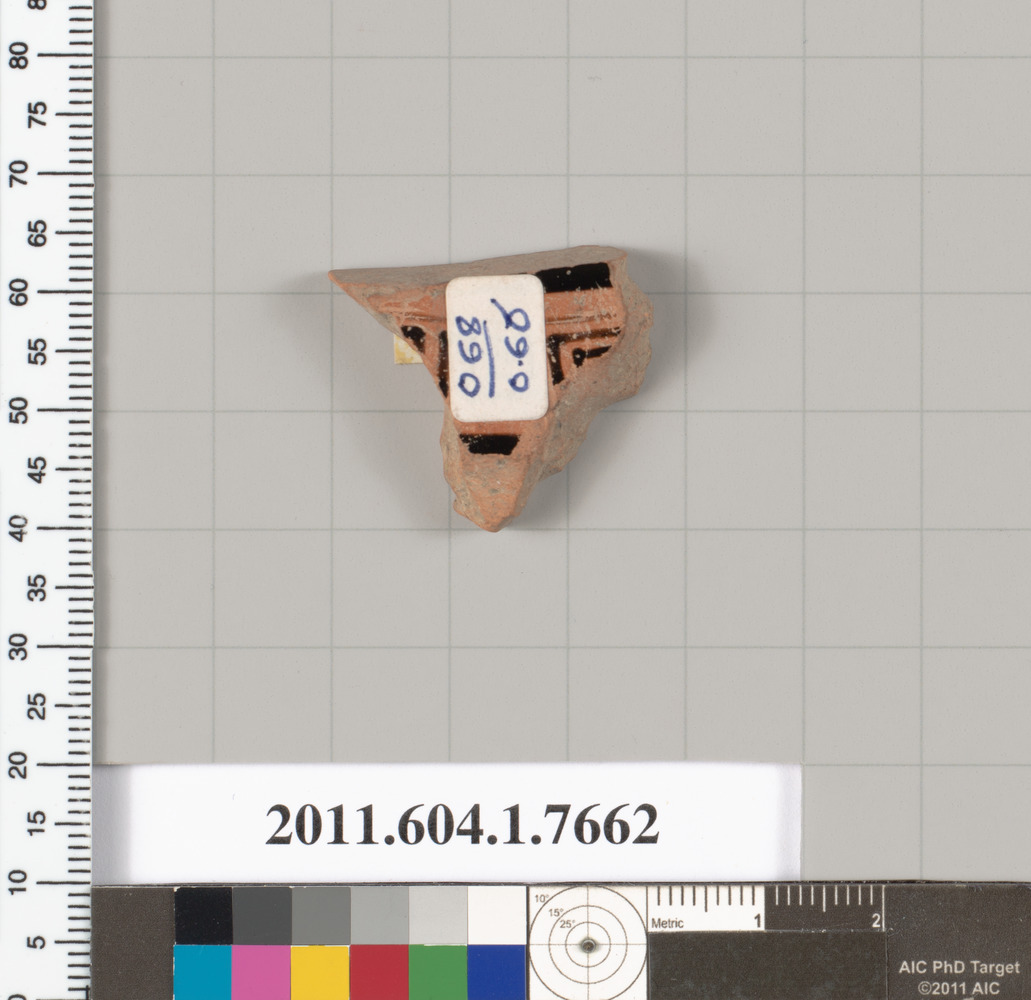
Heritage Synthesis: Terracotta fragment of a kylix (drinking cup)
Curated on Jun 20, 2026 // Node: LDN-01
The Vestigial Bloom: Terracotta Fragments and the Architecture of Absence in Old Money Silhouettes
The terracotta fragment of a Greek Attic kylix—a drinking cup reduced to a shard of fired clay—presents a paradox central to the Lauren Fashion Heritage Lab’s 2026 Old Money narrative. At first glance, this broken vessel belongs to a world of symposiums and libations, not to the restrained elegance of heritage wardrobes. Yet within its fractured rim and faded black-figure decoration lies a profound lesson: that true luxury, like the *Udumbara flower* of the Japanese temple plaque, is often rendered most powerfully through what is withheld, eroded, or left unsaid. This shard, when read through the lens of East Asian aesthetics—particularly the Zen-inflected tension between “虚像” (virtual image) and “实存” (substantial existence)—becomes a blueprint for a 2026 silhouette that privileges *patina over perfection*, *absence over abundance*, and *the trace over the statement*.
I. The Kylix Fragment as a “Visible Invisibility”
The Attic kylix was, in its original form, a vessel of conviviality—its wide bowl designed to hold wine, its tondo often painted with scenes of revelry or myth. The terracotta fragment, however, denies us this completeness. We see only a curve of the lip, a sliver of the black glaze, a ghost of a figure’s foot. This is not a failure of preservation but a *deliberate aesthetic condition*. In Japanese terms, the fragment embodies *wabi-sabi*: the beauty of the impermanent, the imperfect, the incomplete. The kylix’s missing sections are not voids to be mourned but spaces for the viewer’s imagination to inhabit—much like the temple plaque’s “Udumbara flower,” which exists only as a name, a promise, a three-thousand-year interval.
For the 2026 Old Money silhouette, this principle translates into a rejection of the “loud” luxury of logos and overt ornamentation. Instead, the garment becomes a vessel for *vestigial presence*: a jacket whose shoulder seam is slightly dropped, suggesting a former weight; a trouser whose cuff is frayed not from neglect but from a lifetime of wear; a coat whose wool has been brushed to a soft haze, obscuring the original weave. These are not signs of decay but of *lived time*—the terracotta’s equivalent of a chipped rim or a faded glaze. The Old Money client does not seek the “new” kylix, gleaming in its wholeness; she seeks the fragment that holds the memory of the symposium, the echo of laughter, the stain of wine.
II. The Chest for Storing Garments and the Silhouette as Container
The Japanese garment chest (*tansu*) with its painted floral decoration offers a complementary model. Where the kylix fragment speaks to *absence*, the chest speaks to *containment*. Its painted flowers—lilies, chrysanthemums, plum blossoms—are not merely decorative; they are *thresholds* between the mundane act of storage and the sacred act of preservation. As the internal genetic code notes, “衣物是身体的延展,衣箱则是衣物的栖所,而画上的花则为这个栖所注入了时间的呼吸” (garments are extensions of the body, the chest is the dwelling of garments, and the painted flowers infuse this dwelling with the breath of time).
In the 2026 Old Money silhouette, the garment itself becomes a *chest for storing garments*—a layered, volumetric form that houses the body while simultaneously housing the memory of the body’s movements. Consider a double-faced cashmere coat: its exterior is a quiet charcoal, its interior a deep burgundy that only reveals itself when the wearer turns or sits. This is the painted flower of the tansu—the hidden bloom that enriches the act of dressing. Similarly, a silk blouse with a pleated back panel allows the fabric to expand and contract like the bellows of a chest, creating a *breathing volume* that accommodates both the physical form and the intangible aura of the wearer. The silhouette is not sculpted to the body but *envelops* it, offering a space of repose—much like the chest offers a space of repose for the kimono.
III. The Terracotta’s Black-Figure Line and the Architecture of the Seam
The black-figure technique of the kylix fragment—where silhouetted figures are incised with fine lines to reveal the red clay beneath—offers a direct material analogue for the 2026 silhouette’s construction. The black glaze is not a flat surface; it is a *field of tension* between opacity and revelation. The incised lines are not merely decorative; they are *structural*, defining the anatomy of the figure, the fold of a himation, the gesture of a hand.
In garment construction, this translates to a renewed emphasis on the *seam as a line of intention*. A tailored jacket’s princess seam, for instance, is not simply a means of shaping fabric; it is a *black-figure incision* that traces the body’s architecture while leaving the fabric’s surface largely unadorned. The 2026 Old Money silhouette favors *negative-space detailing*: a single dart that runs from shoulder to waist, a welt pocket that is nearly invisible until the hand approaches, a hem that is turned and stitched by hand, leaving a subtle ridge. These are the “incised lines” of the kylix—minimal, precise, and deeply communicative of the maker’s hand.
IV. The Aesthetic of the “间” (Ma) and the 2026 Silhouette
The internal genetic code identifies the Japanese concept of *ma* (間)—the interval, the pause, the space between—as the unifying aesthetic principle between the temple plaque and the garment chest. The kylix fragment, too, is an object of *ma*: it exists in the interval between whole and broken, between function and artifact, between the symposium of antiquity and the vitrine of the museum. For the 2026 Old Money silhouette, *ma* becomes the governing principle of proportion.
Consider a long-line blazer that falls just below the hip, leaving a precise *gap* of three inches between its hem and the trouser waistband. This is not a random measurement but a calculated *pause*—a moment of visual breath that allows the eye to rest before moving to the next garment. Or consider a wide-leg trouser that skims the floor, creating a *negative space* between the hem and the shoe. This is the *ma* of the kylix’s missing section—an absence that defines the presence. The silhouette is not about filling space but about *orchestrating emptiness*.
V. Conclusion: The Three-Thousand-Year Silhouette
The terracotta fragment of the kylix, the temple plaque of the Udumbara flower, and the painted chest for storing garments converge on a single truth: that the most enduring luxury is that which acknowledges its own transience. The 2026 Old Money silhouette is not a revival of a past style but a *receptacle for time itself*. It is a garment that, like the kylix shard, carries the memory of its making; like the temple plaque, it bears the patina of devotion; like the chest, it holds the breath of seasons past.
When the wearer dons this silhouette, she is not simply dressing for the present. She is participating in a three-thousand-year interval—the time between the Udumbara flower’s last bloom and its next. She is the *kylix fragment* that has survived the symposium, the *chest* that has preserved the kimono, the *plaque* that names the invisible. The silhouette is not a statement of wealth but a *witness to time*—and in that witnessing, it achieves the rarest form of elegance: the grace of being both here and elsewhere, both whole and fragment, both visible and profoundly, beautifully unseen.
Heritage Lab Insight
Genetic Bridge: Archive node focusing on Heritage-Black craftsmanship.