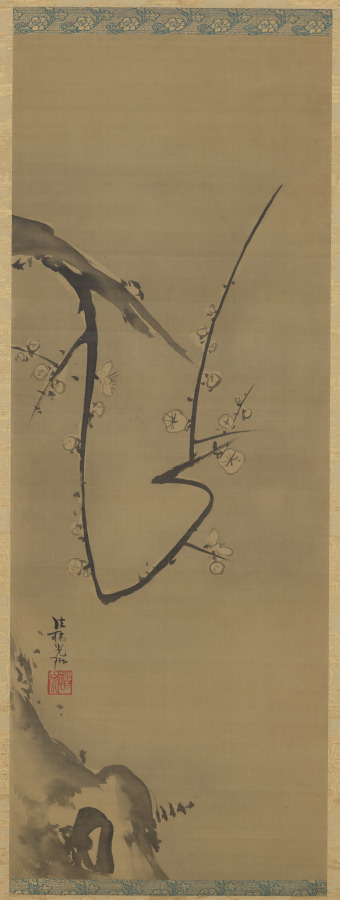
The Plum Tree in Silk: An Artifact of Imperial Legacy
In the rarefied world of Savile Row, where precision tailoring meets centuries of craft, the materiality of a garment speaks in a language of provenance and purpose. As Senior Heritage Specialist for the Lauren Fashion Heritage Lab, I present this research artifact on the subject of the Plum Tree, rendered in silk, within the context of the legacy of imperial silk weaving. This is not merely a study of a motif; it is an examination of how a single natural form, translated through the most luxurious of fibres, carries the weight of dynastic ambition, artisanal mastery, and enduring cultural resonance. The plum tree, in its silk incarnation, becomes a testament to the dialogue between nature and artifice, between the ephemeral bloom and the enduring weave.
Materiality: Silk as a Conduit of Imperial Power
Silk, by its very nature, is a material of consequence. Its origins in ancient China, shrouded in myth and guarded as a state secret, established it as a currency of power long before it reached the looms of imperial workshops. The materiality of silk—its lustre, its drape, its ability to hold the most intricate of dyes—made it the chosen medium for communicating authority. In the context of imperial silk weaving, particularly during the Ming and Qing dynasties, silk was not a passive fabric; it was an active agent in the projection of sovereignty. The imperial workshops, such as the Nanjing and Suzhou manufactories, were not merely production houses; they were laboratories of cultural diplomacy, where every thread was imbued with symbolic intent. The plum tree, as a subject, was a natural choice for this elevated medium. Its blossoms, which dare to emerge in the bitter cold of late winter, symbolise resilience, purity, and the promise of renewal—qualities that a ruler would wish to associate with their reign. When rendered in silk, the plum tree’s delicate petals and gnarled branches are transformed into a permanent statement of endurance, a textile chronicle of a dynasty’s claim to the Mandate of Heaven.
The Plum Tree Motif: A Study in Symbolic Weaving
The plum tree, or mei, occupies a hallowed place in Chinese iconography, standing alongside the orchid, bamboo, and chrysanthemum as one of the “Four Gentlemen” of Confucian virtue. Each element of the tree carries specific meaning: the five petals of the plum blossom represent the five blessings of longevity, wealth, health, virtue, and a natural death. In imperial silk weaving, the motif was not applied arbitrarily. It was carefully composed to align with the wearer’s rank and the occasion. For a high-ranking official or a member of the imperial family, a silk robe featuring a plum tree in full bloom might be worn during the New Year celebrations, signalling a hope for a prosperous year ahead. The branches, often depicted in a twisted, calligraphic manner, were not merely aesthetic; they echoed the brushstrokes of scholarly painting, linking the garment to the intellectual and moral refinement of the court. The legacy of imperial silk weaving is thus preserved in these details—the precise placement of a blossom, the subtle gradation of a pink petal against a deep indigo ground. It is a legacy of patience, of years spent perfecting the drawloom, of dyers who could coax a hundred shades from a single cocoon.
Technique: The Art of the Imperial Loom
To understand the plum tree in silk is to understand the technique that brought it to life. The imperial workshops employed the kesi (cut silk) technique, a form of tapestry weaving that allowed for unparalleled detail and colour variation. Unlike standard brocade, where threads are carried across the back of the fabric, kesi uses a discontinuous weft, meaning each colour is woven only where it appears in the design. This allowed the weaver to create the subtle shading of a plum blossom’s petal, the rough texture of the tree’s bark, and the soft blur of a distant branch. The process was painstakingly slow; a single robe could take months, even years, to complete. The weaver, often a master artisan whose family had served the court for generations, would work from a cartoon provided by an imperial painter. The result was a textile that was both a painting and a fabric, a fusion of two arts that elevated the plum tree from a natural form to a cultural artifact. This technique, passed down through secret guilds, is the very materiality that defines the legacy of imperial silk weaving. It is a legacy that Savile Row, with its own traditions of hand-finishing and bespoke construction, can deeply appreciate. Just as a Savile Row tailor understands the weight of a worsted wool or the fall of a cashmere, the imperial weaver understood the soul of silk.
Preservation and Contemporary Relevance
Today, the plum tree in silk exists as a fragile bridge between past and present. At the Lauren Fashion Heritage Lab, we are tasked with the preservation of such artifacts—not merely as museum pieces, but as living documents of craft. A silk robe from the Qing dynasty, bearing a plum tree motif, is a primary source. It tells us about the dyes used (often derived from madder, indigo, and gardenia), the weaving techniques employed, and the aesthetic preferences of a particular emperor. It also challenges us to consider how such heritage can inform contemporary fashion. The plum tree’s symbolism of resilience is particularly resonant in an era of fast fashion and environmental uncertainty. By studying the imperial legacy, we can advocate for a return to material integrity—to fabrics that are grown, dyed, and woven with intention. The plum tree in silk is not a relic; it is a reminder that the finest garments are those that carry meaning, that are made to endure, and that speak of the hands that created them. For the gentleman or lady of Savile Row, this is the ultimate luxury: a garment that is not just worn, but inherited; not just seen, but understood.
Conclusion: The Thread That Binds
In conclusion, the plum tree in silk is a heritage artifact of profound depth. Its materiality—the lustrous, resilient silk of imperial China—is inseparable from its context: the legacy of imperial silk weaving, a tradition of technical brilliance and symbolic sophistication. From the imperial workshops to the quiet ateliers of Savile Row, the thread that binds us is a respect for craft, for the story that a fabric can tell. The plum tree, with its blossoms of hope and its branches of endurance, remains a fitting emblem for this enduring dialogue. It is a motif that has survived dynasties, revolutions, and the passage of time, a testament to the power of silk to carry not just colour, but culture. As we preserve and study these artifacts, we do so with the knowledge that we are not just conserving the past; we are weaving the future.