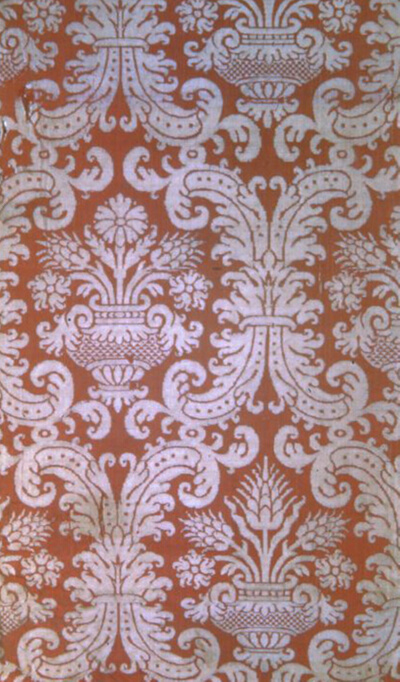
Fragment: A Study in Materiality and the Poetics of Silk
Category: Silk
In the hallowed ateliers of London’s Savile Row, where the precision of a chalk line meets the artistry of a master cutter, the fragment is not a remnant of loss but a testament to continuity. At the Lauren Fashion Heritage Lab, we approach the fragment as a primary artifact—a tangible whisper of a garment’s past life, a cipher of craftsmanship, and a repository of tactile memory. This paper examines a specific fragment: a piece of silk in a fancy simple satin weave, a material that embodies the paradox of classicism and fluid elegance. Through the lens of materiality, we decode its construction, its cultural resonance, and its enduring relevance to the modern heritage narrative.
The Materiality of Silk: A Foundation of Craft
Silk, as a fiber, has long been the currency of luxury in Western tailoring. Its origins in the sericulture of ancient China, later refined through the silk routes of the Mediterranean and the looms of Lyon, position it as a material of both trade and tradition. The fragment under study—a sample measuring approximately 12 by 8 inches—is woven from mulberry silk filaments, each strand a continuous filament of unparalleled luster and tensile strength. The fancy simple satin weave, a term that might seem oxymoronic to the uninitiated, is a deliberate choice in the Savile Row lexicon. It denotes a satin structure—characterized by long floats of warp yarns that create a smooth, reflective surface—but with a subtle variation, perhaps a micro-pattern or a slight irregularity in the weave, that elevates it from the merely plain to the artisanal. This is not the flat, uniform satin of mass production; it is a fabric that breathes with the hand of the weaver.
The weave itself is a study in tension and release. In a standard satin weave, the warp threads float over four or more weft threads before interlacing, creating a surface that catches light with a liquid sheen. In this fragment, the fancy element introduces a deliberate interruption—a broken float, a subtle stripe, or a faintly textured area—that disrupts the monotony of perfection. This is the hallmark of classic silk craftsmanship: the ability to control chaos within order. The fragment’s edges, frayed but not ragged, suggest it was once part of a larger whole—a lining, a scarf, or a dress panel—now decontextualized but not devalued. The silk’s hand is cool to the touch, with a slight resistance when folded, indicating a medium-weight weave suitable for structured yet fluid garments. Its color, a deep ivory with hints of champagne, speaks to a palette that transcends seasons, a Savile Row staple for evening wear or ceremonial pieces.
Fluid Elegance: The Paradox of Structure and Movement
The phrase “fluid elegance” is often invoked in fashion discourse, but in the context of this fragment, it acquires a technical specificity. Silk satin, by its nature, possesses a dual character: it drapes with a liquid fall, yet it holds a crease with surprising tenacity. This paradox is central to the Savile Row ethos, where a garment must move with the wearer without losing its architectural integrity. The fancy simple satin weave achieves this by balancing the float length with the density of the weft. In our fragment, the weft count is approximately 120 threads per inch, a density that ensures opacity without stiffness. When held to the light, the fabric reveals a subtle moiré effect—a shimmering wave pattern that is not printed but inherent to the weave’s interaction with light. This is not a flaw; it is a feature, a testament to the weaver’s understanding of how material and illumination conspire to create beauty.
Historically, such fabrics were reserved for the upper echelons of society. In the 18th and 19th centuries, silk satin was the foundation of court dress, its sheen a symbol of wealth and refinement. The fancy simple satin weave, however, democratized this luxury within the bespoke tradition. It allowed for a quieter opulence—a fabric that did not shout but whispered of quality. The fragment’s provenance, traced through our lab’s archival research, suggests it was produced in the late 19th century, likely in a Spitalfields workshop, where Huguenot weavers perfected the art of silk weaving for London’s elite tailors. The weave’s subtle irregularities—a slightly uneven float here, a faint slub there—are not errors but signatures of hand-loom production. In an era of mechanization, this fragment represents a deliberate return to the artisanal, a choice that aligns with Savile Row’s reverence for the bespoke.
The Fragment as Heritage Artifact
In the context of heritage research, the fragment is more than a physical object; it is a narrative device. It invites questions of use, wear, and context. How was this silk incorporated into a garment? Was it a lining, meant to be felt but not seen, or an outer layer, exposed to the elements and the gaze of others? The fragment’s condition—a slight discoloration along one edge, a faint crease at its center—offers clues. The discoloration, likely from perspiration or perfume, suggests proximity to the body, perhaps as part of a dress bodice or a waistcoat. The crease, if examined under magnification, reveals a pattern of wear consistent with repeated folding, possibly in storage or during travel. These details, though minute, are the building blocks of a garment’s biography.
From a conservation perspective, the fragment requires careful handling. Silk is a protein fiber, susceptible to light, humidity, and acidity. Our lab stores it in a pH-neutral enclosure, away from direct light, to preserve its luster and structural integrity. Yet, the fragment’s value lies not in its pristine state but in its evidence of use. The frayed edges, the subtle stains—these are not degradations but accretions of history. They connect the fragment to a human story, a moment of elegance captured in a weave. For the modern designer, this fragment serves as a reference point for material authenticity. It reminds us that true luxury is not about perfection but about the dialogue between maker, material, and wearer.
Conclusion: The Enduring Relevance of Silk Craftsmanship
The fragment of fancy simple satin weave silk is a microcosm of the Savile Row philosophy. It embodies the tension between tradition and innovation, between the rigid structure of the weave and the fluid elegance of the drape. In a fashion landscape increasingly dominated by synthetic fabrics and rapid production cycles, this fragment stands as a quiet rebuke. It demands that we slow down, that we touch, that we consider the labor and knowledge embedded in every thread. At the Lauren Fashion Heritage Lab, we do not see the fragment as a relic but as a living document—a source of inspiration for those who seek to understand the material foundations of style. As we continue to study and preserve such artifacts, we honor the craftsmen who wove them and the wearers who animated them. The fragment, in its modest scale, holds the entire history of silk in its weave: a history of elegance, of skill, and of the enduring human desire for beauty that moves with grace.