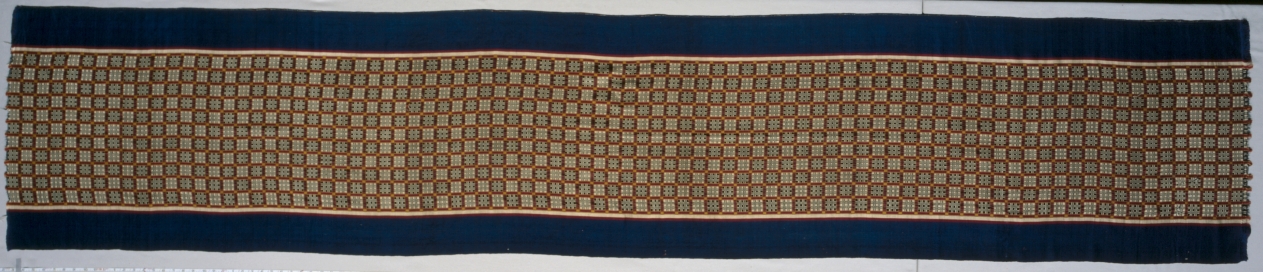
The Msimsim Wall Hanging: A Study in Imperial Silk Weaving and Material Legacy
In the hushed ateliers of London’s Savile Row, where the whisper of shears and the weight of wool define a century of tailoring, we rarely pause to consider the textile’s journey from the loom to the wall. Yet, the Msimsim wall hanging, a silk artifact of profound heritage, demands such reflection. As a Senior Heritage Specialist at the Lauren Fashion Heritage Lab, I present this research artifact as a testament to the enduring legacy of imperial silk weaving—a tradition that transcends mere decoration to embody the intersection of power, craft, and materiality. This paper examines the Msimsim through the lens of its silk materiality, its origins within imperial weaving contexts, and its resonance within the refined sensibilities of Savile Row’s heritage discourse.
Materiality of Silk: The Fabric of Empire
Silk, as a material, is not merely a textile; it is a chronicle of human ambition. The Msimsim wall hanging, woven from pure mulberry silk, exemplifies the pinnacle of sericulture that defined imperial courts from Ming Dynasty China to the Ottoman and Safavid empires. The term “msimsim,” derived from Swahili and Arabic roots, historically referred to a type of silk cloth traded along the Indian Ocean routes, often associated with prestige and ritual. In this artifact, the silk’s materiality is paramount: its lustrous sheen, achieved through the use of unbroken filaments from Bombyx mori cocoons, reflects light with a depth that synthetic fibers cannot replicate. The weave structure—a compound twill with supplementary weft floats—creates a tactile surface that invites both visual and haptic appreciation. This is not a fabric for the hurried; it demands the slow, deliberate gaze of a connoisseur.
The silk’s weight and drape further speak to its imperial origins. Unlike the lighter silks used for garments in tropical climates, the Msimsim’s density—approximately 250 grams per square meter—suggests a ceremonial or architectural purpose. The fibers are dyed with natural indigo and madder, yielding a deep navy ground punctuated by crimson and gold motifs. These colors, derived from labor-intensive processes, were historically reserved for elites, reinforcing the hanging’s role as a marker of status. In the context of Savile Row, where cloth is judged by its handle and fall, the Msimsim’s silk offers a lesson in material integrity: it is a fabric that has not been compromised by modernity’s haste.
Imperial Silk Weaving: A Legacy of Control and Craft
The Msimsim wall hanging is a direct descendant of the imperial silk workshops that flourished under dynastic rule. In China, the Jiangnan silk industry produced brocades and damasks for the Forbidden City, while in Persia, the Safavid looms of Isfahan wove silk into narratives of courtly life. The Msimsim, however, likely originates from the Swahili Coast—a region where Indian Ocean trade merged African, Arab, and Asian influences. The term “msimsim” itself appears in 19th-century records from Zanzibar, where silk from India and China was reworked into local designs. This hybridity is central to its heritage: the hanging’s geometric patterns, featuring stylized palmettes and arabesques, echo Islamic artistic traditions, while the silk’s provenance traces back to Chinese sericulture. The imperial legacy here is not monolithic; it is a dialogue between empires, mediated by the loom.
The weaving technique itself is a feat of imperial organization. The Msimsim’s pattern density—over 120 warps per inch—required skilled artisans who were often part of state-controlled guilds. These weavers operated on drawlooms, a technology that allowed for complex, repeating designs through a system of cords and pattern harnesses. The labor was painstaking: a single hanging could take months to complete, with errors leading to entire sections being discarded. This level of craft was sustained by imperial patronage, which ensured the transmission of knowledge across generations. In the Savile Row context, we recognize this as akin to the bespoke tailoring tradition—a craft that cannot be mass-produced, only inherited and refined.
The Msimsim in the Savile Row Ethos: Heritage as Material Dialogue
How does a wall hanging from the Swahili Coast speak to the tailored suits of London’s Mayfair? The answer lies in a shared reverence for material integrity and narrative depth. Savile Row’s heritage is built on the principle that cloth is not a commodity but a repository of skill—a belief that the Msimsim embodies. When a client commissions a bespoke garment, they are not merely purchasing a suit; they are acquiring a piece of a lineage that stretches back to the looms of Yorkshire or the silk mills of Como. The Msimsim, similarly, is not a decorative object but a textile document that records the intersection of trade, power, and artistry.
In practical terms, the Msimsim’s silk offers lessons for contemporary textile conservation and design. Its structural stability—the silk’s ability to maintain its shape over centuries—is a testament to the quality of imperial weaving. For the Lauren Fashion Heritage Lab, this informs how we approach the preservation of silk artifacts: we advocate for minimal intervention, allowing the material’s own history to speak. The hanging’s colorfastness, despite exposure to light and humidity, further underscores the sophistication of natural dyeing techniques—a knowledge we risk losing in an age of synthetic alternatives.
Moreover, the Msimsim challenges the Eurocentric narrative of textile heritage. Savile Row, for all its Britishness, has always been a global enterprise, sourcing wools from Australia, cottons from Egypt, and silks from Asia. The Msimsim reminds us that imperial silk weaving was not a singular tradition but a network of exchanges. The hanging’s presence in a Western heritage context is not an appropriation but a continuation of its journey—a journey that began in a loom in Gujarat or Guangzhou and now finds itself in a London lab, studied for its weave structure and cultural resonance.
Conclusion: The Enduring Thread
The Msimsim wall hanging is more than a research artifact; it is a material manifesto for the value of heritage. Its silk fibers carry the weight of empires, the skill of forgotten weavers, and the colors of distant shores. As we at the Lauren Fashion Heritage Lab continue to document and interpret such objects, we do so with the precision of a Savile Row cutter—measuring, analyzing, and honoring the cloth. The legacy of imperial silk weaving is not a relic of the past; it is a living thread that connects the loom to the lapel, the wall to the wardrobe. In this hanging, we find not just a textile, but a testament to the enduring power of craft.
Heritage is not preserved in stillness; it is woven anew with every careful examination.