From Terracotta Fragment to Tailored Silhouette: The Dialectics of Finite Form and Infinite Line in 2026 Old Money Fashion
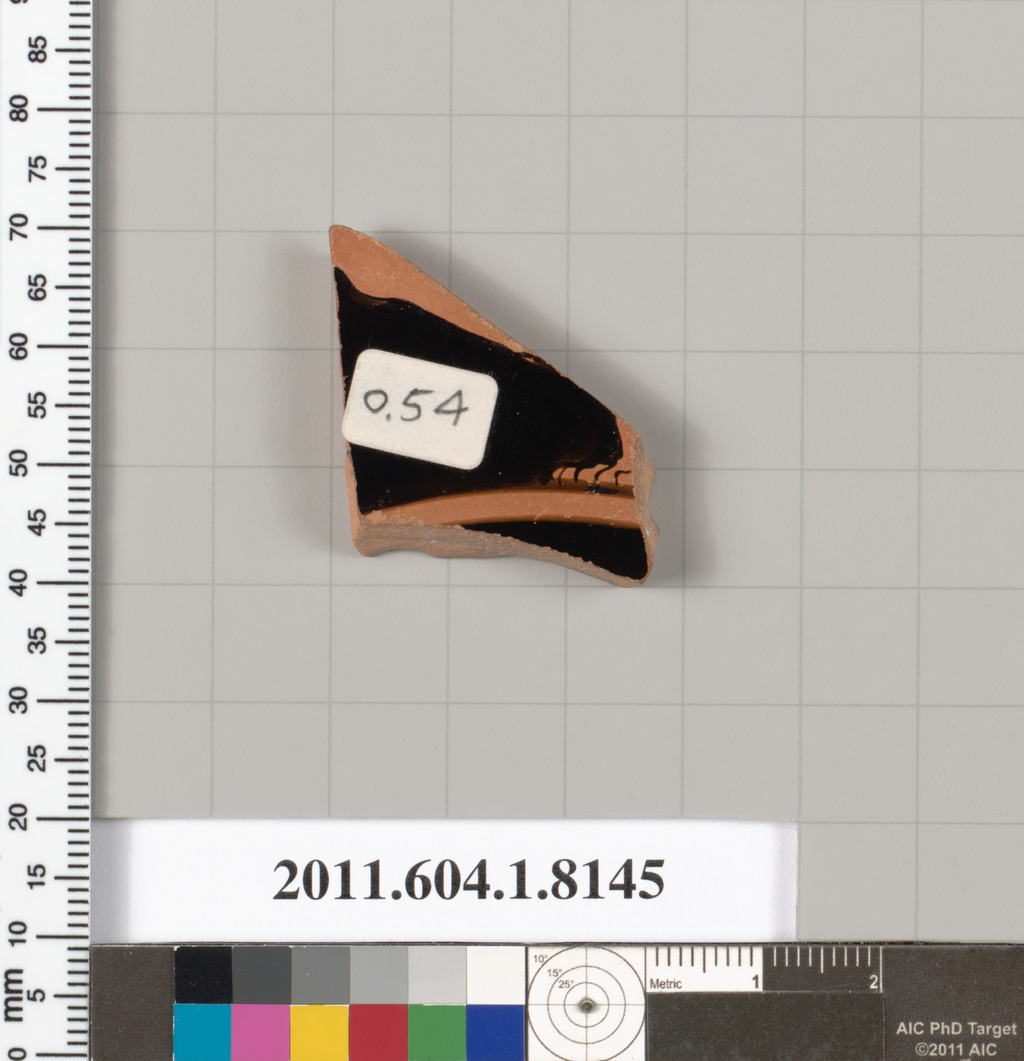
The scholarly gaze of the Lauren Fashion Heritage Lab often turns to unexpected intersections—where an ancient artifact, seemingly remote from the atelier, reveals a latent syntax for contemporary dress. The terracotta fragment of a Greek Attic kylix (drinking cup), now housed in a museum collection, is one such artifact. At first glance, a broken shard of fired clay, painted with the attenuated limbs of a symposium reveler, appears worlds apart from the quiet luxury of an Old Money wardrobe. Yet, when read through the internal genetic code of our heritage—a code that juxtaposes the Japanese Udumbara Flowers wooden plaque’s Zen emptiness with the Han dynasty bronze mirror’s Daoist dynamism—this Greek fragment becomes a profound meditation on the 2026 silhouette. It teaches us that the essence of Old Money is not opulence, but the disciplined negotiation between finite form (the cut, the seam, the shoulder) and infinite line (the drape, the fall, the unbroken contour).
The Kylix as a Diagram of Restrained Motion
The Attic kylix was designed for the symposion, a ritualized drinking party that balanced hedonism with philosophical discourse. Its shallow bowl, raised on a slender stem, was meant to be held in the hand, tilted, and passed. The painted figures—often youths, athletes, or gods—are rendered in a state of poised action: a runner mid-stride, a discus thrower coiled to release, a reclining figure reaching for a cup. The terracotta fragment preserves this frozen kinetic energy. The line is not merely decorative; it is a tension vector. It defines the boundary of the body against the black-ground void, creating a silhouette that is both precise and breathing.
This duality mirrors the aesthetic dialectic we uncovered between the Udumbara plaque and the Han mirror. The plaque, with its carved flower emerging from bare wood, practices subtraction—letting the material’s inherent emptiness speak. The mirror practices addition—filling every surface with cosmic narrative. The kylix occupies a middle ground. Its painted figures are not abstracted into pure form (like the Udumbara), nor are they lost in a dense symbolic field (like the mirror). They are discrete entities in a finite space, their contours sharply defined against the clay. Yet, the line that defines them is not static; it flows, curves, and accelerates, suggesting movement beyond the fragment’s edge. This is the first lesson for 2026 Old Money silhouettes: the garment must be a finite container for infinite potential.
Translating Terracotta Lineage into Tailoring
In practical terms, the kylix fragment informs the 2026 silhouette through its treatment of the shoulder line, the waist suppression, and the hem fall. The Greek painter’s brushstroke, which outlines a youth’s deltoid with a single unbroken curve, becomes the blueprint for a jacket’s natural shoulder. The 2026 Old Money blazer will reject the exaggerated, power-shouldered padding of previous decades. Instead, it will adopt a “kylix shoulder”—a subtle, rolled sleeve head that follows the body’s own architecture, much as the painted line follows the athlete’s muscle. This is not a return to 1990s minimalism, but a conscious archaeology of line. The shoulder is a finite point of structure; the drape from it must be infinite, cascading without interruption.
The waist suppression, too, finds its analogue in the kylix’s stem. The cup’s bowl and stem are distinct yet unified—a sharp transition that does not break the visual flow. For trousers and skirts, this translates into a high, clean waistband that cinches without pinching, creating a silhouette that flares gently from a defined apex. The 2026 Old Money trouser will not be a straight tube; it will have a subtle, almost imperceptible “kylix curve” from hip to hem, echoing the cup’s transition from bowl to foot. The fabric—whether wool, cashmere, or a heritage-black silk—must hold this shape without stiffness, as if the garment were painted onto the body in a single, fluid stroke.
The Fragment as a Metaphor for Heritage
Most crucially, the terracotta fragment teaches us about incompleteness as a luxury signifier. The kylix is broken; we see only a portion of the original scene. Yet, this fracture does not diminish its power—it amplifies it. The missing sections invite the viewer to complete the narrative in their mind. This is the essence of the 2026 Old Money aesthetic: the garment that suggests more than it reveals. A jacket with a single, perfectly placed pocket; a skirt whose hem falls just below the knee, leaving the calf as a blank canvas; a coat whose lapel width is precisely calibrated to echo the kylix’s rim. These are not arbitrary choices. They are heritage fragments—pieces of a larger whole that the wearer, and the observer, must assemble.
The internal genetic code of our Lab—the dialectic between the Udumbara’s Zen void and the Han mirror’s cosmic plenitude—finds its resolution here. The kylix fragment is neither empty nor full. It is a threshold. Its painted line is the edge where the finite garment meets the infinite body. The 2026 Old Money silhouette, therefore, is not about covering or revealing, but about defining the boundary between the two. The terracotta fragment, with its poised athletes and broken edges, whispers to the atelier: Cut with precision, but let the line breathe. Let the garment be a fragment of a larger story—one that the wearer completes with every step, every gesture, every tilt of the head.
Conclusion: The Line as Legacy
In the final analysis, the terracotta kylix fragment is not a relic of a dead civilization, but a living diagram for the 2026 Old Money wardrobe. It teaches us that true luxury is not in the abundance of material, but in the economy of line. The Greek painter used a single brushstroke to define a shoulder; the Han mirror used a thousand to define a cosmos. The 2026 silhouette must choose its lineage. For Lauren Fashion Heritage Lab, the answer is clear: we follow the kylix. We embrace the finite form—the sharp shoulder, the clean waist, the precise hem—and we let the infinite line of the fabric, the drape, and the movement speak the rest. This is the heritage of Heritage-Black: a color that is not a color, but a void that contains all possibilities. The terracotta fragment, broken and beautiful, shows us that the most powerful statement is the one that is almost, but not quite, complete.