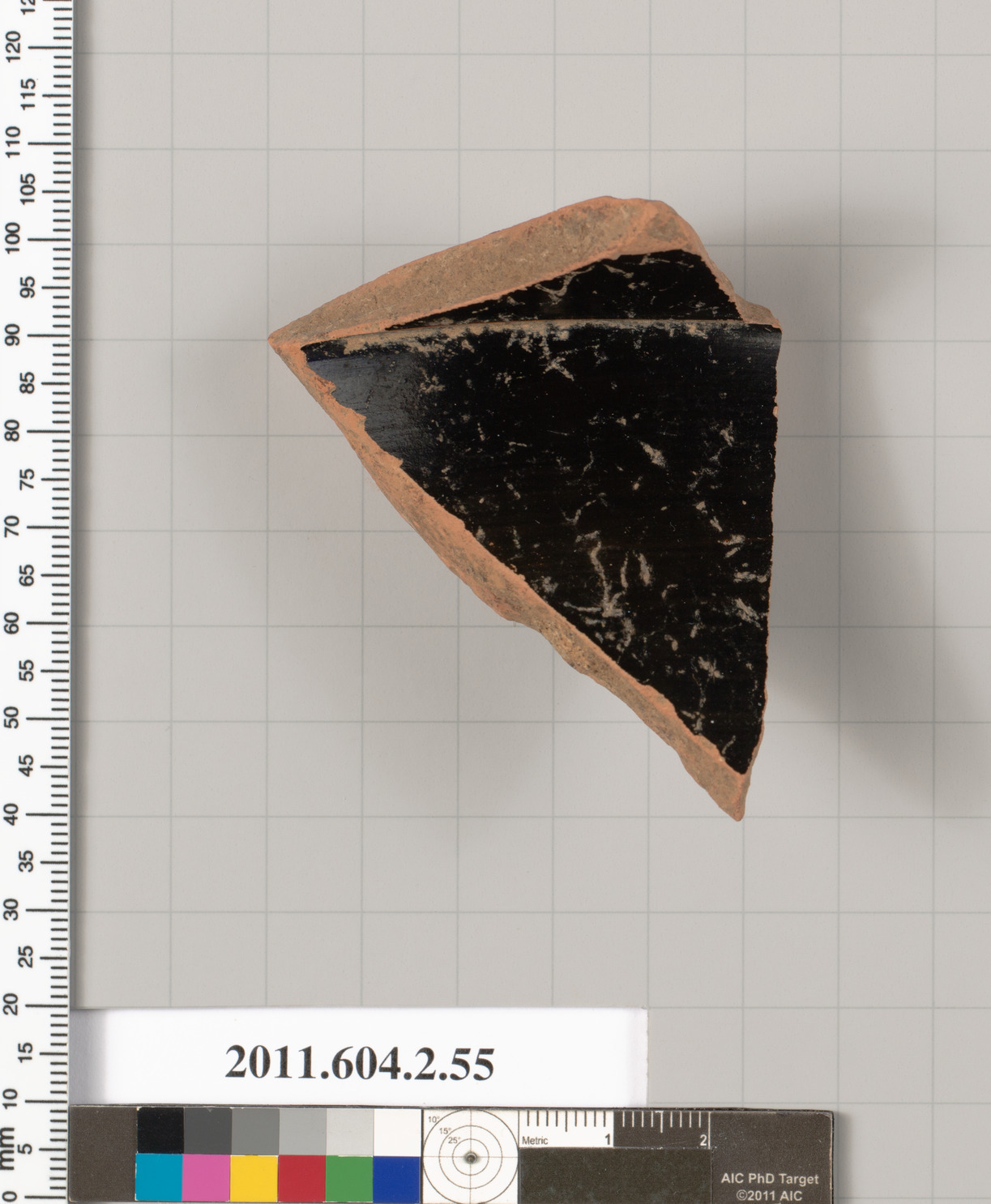
The Archaeology of Absence: Terracotta Fragments and the 2026 Old Money Silhouette
Introduction: The Fragment as a Hermeneutic Device
The terracotta fragment of an Attic pot, now housed in a museum vitrine, is not merely a broken shard of antiquity. It is a palimpsest of time, a physical remnant that speaks more powerfully through its incompleteness than any pristine artifact could. For the Lauren Fashion Heritage Lab, this fragment—with its weathered surface, its broken edge, and its faint traces of black-figure decoration—serves as a profound hermeneutic device for reimagining the 2026 Old Money silhouette. The Old Money aesthetic, at its core, is not about opulence or novelty; it is about the quiet authority of inheritance, the unspoken narrative of lineage, and the beauty of things that have been worn, mended, and passed down. The terracotta fragment, in its raw materiality and its condition of partial preservation, offers a blueprint for a silhouette that privileges texture over pattern, patina over polish, and the aesthetics of erosion over the tyranny of perfection.
Materiality and the Language of Surface
The Attic terracotta fragment is defined by its surface: the porous clay, the subtle variations in ochre and umber, the faint incised lines that once delineated a figure or a floral motif. This is not a surface that invites a single, fixed gaze; rather, it demands a tactile, almost haptic engagement. The eye must travel across its irregularities, reading the cracks and the faded slip as a narrative of use and exposure. For the 2026 Old Money silhouette, this translates into a deliberate embrace of textural complexity. We are moving away from the sterile, high-gloss finishes of fast fashion and toward fabrics that possess a “lived-in” quality. Think of a heavy wool flannel that has been brushed to a soft, slightly napped surface, or a cashmere jersey that drapes with the gentle weight of age. The black of Heritage-Black, in this context, is not a flat, absolute void. It is a deep, absorbent black that reveals subtle variations in weave and light—a black that has “depth,” much like the dark interior of the terracotta shard. This is the black of a well-worn blazer, of a pair of trousers that have been pressed a thousand times, of a coat that has absorbed the dust of libraries and the smoke of old fireplaces.
The Silhouette of the Fragment: Incompleteness as Structure
The most striking formal quality of the terracotta fragment is its broken edge. This edge is not a flaw; it is a structural element that defines the object’s identity. It is a boundary that is both a limit and an invitation—a limit of what remains, and an invitation to imagine what is lost. The 2026 Old Money silhouette, inspired by this principle, will embrace asymmetry and deliberate incompleteness. This does not mean sloppy or unfinished garments; rather, it means silhouettes that are intentionally “cropped” or “severed” in a way that creates visual tension. Consider a single-breasted jacket that ends just below the ribcage, leaving the waistcoat beneath exposed. Or a pair of trousers that are cut with a slight, almost imperceptible taper, as if the fabric itself has been worn away at the hem. The line of the garment should feel as though it has been “excavated” from a larger, more complete form. This is the antithesis of the “total look” of contemporary luxury branding; it is a silhouette that suggests a history of alteration, of being passed down and adapted. The shoulder line, too, can echo the fragment’s edge: a soft, unpadded shoulder that slopes naturally, as if the structure of the garment has softened with time, much like the clay of the pot has yielded to the elements.
The “Udonge” Principle: Transience and the Value of the Ephemeral
Returning to the internal genetic code of the Udumbara Flowers temple plaque, we find a parallel principle: the valorization of the transient. The udumbara flower, blooming only once in three thousand years, is a metaphor for the rare and the fleeting. The terracotta fragment, too, is a record of a fleeting moment—the moment the pot was broken, the moment it was discarded, the moment it was unearthed. The 2026 Old Money silhouette must embody this same ephemeral dignity. It is not about garments that look new; it is about garments that look as though they have been “lived through” a significant event, yet remain dignified. This is achieved through the use of “imperfect” finishes: raw edges left unhemmed, buttons that are slightly mismatched, linings that are visible at the cuff. These are not signs of carelessness; they are marks of authenticity, akin to the crack lines on the terracotta. They tell a story of a garment that has been cared for, but not cosseted; worn, but not exhausted. The silhouette itself should have a sense of “gravity”—a weight that anchors the wearer to the earth, much like the heavy clay of the pot. This is achieved through longer, leaner proportions: a coat that falls to the mid-calf, a skirt that skims the ankle, a trouser that breaks just above the shoe. The line should be uninterrupted, a single, unbroken descent from shoulder to hem, echoing the way the eye follows the curve of the terracotta shard.
The Chest for Storing Garments: Interiority and the Unseen
The Chest for Storing Garments painting, with its closed lid and its promise of hidden contents, offers a further layer of meaning. The terracotta fragment, in its broken state, reveals its interior—the rough, unglazed core of the clay. This interior is not meant to be seen; it is the structural heart of the object, hidden by the decorative surface. The 2026 Old Money silhouette must honor this interiority. The garments should have a sense of “hidden architecture”: a beautifully constructed inner lining, a carefully placed pocket, a seam that is finished with the same precision as the visible seams. These details are not for the observer; they are for the wearer, a private pleasure that echoes the chest’s hidden garments. The silhouette itself can play with this concept of concealment and revelation. A high-necked blouse that buttons up to the chin, yet has a subtle slit at the back. A coat that is voluminous from the front, but cut away at the sides to reveal a slimmer underlayer. This is the aesthetics of the “backstage”, where the unseen is given as much weight as the seen. The black of Heritage-Black, in this context, becomes a “screen” that both conceals and invites projection. It is the color of the closed chest, the color of the unlit interior, the color of potential.
Conclusion: The Silhouette as a Fragment of Time
In synthesizing the terracotta fragment with the philosophical underpinnings of the Udonge and the Chest, the 2026 Old Money silhouette emerges as a fragment of time itself. It is not a fixed form, but a condition of being—a state of dignified incompleteness, of textured surface, of hidden interiority. The garments are not meant to be seen as new creations; they are meant to be seen as “relics” of a personal history, objects that have been shaped by use and time. The silhouette is lean, grounded, and asymmetrical, with a preference for heavy, tactile fabrics and deliberately imperfect finishes. It is a silhouette that whispers, rather than shouts, and its authority comes not from novelty, but from the quiet confidence of something that has endured. The terracotta fragment, in its silent, broken beauty, has shown us that the most powerful statement is often made by what is left unsaid—and that in fashion, as in archaeology, the most profound truths are found in the fragments we choose to keep.